Get your free personalized podcast brief
We scan new podcasts and send you the top 5 insights daily.
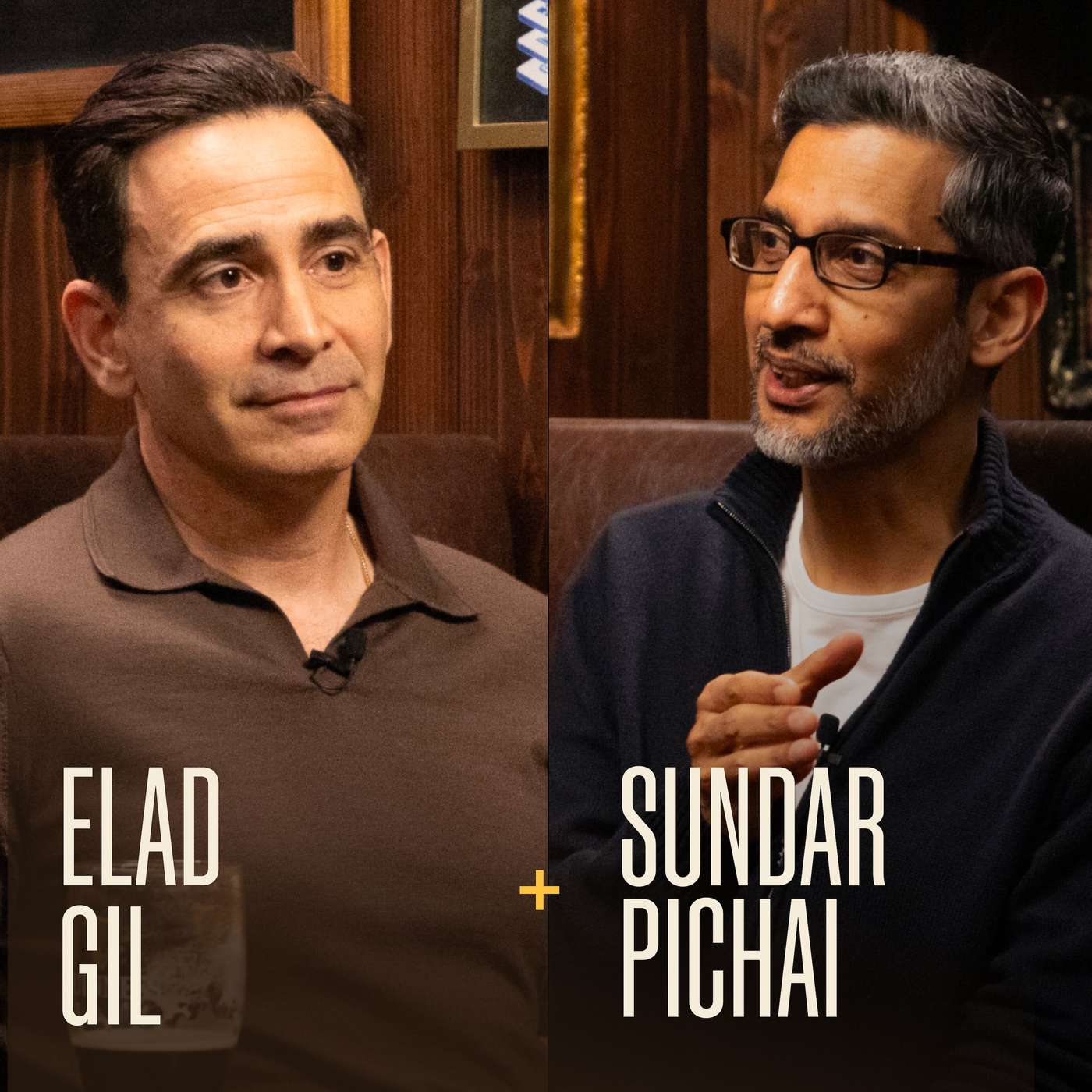
Pichai says computing will shift from humans adapting to machines toward machines adapting to people, with natural voice and persistent context. Still, he expects interfaces to remain for entertainment and video, because users will want to watch or consume what AI creates for them personally.

Related Insights
The next paradigm for AI interfaces is shifting from passive tools (like transcription apps) to active participants. New real-time voice models that can listen and speak simultaneously will function as a live third party in conversations, offering proactive input rather than just post-hoc analysis.

AI will soon create a unique user interface for every individual, adapted to their needs. For designers, this means shifting from creating fixed systems to defining flexible boundaries within which form and function can blend, balancing personalization with brand identity and usability.

The dominant paradigm of interacting with computers through graphical user interfaces (GUIs) is temporary. The future is a single, conversational AI agent that acts as an operating system, managing all your data and executing commands directly, thereby making applications and their visual interfaces redundant.
A future is predicted where UIs are no longer static but are dynamically generated in real-time. Interfaces will change and adapt based on user prompts and observed behavior, becoming a personalized, sycophantic stream of information tailored to an individual's unique consumption patterns and preferences.

The future of media is not just recommended content, but content rendered on-the-fly for each user. AI will analyze micro-behaviors like eye movement and swipe speed to generate the most engaging possible video in that exact moment. The algorithm will become the content itself.

Tony Fadell predicts the next major interface shift will prioritize voice input over touch. However, he dismisses the screenless future. A display is the optimal way to consume visual information like maps, meaning some form of screen will persist, even if it's secondary to voice.

Pat Gelsinger frames the AI revolution as an inversion of human-computer interaction. For 50 years, people have adapted to computers. AI-native applications will reverse this, with the computer adapting to the user's language and context—a paradigm shift that will dramatically change user experience.

Instead of being replaced by AI chatbots or agents, Pichai believes Search will evolve to manage them. Users will run multiple, long-running tasks, and Search will become the interface to orchestrate these agentic flows, expanding its capabilities rather than becoming obsolete.
The next user interface paradigm is delegation, not direct manipulation. Humans will communicate with AI agents via voice, instructing them to perform complex tasks on computers. This will shift daily work from hours of clicking and typing to zero, fundamentally changing our relationship with technology.

Users will stop interacting with countless individual apps and websites. Instead, they'll communicate with a personal AI agent that handles tasks by interfacing with services via APIs, making traditional graphical user interfaces obsolete.