Get your free personalized podcast brief
We scan new podcasts and send you the top 5 insights daily.
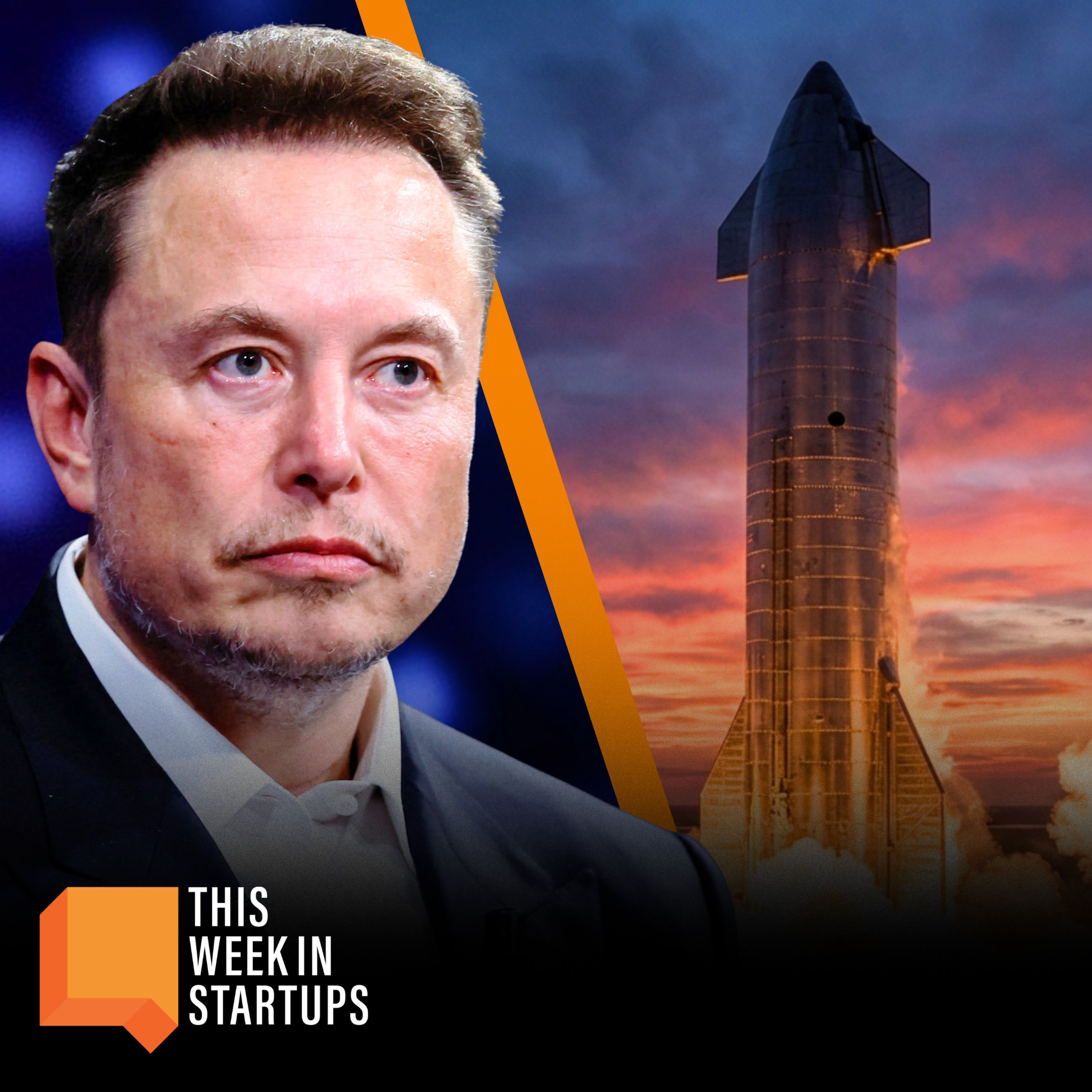
By driving the cost of launching a kilogram into orbit from $50,000 down to a potential $10, SpaceX is creating a phase transition in the space economy. This drastic cost curve reduction makes previously impossible ventures, like orbital data centers, not just feasible but economically superior.

Related Insights
Space data centers' viability hinges on a breakeven point where launch costs are outweighed by savings from no permitted land, no need for battery backup (24/7 sun), and 8x more efficient solar panels. Starcloud estimates this economic crossover occurs when launch costs drop to around $500 per kilogram.

The entire strategy of building data centers in space is only economically feasible because SpaceX's Starship is projected to increase launch capacity by 20 times and drastically lower costs. This specific technological leap turns a sci-fi concept into a viable business model.
Google's "Project Suncatcher" aims to place AI data centers in orbit for efficient solar power. However, the project's viability isn't just a technical challenge; it fundamentally requires space transport costs to decrease tenfold. This massive economic hurdle, more than technical feasibility, defines it as a long-term "moonshot" initiative.

Projections based on SpaceX's launch cost reductions indicate that deploying AI data centers in space will become as economical as building them on Earth by 2035. This transforms a science fiction concept into a near-term business reality, driven by advantages like superior cooling and unlimited solar power.

Unlike current rockets, Starship is designed for full and rapid reusability. This aircraft-like operational model is projected to drop the cost per kilogram to orbit from over $1,400 to potentially as low as $10, enabling an economic revolution for space-based infrastructure.

Skepticism around orbital data centers mirrors early doubts about Starlink, which was initially deemed economically unfeasible. However, SpaceX drastically reduced satellite launch costs by 20x, turning a "pipe dream" into a valuable business. This precedent suggests a similar path to viability exists for space-based AI compute.

On Earth, each new data center is more expensive than the last due to land and energy constraints. In space, manufacturing satellites at scale and declining launch costs (via Starship) mean the marginal cost for each new data center goes down, creating fundamentally different scaling economics.
By pioneering reusable rockets like the Falcon Heavy, SpaceX reduced the cost to orbit to approximately $1,400 per kilogram, a 92% reduction from historical averages. This extreme cost advantage creates a formidable barrier to entry for any new competitors.

Recent viability for orbital data centers doesn't stem from new server technology, but from SpaceX's Starship rocket. Its success in dramatically lowering the cost of launching mass into orbit is the critical, non-obvious enabler that makes the entire concept economically plausible for the first time.

Investor Gavin Baker argues that once Starship is fully reusable, the cost of launching a gigawatt of compute into orbit could be half the cost of building it terrestrially ($30B vs. $60B). This is because space eliminates the significant power and cooling costs (around $25B per gigawatt) required on Earth, creating a compelling economic case for orbital data centers.
