Get your free personalized podcast brief
We scan new podcasts and send you the top 5 insights daily.
The shift from single text prompts to allowing multiple reference images was a turning point for practical AI applications. It enabled real-world use cases like virtual clothing try-ons, interior design visualization, and even simulating crowd behavior during a fire drill, moving beyond simple artistic generation.

Related Insights
The quality and vision of an AI-generated video are determined more by the source reference images and videos than by the text prompt itself. Providing a strong visual reference gives the model a clear understanding of taste, style, and desired outcome, acting as a more powerful input than descriptive text alone.

While conversations focus on large language models, the capabilities of ChatGPT Images 2.0 are described as a significant and "insane" leap forward. This release marks a tangible advance in visual communication and image editing that could be the first to genuinely threaten traditional graphic design roles.

The future of creative AI is moving beyond simple text-to-X prompts. Labs are working to merge text, image, and video models into a single "mega-model" that can accept any combination of inputs (e.g., a video plus text) to generate a complex, edited output, unlocking new paradigms for design.

The next frontier for visual intelligence is twofold: creating truly multimodal models that retain long-term context of user interactions without re-prompting, and developing real-time generation. Real-time capabilities are crucial for creating duplex interactions and enabling robots to perceive and act instantly.
Instead of relying on sparse human-written "alt text," Ideogram uses AI models to analyze images and generate highly detailed, structured text descriptions. This rich, synthetic data is then used to train their primary text-to-image model, creating a powerful self-improvement loop for data quality.

Instead of asking AI to perfect one animation, MDS prompted it to "create five vastly different hover effects." This divergent approach uses AI as a creative partner to explore the possibility space, revealing unexpected directions you might not have conceived of on your own.

Unlike current text-based LLMs, effective agentic commerce requires a visual interface. Consumers need to see generated images of products, especially how clothing looks on them or how furniture fits in their home. The output must be product imagery, not just descriptive text, to be truly useful.

When analyzing video, new generative models can create entirely new images that illustrate a described scene, rather than just pulling a direct screenshot. This allows AI to generate its own 'B-roll' or conceptual art that captures the essence of the source material.

Unlike tools that generate images from scratch, this model transforms existing ones. Users control the intensity, allowing for a spectrum of changes from subtle lighting adjustments to complete stylistic overhauls. This positions the tool for iterative design workflows rather than simple generation.
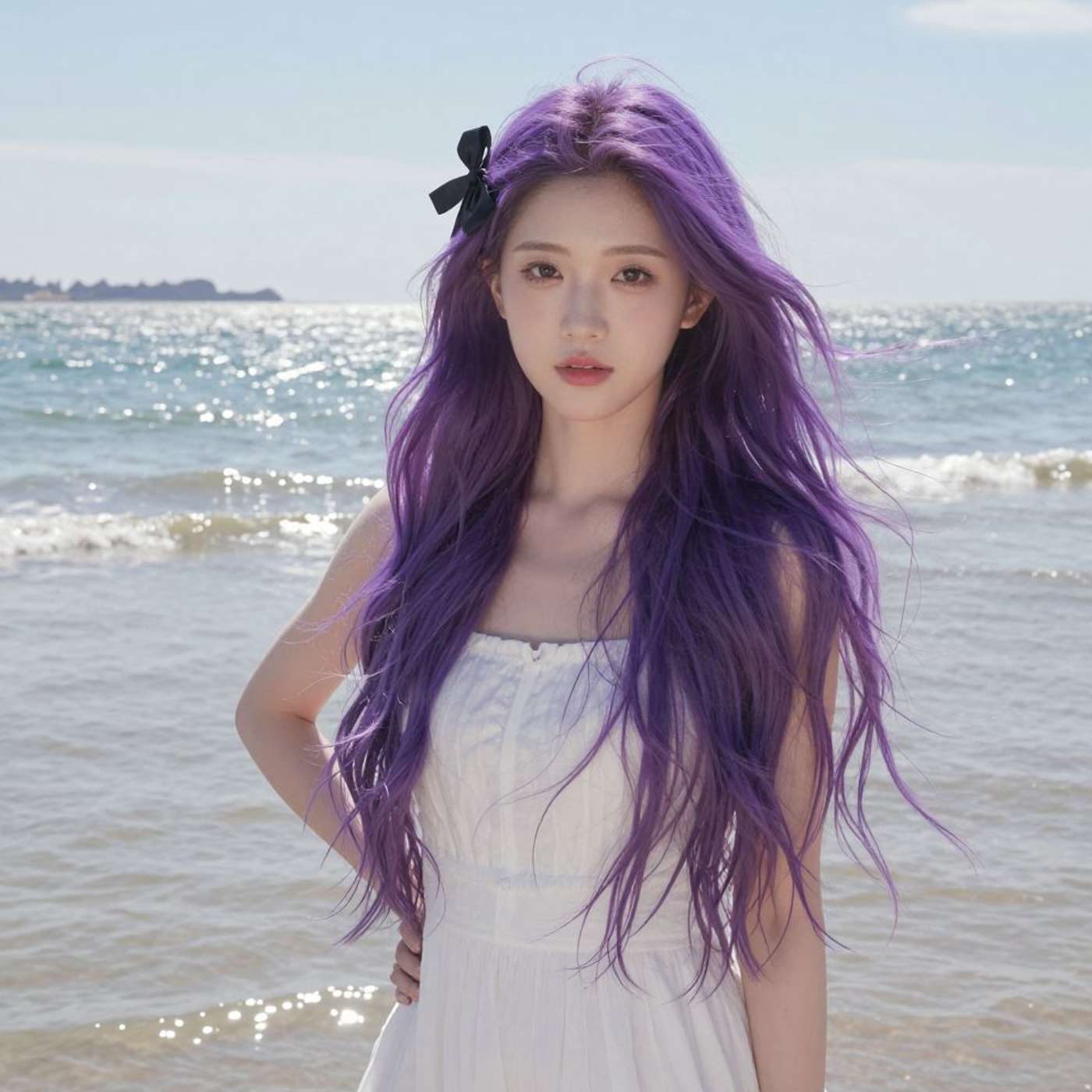
Google's image model Nano Banana succeeded not by marginally improving raw generation, but by enabling high-fidelity editing and entirely new capabilities like complex infographics. This suggests a new metric for AI models—an "unlock score"—that prioritizes the expansion of practical applications over incremental gains on existing benchmarks.
