Get your free personalized podcast brief
We scan new podcasts and send you the top 5 insights daily.
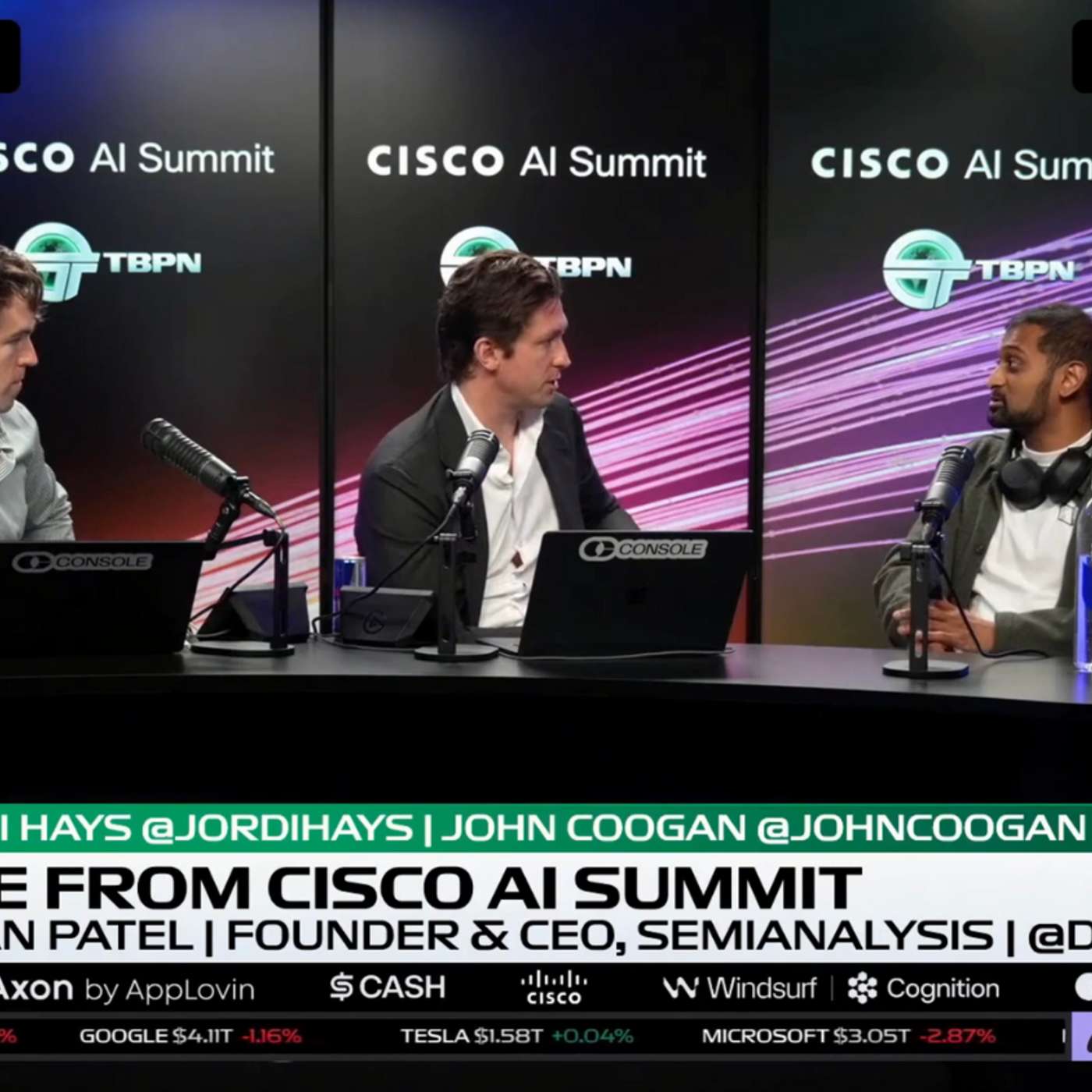
During a CNBC interview, GameStop CEO Ryan Cohen repeatedly failed to explain how he would cover a ~$16 billion funding gap for his $55 billion offer for eBay. This public display of unpreparedness and evasion severely undermines the offer's credibility, making it appear non-serious to eBay's board and shareholders.

Related Insights
Oracle's reactive posts reassuring the market about its OpenAI financing project weakness, not confidence. This communication style is compared to 'bank run language' from the FTX era. Strong market players typically don't feel the need to publicly address every rumor.
Cohen's attempt to replicate his Chewy success by turning GameStop into an "everything store for gaming" backfired. He learned that physical retail is unforgiving with inventory; unlike e-commerce, unsold products depreciate rapidly and must be marked down, costing shareholders significant money.

When questioned on OpenAI's massive $1.4T spending commitments, CEO Sam Altman's response was not a financial justification but a challenge. He stated that if investors are concerned, he can easily find buyers for their shares, highlighting intense market demand over traditional financial planning.
When a CEO is evasive, it may not be skilled media training but a genuine inability to articulate business fundamentals. A challenging interview can serve as a potent diagnostic tool for leadership competence, revealing whether a leader truly understands their own company's operations and strategy.

The real prize in the GameStop-eBay deal isn't product synergy, but eBay's bloated $2.4 billion marketing budget which only generated one million new users. A buyer could acquire eBay, drastically cut this inefficient spending to service the debt, and unlock massive value that Wall Street currently misprices as a fixed cost.

Admitting when you don't have an answer, especially during fundraising, is a powerful tool. It builds trust and credibility with potential investors. This honesty can also help identify gaps in your team or strategy that an investor might be able to help fill.

After publicly celebrating a massive $100 billion investment plan with OpenAI, NVIDIA's CEO Jensen Huang is now dismissing the figure as absurd. This pivot appears to be a form of corporate gaslighting, attempting to control the narrative after the deal stalled, despite prior press releases and interviews.

When a buyer consortium tried to force a lower price by locking up all available debt financing sources, Zayo's CEO regained leverage by personally orchestrating an alternative bid, convincing two smaller, reluctant firms to partner up.

The company is discussing an IPO while reportedly facing $1.4 trillion in financial obligations and losing $20 billion this year on just $13 billion in revenue. This unprecedented cash burn and debt-to-revenue ratio creates a financial picture that seems untenable for a public offering without a radical, unproven shift in its business model.
The celebrated $100B Nvidia-OpenAI deal was revealed by Nvidia's CEO to be just an 'invitation to invest,' not a firm commitment. This highlights the dangers of the 'press release economy,' where grand announcements are made for hype before deals are papered, creating a perception gap that can lead to public backtracking and reputational risk.