Get your free personalized podcast brief
We scan new podcasts and send you the top 5 insights daily.
Oracle's reactive posts reassuring the market about its OpenAI financing project weakness, not confidence. This communication style is compared to 'bank run language' from the FTX era. Strong market players typically don't feel the need to publicly address every rumor.
Related Insights
OpenAI's CFO requested government loan guarantees, framing it as a national security issue. The subsequent public backlash and clumsy walk-back highlight a lack of disciplined communication for a company underpinning much of the tech market's current valuation, signaling immaturity.

The outcry over OpenAI’s government backstop request stems from broader anxiety. With a committed $1.4 trillion spend against much lower revenues, the market perceives OpenAI as a potential systemic risk, and its undisciplined financial communication amplifies this fear.
OpenAI's CFO using the term "backstop" doomed the request by associating AI investment with the 2008 bank bailouts. The word conjures failure and socializing private losses, whereas a term like "partnership" would have framed the government's role as a positive, collaborative effort, avoiding immediate public opposition.

Blue Owl's decision to back out of financing an Oracle data center reflects a growing concern among lenders about overexposure to Oracle's massive AI infrastructure commitments. This suggests a potential funding bottleneck for the entire ecosystem as lenders become more cautious.

Nvidia CEO Jensen Huang pushed back against reports of a stalled $100B investment in OpenAI, clarifying it was never a firm commitment but rather an "invitation to invest up to $100 billion." This highlights how announcements in the "press release economy" can be misconstrued as binding deals, creating market confusion.

The massive OpenAI-Oracle compute deal illustrates a novel form of financial engineering. The deal inflates Oracle's stock, enriching its chairman, who can then reinvest in OpenAI's next funding round. This creates a self-reinforcing loop that essentially manufactures capital to fund the immense infrastructure required for AGI development.
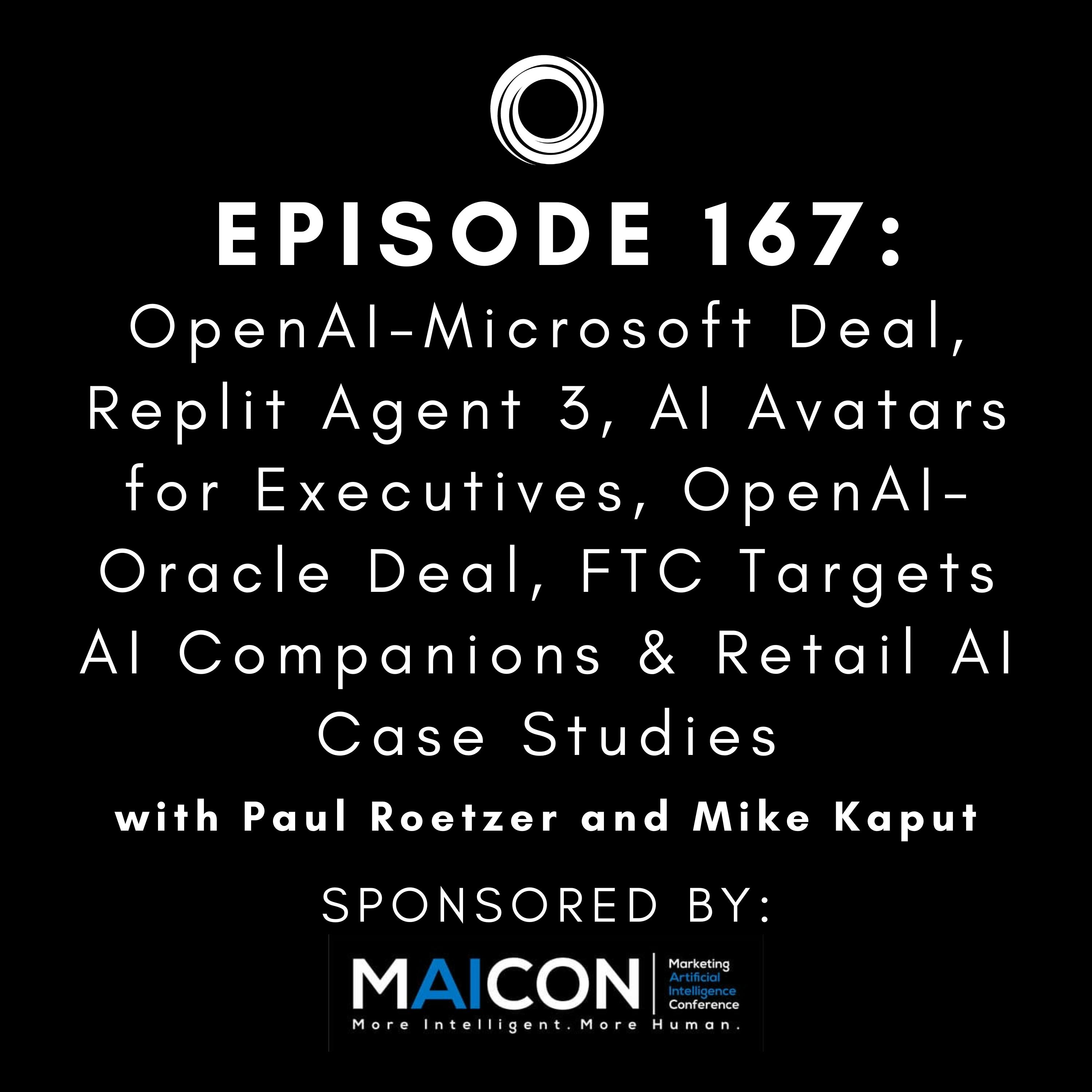
After publicly celebrating a massive $100 billion investment plan with OpenAI, NVIDIA's CEO Jensen Huang is now dismissing the figure as absurd. This pivot appears to be a form of corporate gaslighting, attempting to control the narrative after the deal stalled, despite prior press releases and interviews.
The celebrated $100B Nvidia-OpenAI deal was revealed by Nvidia's CEO to be just an 'invitation to invest,' not a firm commitment. This highlights the dangers of the 'press release economy,' where grand announcements are made for hype before deals are papered, creating a perception gap that can lead to public backtracking and reputational risk.

In its $50B fundraising announcement, Oracle strategically highlighted customers like TikTok, AMD, and xAI—not just OpenAI. This is a calculated move to reassure lenders and investors that its massive data center expansion isn't precariously dependent on a single, massive contract with OpenAI.
Despite being the world's largest company, NVIDIA issued scheduled, press-release-style tweets defending its products against Google's. This reactive communication comes across as insecure and is less effective than a nuanced, conversational response from its CEO would be, undermining its dominant market position.
