Get your free personalized podcast brief
We scan new podcasts and send you the top 5 insights daily.
A guest with a decades-long gambling problem consistently rejects the 'addict' label. He instead refers to his compulsion as his 'action' or 'entertainment.' This psychological reframing allows him to perceive the destructive habit as a chosen lifestyle rather than a sickness he can't control.

Related Insights
A guest who grew up with a single mom and financial scarcity didn't become frugal. Instead, the feeling of 'never having enough' drove him to high-risk sports betting from age 15 in an attempt to quickly acquire the lifestyle he felt he was missing.
Modern society turns normal behaviors like eating or gaming into potent drugs by manipulating four factors: making them infinitely available (quantity/access), more intense (potency), and constantly new (novelty). This framework explains how behavioral addictions are engineered, hijacking the brain’s reward pathways just like chemical substances.
The antidote to the destructive, isolating risk of online gambling is not risk aversion, but the redirection of that appetite toward constructive, real-world challenges. This involves encouraging social risks like approaching strangers, asking someone out, and investing in relationships—actions that build character and connection rather than draining finances.

A recovering gambler is channeling his decades of obsessive, user-level knowledge into a legitimate career. He traveled to Las Vegas not to bet, but to network with executives at a sports information network, demonstrating a powerful strategy of repurposing the expertise gained from a vice into a professional asset.
The host advises a recovering gambler to get into investing by highlighting its parallels to professional gambling. Using quotes from Warren Buffett and a blackjack expert, she frames it as a game where research and rational decisions beat hunches, effectively channeling his desire for 'action' into a constructive pursuit.
Addiction isn't defined by the pursuit of pleasure. It's the point at which a behavior, which may have started for rational reasons, hijacks the brain’s reward pathway and becomes compulsive. The defining characteristic is the inability to stop even when the behavior no longer provides pleasure and begins causing negative consequences.
Psychiatrist Anna Lemke details her own obsession with romance novels, which began innocently but escalated to needing more graphic content, hiding her reading, and losing interest in family and work. Her story shows how any highly reinforcing behavior, not just illicit drugs, can become a true addiction.
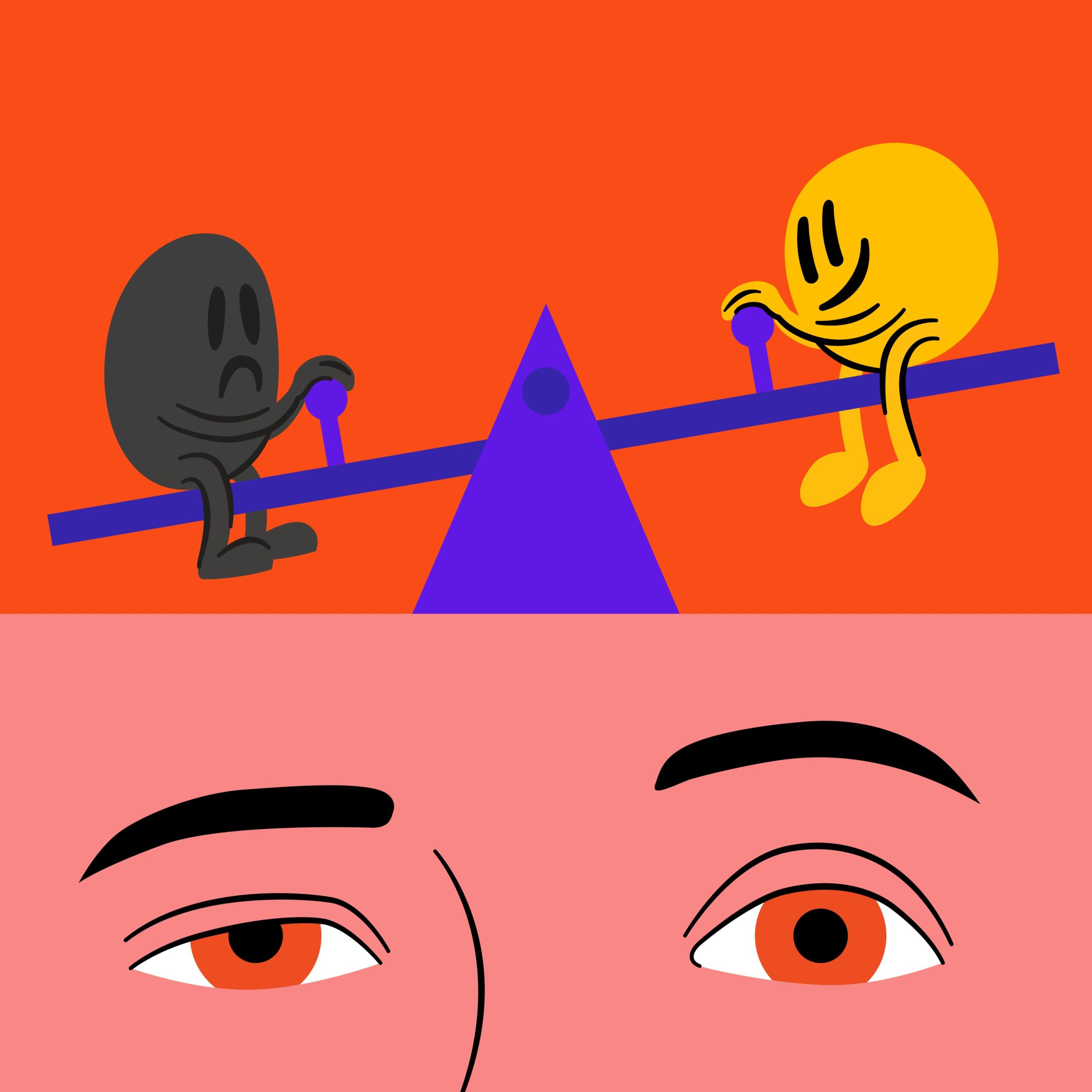
Constantly bombarding our reward pathways causes the brain to permanently weigh down the 'pain' side of its pleasure-pain balance. This alters our baseline mood, or 'hedonic set point,' meaning we eventually need our substance or behavior not to get high, but simply to escape a state of withdrawal and feel normal.
Rather than viewing addiction as a simple vice, it can be understood as a desperate attempt to find transcendence or a temporary refuge from a painful reality. This perspective, shared by a Native elder, recasts addiction as a spiritual quest gone awry, rooted in a need for a different state of being.

The goal of transformation isn't just consistency, but integration. A successful shift is marked by crossing a chasm where a desired behavior transforms. It moves from something you force yourself to do ('I have to') to something that feels wrong not to do ('it's hard not to').
