Get your free personalized podcast brief
We scan new podcasts and send you the top 5 insights daily.
The next agent architecture separates the core intelligence (cloud inference) from the execution environment ('hands'). This enables a cloud-based agent to securely access and perform tasks on a user's local machine, separating thought from action.

Related Insights
Project Solara introduces thin, dedicated hardware for AI agents, shifting the computing hub from the mobile device to the cloud. This model is especially powerful in enterprise settings where user context and corporate data already reside in the cloud.

Instead of relying on cloud-based knowledge, AI agents gain immense power and context by operating on local files. This local-first approach improves performance, ensures privacy, and allows the AI to build a comprehensive, private knowledge base of your work, countering the 'cloud everything' trend.

The 'out of the box' architecture, where an agent's logic runs separately from its sandboxed execution environment, is more complex but offers superior security and reusability. This prevents agent secrets from being exposed in the execution environment and allows leveraging existing developer setups.
The AI industry is moving beyond single-step inference ('the brain') towards multi-step agents that take actions ('the muscle'). This trend compels inference providers to acquire or build secure execution sandboxes, expanding their offerings to handle the entire 'think-and-do' cycle for their customers.

Unlike generative AI (like ChatGPT) which only provides text output, agentic AI can perform actions on your behalf. It can log into accounts, click buttons, and complete multi-step tasks, shifting AI from a smart consultant to an autonomous digital assistant.

The trend toward cloud-native everything overlooks the power and convenience of the local machine. Providing an AI agent with local access avoids the immense friction of replicating a user's tools and authentication states in the cloud, making the agent far more capable.
A hybrid approach to AI agent architecture is emerging. Use the most powerful, expensive cloud models like Claude for high-level reasoning and planning (the "CEO"). Then, delegate repetitive, high-volume execution tasks to cheaper, locally-run models (the "line workers").
Both companies are separating the agent's control layer (harness/brain) from the execution environment (compute/hands). This architectural convergence, driven by enterprise needs for security, durability, and scale, shows a maturing standard for building production-grade AI agents.

While local coding agents have product-market fit today, OpenAI's Michael Bolin argues the long-term trend is remote agents. To achieve true automation—like having an agent autonomously tackle every new bug ticket—workloads must run in the cloud, unconstrained by a developer's personal machine.

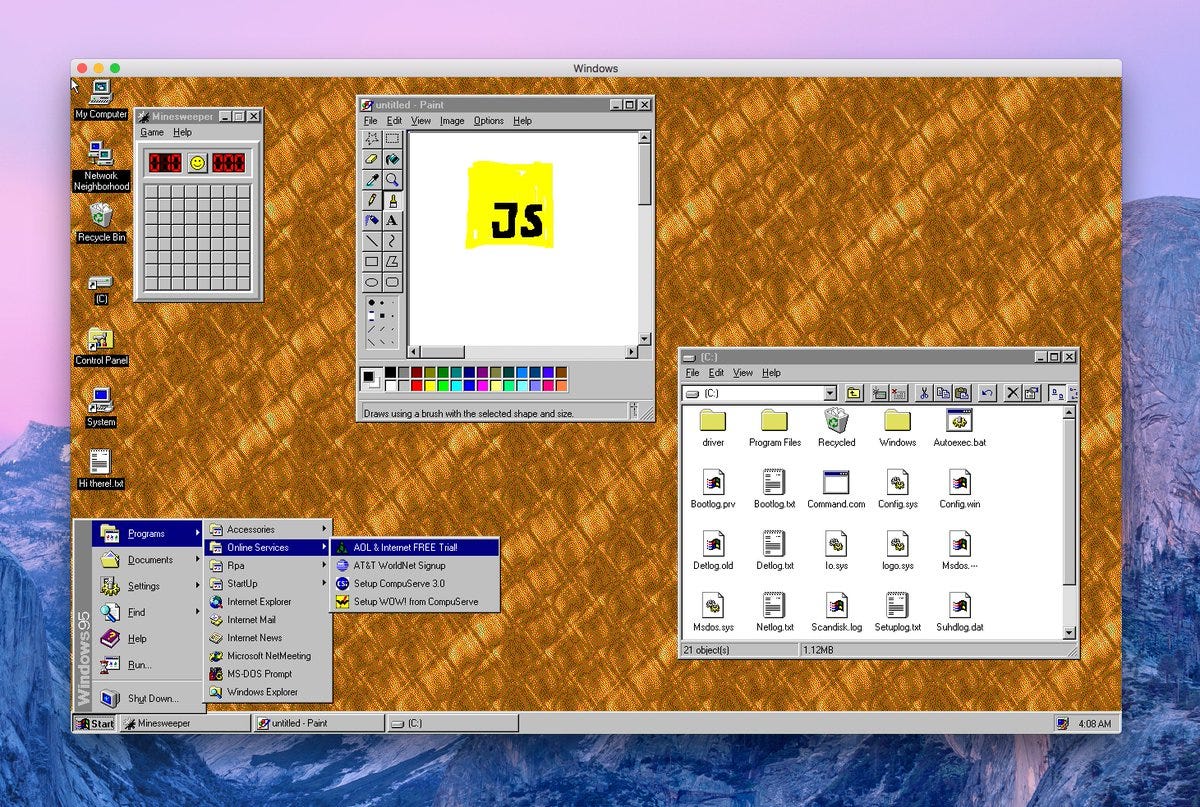
A new wave of AI agents from companies like Manus and Adaptive are launching with a core "My Computer" feature. This signals a critical realization: to be truly useful, agents must move beyond cloud-only environments and gain access to local files and applications on a user's personal machine.