Get your free personalized podcast brief
We scan new podcasts and send you the top 5 insights daily.
Specific drone designs become obsolete almost immediately after fielding due to rapid adversarial countermeasures. The true goal of rapid procurement initiatives is discovering companies capable of fast iteration and scaling production, allowing unit costs to decrease while manufacturing capacity remains flexible.

Related Insights
The Ukrainian conflict demonstrates the power of a fast, iterative cycle: deploy technology, see if it works, and adapt quickly. This agile approach, common in startups but alien to traditional defense, is essential for the U.S. to maintain its technological edge and avoid being outpaced.

The conflict in Ukraine exposed the vulnerability of expensive, "exquisite" military platforms (like tanks) to inexpensive technologies (like drones). This has shifted defense priorities toward cheap, mass-producible, "attritable" systems. This fundamental change in product and economics creates a massive opportunity for startups to innovate outside the traditional defense prime model.
A new category of agile tech companies is winning major defense contracts by offering cheaper, software-driven, and nimbler solutions like drones and AI, directly challenging established giants like Lockheed Martin.
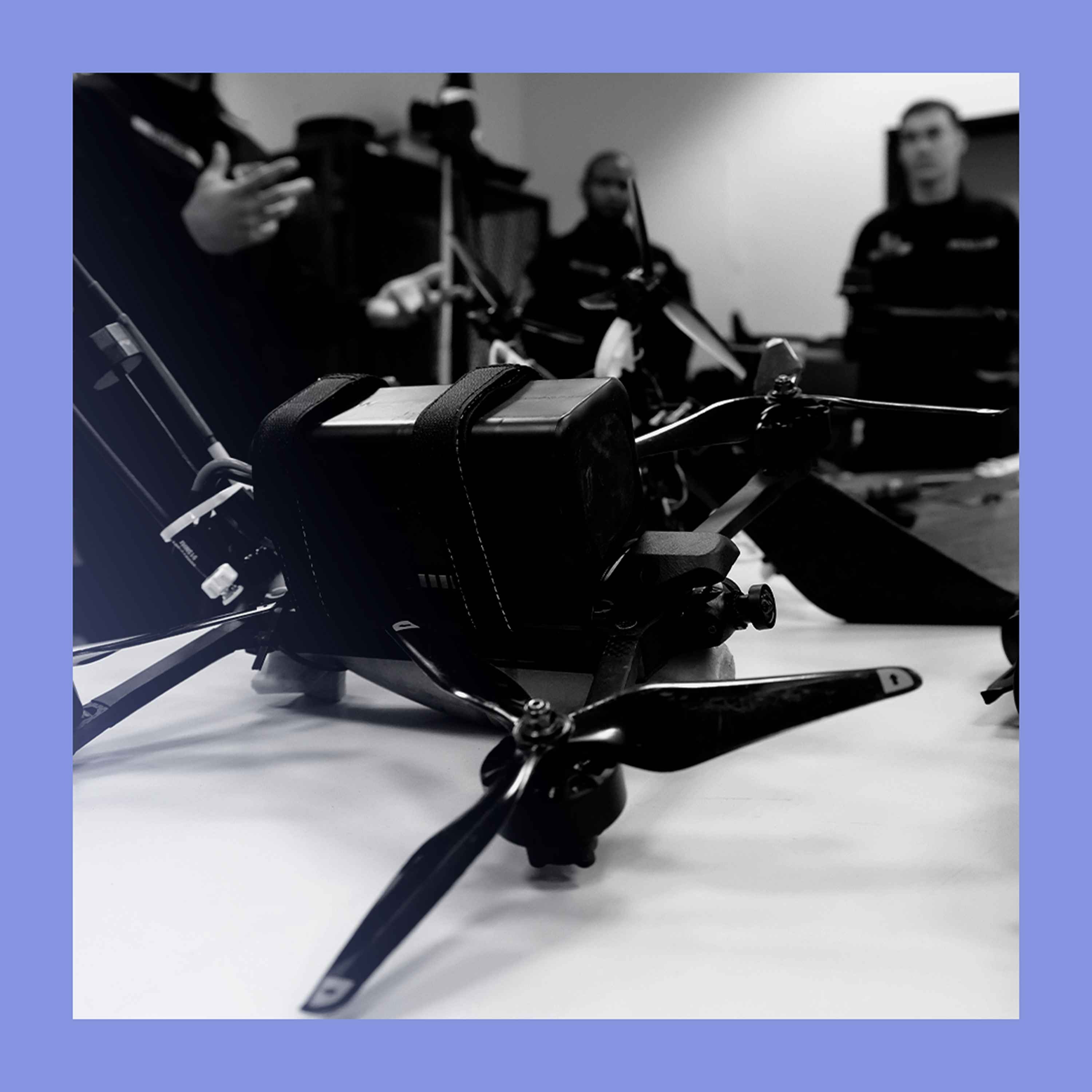
Unlike the US model of a single "drone guy" per platoon, Ukraine has entire battalions focused on drone warfare. These units have frontline labs that debrief missions and iterate on drone technology within days, creating a dramatically faster innovation cycle.
The Pentagon is moving away from decades-long, multi-billion dollar projects like aircraft carriers. The new focus is on mass-produced, attributable, low-cost systems like drones, which allows for faster innovation and deployment from new defense tech startups, not just the old primes.

The rapid evolution of drones in Ukraine demonstrates that commercially viable, inexpensive products are now central to modern warfare. The ability to iterate quickly using commercial supply chains provides a mass-producible advantage over traditional, slow-moving defense procurement for certain capabilities.

In a significant strategy shift, the U.S. military created its LUKAS drone by reverse-engineering an Iranian Shahed drone. This "Toyota Corolla of drones" approach—cheap, plentiful, and battle-ready in under two years—marks a departure from the traditional slow, expensive Pentagon procurement process.

Domestic lab testing cannot replicate the blistering speed of adaptation occurring in modern conflicts. Metz notes that drone startups must test their hardware in operationally relevant, high-threat environments like Ukraine to expose design flaws and ensure their technology can iterate rapidly enough to remain relevant.
The defense procurement system was built when technology platforms lasted for decades, prioritizing getting it perfect over getting it fast. This risk-averse model is now a liability in an era of rapid innovation, as it stifles the experimentation and failure necessary for speed.
Silicon Valley investors are backing companies building cheap, quickly manufacturable, and expendable ("attritable") systems like autonomous boats. The core innovation is the ability to rapidly scale production from one to 10,000 units, fundamentally changing warfighting economics away from expensive, long-cycle platforms like aircraft carriers.
