Get your free personalized podcast brief
We scan new podcasts and send you the top 5 insights daily.
As companies deploy thousands of AI agents, their backend databases face overwhelming load. Redis is pivoting to solve this by acting as a "context engine"—a high-speed intermediary layer that serves pre-processed data to agents, protecting core systems.

Related Insights
AI's biggest enterprise impact isn't just automation but a complete replatforming of software. It enables a central "context engine" that understands all company data and processes, then generates dynamic user interfaces on demand. This architecture will eventually make many layers of the traditional enterprise software stack obsolete.

A new wave of startups, like ex-Twitter CEO's Parallel, is attracting significant investment to build web infrastructure specifically for AI agents. Instead of ranking links for humans, these systems deliver optimized data directly to AI models, signaling a fundamental shift in how the internet will be structured and consumed.

The long-standing trend of centralizing all data into a single warehouse is incompatible with the speed of AI. Large-scale data migrations are too slow. The future architecture will involve AI models operating closer to data sources for faster, decentralized operation.

The most significant challenge holding back AI agent development is the lack of persistent memory. Builders dedicate substantial effort to creating elaborate workarounds for agents forgetting context between sessions, highlighting a critical infrastructure gap and a major opportunity for platform providers.
![Agent Building Trends [Operator Bonus Episode] thumbnail](https://d3t3ozftmdmh3i.cloudfront.net/staging/podcast_uploaded_nologo/41472609/41472609-1752234663609-8665756a468e5.jpg)
An advanced user reveals their largest new expense from building AI agents isn't tokens, but database and storage costs. AI makes vast amounts of previously inert data useful, creating a surge in demand for storage solutions, which is where the real economic leverage lies.

To build a multi-billion dollar database company, you need two things: a new, widespread workload (like AI needing data) and a fundamentally new storage architecture that incumbents can't easily adopt. This framework helps identify truly disruptive infrastructure opportunities.

Dell's CTO identifies a new architectural component: the "knowledge layer" (vector DBs, knowledge graphs). Unlike traditional data architectures, this layer should be placed near the dynamic AI compute (e.g., on an edge device) rather than the static primary data, as it's perpetually hot and used in real-time.

Drawing a parallel to the microservices boom, enterprises will soon deploy thousands of AI agents, creating immense operational complexity. The most valuable future products will be those that, like Datadog for microservices, provide governance, monitoring, and orchestration for this sprawling agentic workforce.
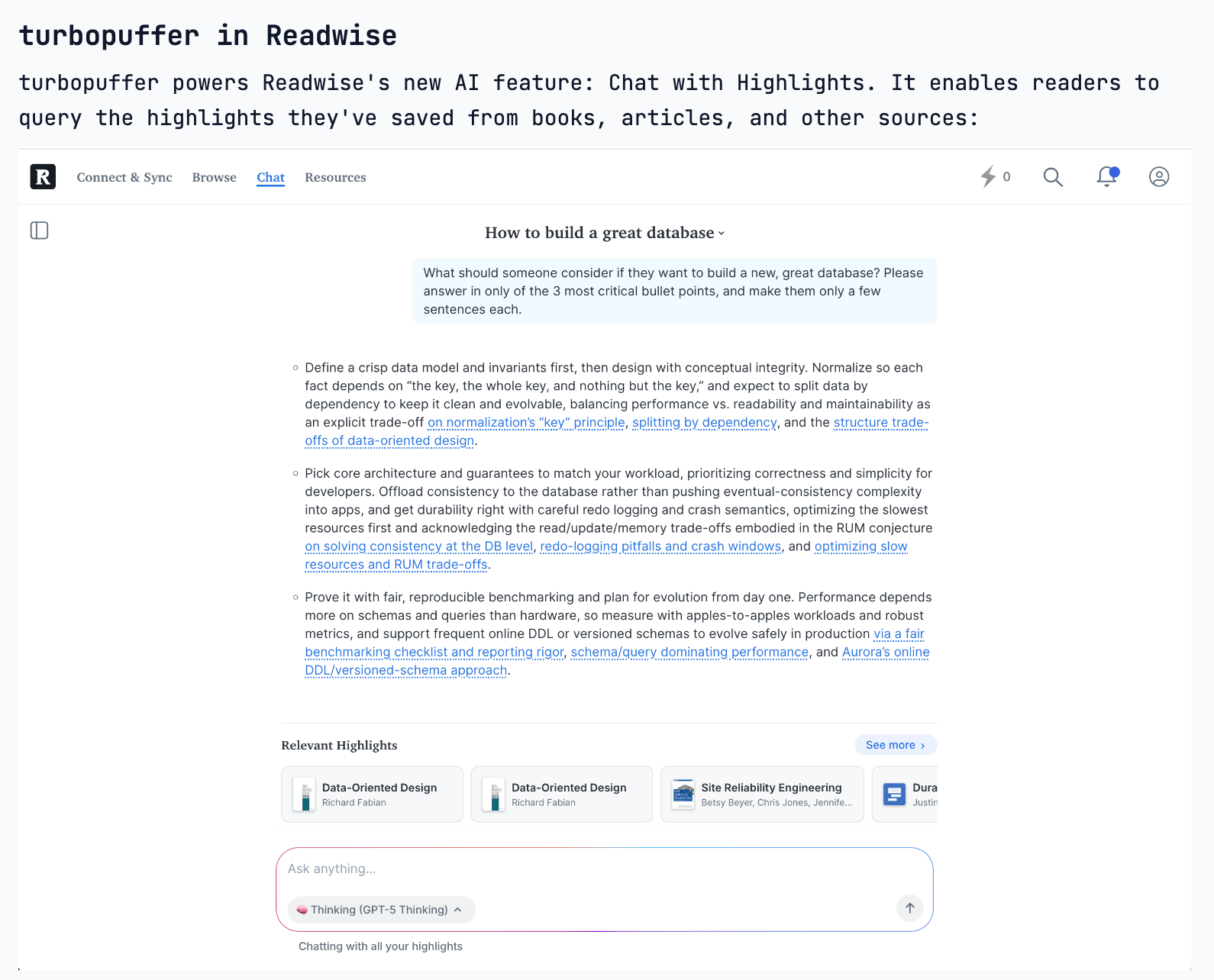
The nature of Retrieval-Augmented Generation (RAG) is evolving. Instead of a single search to populate an initial context window, AI agents are now performing numerous concurrent queries in a single turn. This allows them to explore diverse information paths simultaneously, driving new database requirements.
General AI models understand the world but not a company's specific data. The X-Lake reasoning engine provides a crucial layer that connects to an enterprise's varied data lakes, giving AI agents the context needed to operate effectively on internal data at a petabyte scale.