Get your free personalized podcast brief
We scan new podcasts and send you the top 5 insights daily.
The strategy is to split the main spending bill into smaller "minibuses," allowing Democrats to block funding specifically for the Department of Homeland Security. This targeted approach aims to force accountability on ICE while minimizing widespread disruption to other essential federal services, unlike a full government shutdown.

Related Insights
To prevent political stalemates from causing prolonged government shutdowns, a mechanism could automatically reopen government after a set period. This 'dead hand switch' would trigger pre-agreed, across-the-board budget cuts, forcing politicians to negotiate in good faith to avoid an automated outcome that neither side fully controls.

During a government shutdown, one political strategy is to refuse compromise and instead allow the opposition's actions, like cutting food stamps, to publicly reveal their character and force them to own the unpopular consequences.

A political party might intentionally trigger a government shutdown not to win policy concessions, but to create a public narrative of a dysfunctional opposition. The true victory isn't legislative but reputational, aiming to sway voters in upcoming elections by making the ruling party look incompetent.

A previous ICE funding bill passed only because seven Democrats crossed party lines, a fact the host highlights to show that "the boring stuff moves the needle." This demonstrates how the failure to maintain party discipline on seemingly routine procedural votes can completely undermine a party's larger strategic policy goals.
With a September 30th budget deadline looming, the government needs Democratic votes to avoid a shutdown. Democrats are leveraging this necessity by demanding a rollback of Republican healthcare cuts as the price for their cooperation, showcasing a hardball negotiation tactic in a divided government.

An effective strategy during a government shutdown is to avoid a broad debate and instead focus public attention on one clear, emotionally resonant issue, like the loss of healthcare subsidies. By targeting voters in the opposition's territory, this tactic aims to divide the other party's base and claim the moral high ground.

Political deadlines like military pay dates are often overcome. The true forcing mechanism for ending a prolonged government shutdown is the breakdown of essential services that cause widespread public pain, such as air traffic control disruptions or the cessation of welfare benefits like WIC and SNAP.

Polling data reveals a critical nuance in public perception. Two-thirds of Democrats and a majority of independents interpret the "Abolish ICE" slogan not as eliminating immigration enforcement, but as a demand to replace the agency with a system aligned with American values and due process, a distinction often lost in political attacks.
A major government shutdown was made "oddly tolerable" and politically sustainable because the administration creatively repurposed funds to keep key services paid. This selective funding of the military and homeland security masked the shutdown's full extent, reducing immediate public pressure for a resolution and allowing the impasse to continue.
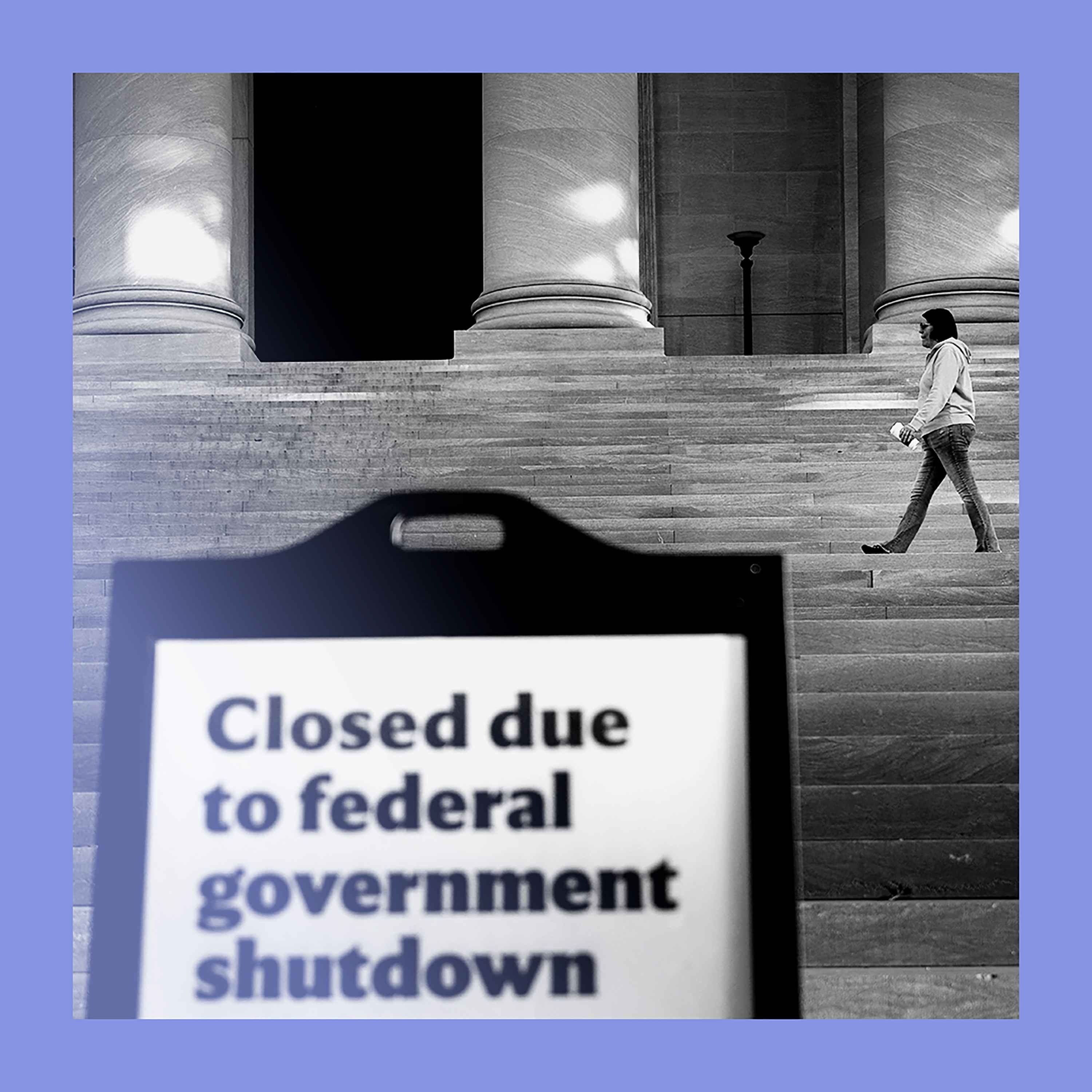
The podcast critiques the Democratic strategy of threatening a government shutdown, arguing their track record shows they often "blink" first and cave without securing significant concessions. The threat is only potent if the party is genuinely committed to holding out for tangible wins, otherwise it weakens their position.