Get your free personalized podcast brief
We scan new podcasts and send you the top 5 insights daily.
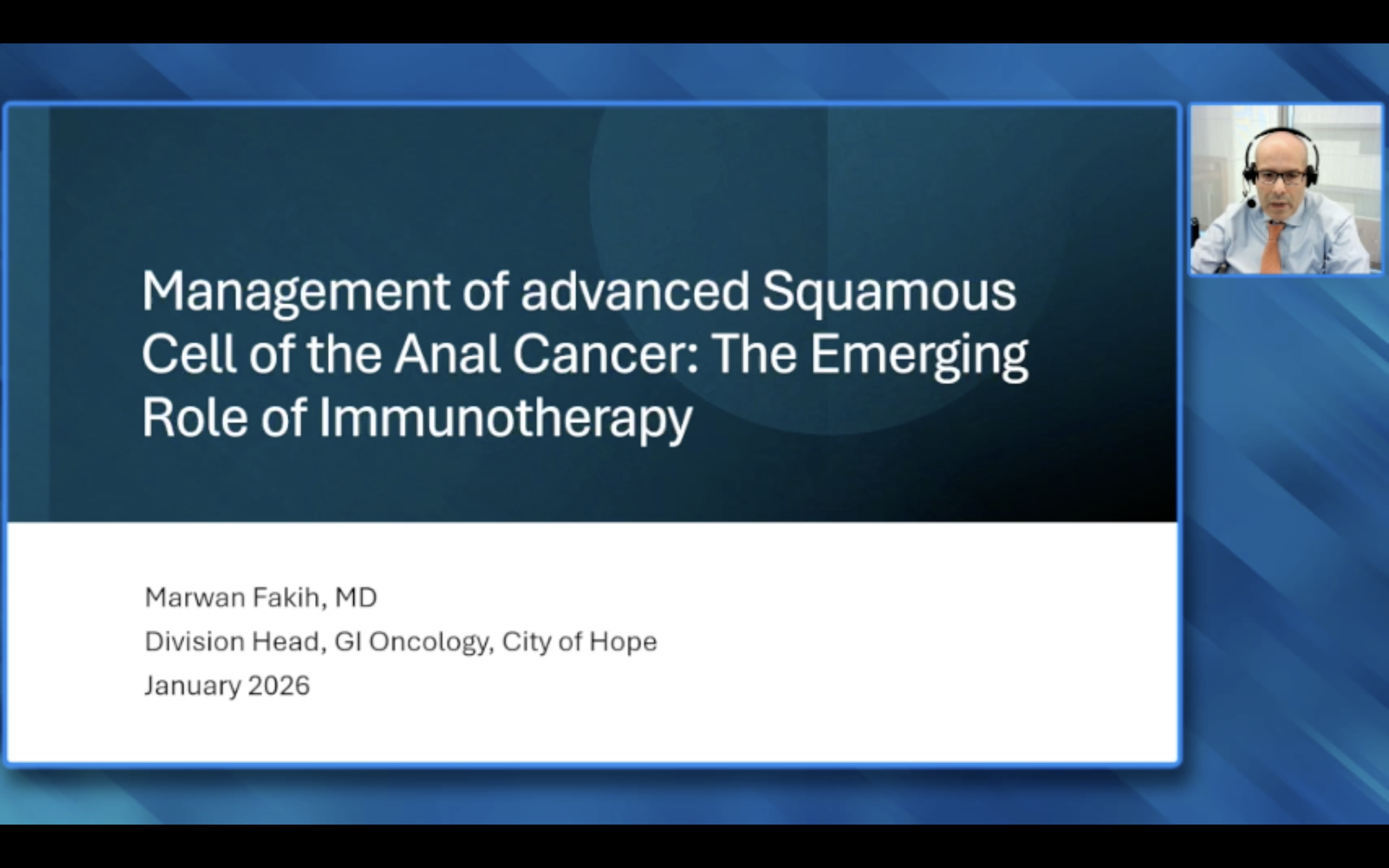
In the Podium-303 trial, adding retifanlimab to chemotherapy improved the overall response rate by 11%. However, its most significant impact was doubling the median duration of response from 7.2 to 14 months, providing a much more durable benefit for patients after chemotherapy is stopped.
Related Insights
The NCI 9673 trial demonstrated that adding the CTLA-4 inhibitor ipilimumab to the PD-1 inhibitor nivolumab did not improve response rate, PFS, or overall survival in patients with previously treated anal cancer. This finding discourages this combination approach, avoiding unnecessary toxicity.
A significant challenge in assessing complete response after neoadjuvant immunotherapy for rectal cancer is the presence of mucin pools. These imaging abnormalities can persist for up to two years, mimicking residual tumor and complicating decisions about non-operative management.
The trial allowed patients in the placebo group to receive retifanlimab upon progression (crossover). This common design dilutes the observed overall survival difference. While initial results were not statistically significant, updated data revealed a clinically meaningful 10.6-month median OS improvement.
While neoadjuvant immunotherapy shows astounding success in MSI-high rectal cancer, the primary difficulty for clinicians lies in accurately assessing complete response via endoscopy and MRI, and managing unique complications like mucin pools or stenosis, rather than simply administering the treatment.
An advisory panel split 50/50 on a two-year immunotherapy regimen but voted 7-to-1 for a one-year drug with similar efficacy. This reveals that for adjuvant therapies in non-metastatic cancer, halving the treatment duration and toxicity exposure can decisively shift the risk/benefit calculation in favor of approval.

Data from the Podium-303 trial's crossover arm suggests that waiting to use a PD-1 inhibitor after progression on chemotherapy is less effective than using it concurrently from the start. This supports the synergistic effect of chemo-immunotherapy and favors the concurrent approach as the standard of care.
An ADC may show better response rates than chemotherapy, but its true benefit is compromised if toxicities lead to treatment discontinuation. As seen with failed PARP/IO combinations, if patients cannot tolerate a drug long enough, the regimen's overall effectiveness can become inferior to standard therapy.
Data from the Checkmate 743 trial shows that patients who stopped dual immunotherapy (Nivo/Ipi) due to toxicity can still achieve long-term benefits. A third of these patients had an ongoing response at three years, despite stopping treatment after only four months on average, providing confidence in the regimen.
Immunotherapies can be effective even without causing significant tumor shrinkage. Immunocore's drug KimTrack had a low 5-7% objective response rate (ORR) but demonstrated a massive overall survival (OS) benefit, challenging the reliance on traditional chemotherapy metrics for evaluating modern cancer treatments.

Dr. Radvanyi advocates for a paradigm shift: treating almost all cancers with neoadjuvant immunotherapy immediately after diagnosis. This "kickstarts" an immune response before standard treatments like surgery and chemotherapy, which are known to be immunosuppressive, can weaken the patient's natural defenses against the tumor.
