Get your free personalized podcast brief
We scan new podcasts and send you the top 5 insights daily.
Lila has found that a single, generalist AI model trained on broad scientific data—spanning life sciences, chemistry, and materials—often beats specialized models. This suggests that cross-domain knowledge allows the model to find connections and reasoning patterns that domain-specific training would miss.

Related Insights
Counterintuitively, training AI models with data from disparate physical domains, like mining, improves the performance of systems in completely different areas, such as self-driving cars. This cross-domain learning suggests that a broad understanding of the physical world is key to robust, real-world AI.

Even a specialized task like coding involves a wide range of human-like interaction: brainstorming, searching, and more. This "AGI-completeness" means a powerful general model with a good "bedside manner" can outperform a narrowly specialized one, complicating the strategy for vertical AI apps.

The Physical Intelligence thesis is that a foundation model learning from diverse data can achieve a "physical understanding" of the world, making it easier to adapt to new tasks than building single-purpose robots from scratch. Generality leverages broader data, which is ultimately a more scalable approach.
![Sergey Levine - Building LLMs for the Physical World - [Invest Like the Best, EP.465] thumbnail](https://megaphone.imgix.net/podcasts/fdcd4328-2c77-11f1-a72b-977309fd08f1/image/b1bb4368d6e13a4a804924681ffe3ab1.jpg?ixlib=rails-4.3.1&max-w=3000&max-h=3000&fit=crop&auto=format,compress)
Biohub's goal was to create a general world model that "understands proteins." An emergent property of this generalist model was state-of-the-art performance in the highly specialized task of designing single-chain antibodies, a critical function for therapeutics. This demonstrates the power of general models to solve niche problems without explicit training.

Just as neural networks replaced hand-crafted features, large generalist models are replacing narrow, task-specific ones. Jeff Dean notes the era of unified models is "really upon us." A single, large model that can generalize across domains like math and language is proving more powerful than bespoke solutions for each, a modern take on the "bitter lesson."
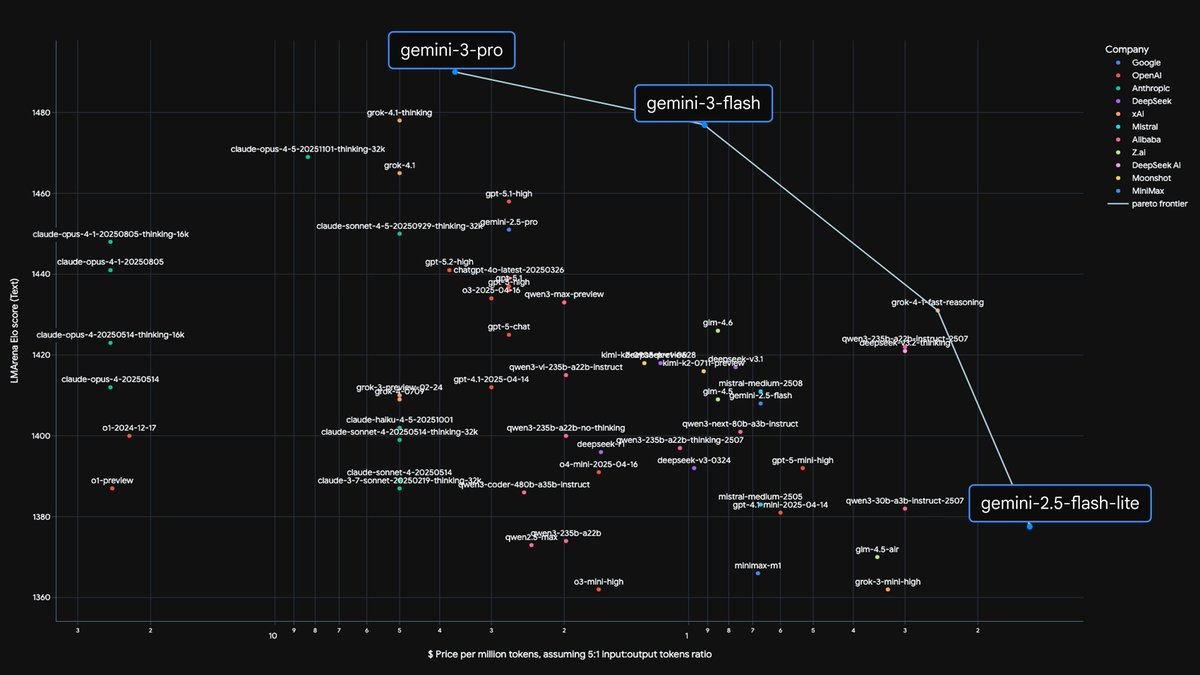
The next leap in AI will come from integrating general-purpose reasoning models with specialized models for domains like biology or robotics. This fusion, creating a "single unified intelligence" across modalities, is the base case for achieving superintelligence.

In a specialized test (Virology Capabilities Test) assessing tacit knowledge, leading AI models doubled the scores of human experts in their own specialized areas. This challenges the long-held belief that practical 'know-how' is an insurmountable barrier for AI in biosecurity.

Rather than just benefiting specialists, AI provides the greatest leverage to generalists. It allows individuals to translate their knowledge work across different domains and artifacts—from writing a document to building an application—dramatically increasing their scope and impact without deep specialization in each area.
Claude's significant improvement came from training on first principles across diverse fields like physics, law, and finance. The model learned to transfer reasoning skills between domains, creating a "tipping point" in intelligence beyond what benchmarks capture.

Adam's team discovered their internal, general-purpose agent (built for tasks like PR management) produced better CAD models than their highly specialized, domain-specific AI. This suggests that a more generally powerful AI with basic primitives can outperform a narrowly focused one.
