Get your free personalized podcast brief
We scan new podcasts and send you the top 5 insights daily.
Even a specialized task like coding involves a wide range of human-like interaction: brainstorming, searching, and more. This "AGI-completeness" means a powerful general model with a good "bedside manner" can outperform a narrowly specialized one, complicating the strategy for vertical AI apps.

Related Insights
Framing AGI as reaching human-level intelligence is a limiting concept. Unconstrained by biology, AI will rapidly surpass the best human experts in every field. The focus should be on harnessing this superhuman capability, not just achieving parity.
Instead of a single, generalizable AI, we are creating 'Functional AGI'—a collection of specialized AIs layered together. This system will feel like AGI to users but lacks true cross-domain reasoning, as progress in one area (like coding) doesn't translate to others (like history).

The path to robust AI applications isn't a single, all-powerful model. It's a system of specialized "sub-agents," each handling a narrow task like context retrieval or debugging. This architecture allows for using smaller, faster, fine-tuned models for each task, improving overall system performance and efficiency.
Current AI models resemble a student who grinds 10,000 hours on a narrow task. They achieve superhuman performance on benchmarks but lack the broad, adaptable intelligence of someone with less specific training but better general reasoning. This explains the gap between eval scores and real-world utility.

The ability to code is not just another domain for AI; it's a meta-skill. An AI that can program can build tools on demand to solve problems in nearly any digital domain, effectively simulating general competence. This makes mastery of code a form of instrumental, functional AGI for most economically valuable work.

AI reverses the long-standing trend of professional hyper-specialization. By providing instant access to specialist knowledge (e.g., coding in an unfamiliar language), AI tools empower individuals to operate as effective generalists. This allows small, agile teams to achieve more without hiring a dedicated expert for every function.

Replit CEO Amjad Massad argues that the ability to write and execute code is a form of general intelligence. This insight suggests that building general-purpose coding agents will outperform handcrafting specialized, expert-knowledge agents for specific verticals, representing a more direct and scalable approach to achieving AGI.
Just as neural networks replaced hand-crafted features, large generalist models are replacing narrow, task-specific ones. Jeff Dean notes the era of unified models is "really upon us." A single, large model that can generalize across domains like math and language is proving more powerful than bespoke solutions for each, a modern take on the "bitter lesson."
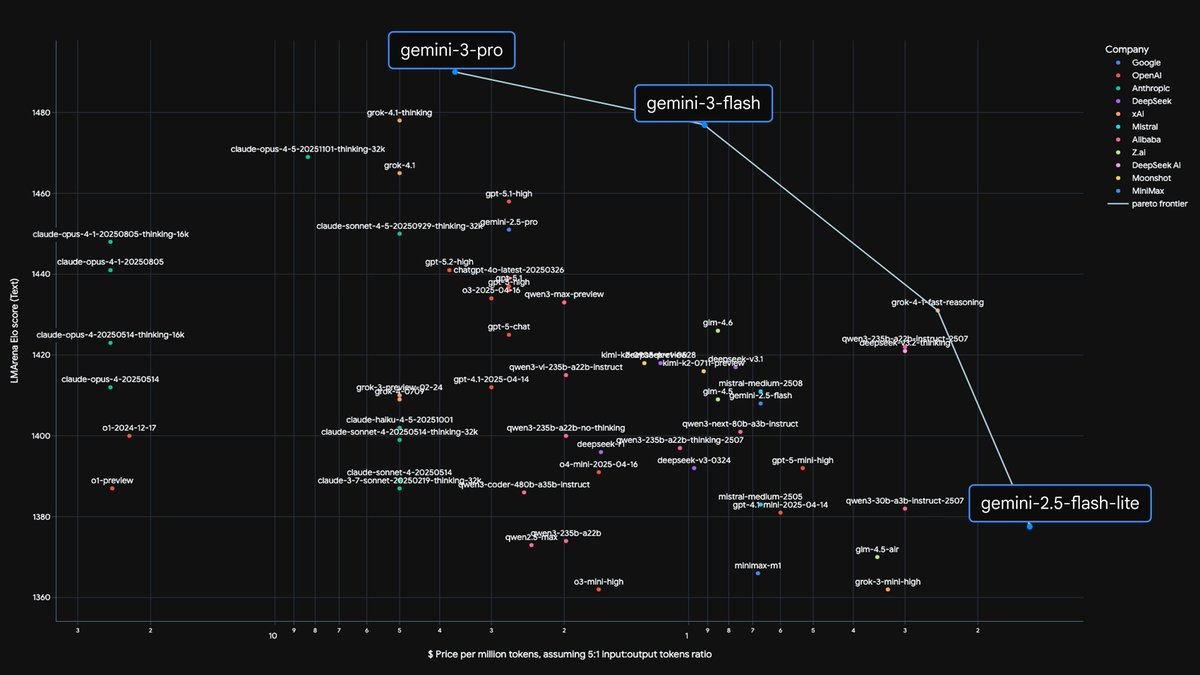
The latest models from Anthropic and OpenAI show a convergence in capabilities. The distinction between a "coding model" and a "general knowledge model" is blurring because the core skills for advanced software development—like planning and tool use—are the same skills needed to excel at any complex knowledge work.
A practical definition of AGI is its capacity to function as a 'drop-in remote worker,' fully substituting for a human on long-horizon tasks. Today's AI, despite genius-level abilities in narrow domains, fails this test because it cannot reliably string together multiple tasks over extended periods, highlighting the 'jagged frontier' of its abilities.