Get your free personalized podcast brief
We scan new podcasts and send you the top 5 insights daily.
This perspective reframes human evolution not as the endpoint, but as a necessary transitional phase. Our species' ultimate purpose could be to create the initial conditions and "seed kernel" for a successor intelligence—AI—which will then continue the trajectory of life in the universe.

Related Insights
Our individual lives, happiness, and suffering are not the ultimate point. Instead, our existence is instrumental to a larger process: the mathematical possibility of self-organization leading to intelligent life that coheres into a vast, godlike mind. We are part of the genesis of this universal consciousness.

Even when surpassed by AGI, humans remain vital because of our unique 'messy' intelligence driven by emotions and unpredictable feelings (qualia). This provides a non-linear, creative input that purely logical machine intelligence cannot replicate, making us a necessary component of a healthy intelligence ecosystem.

The current state of AI development parallels early human evolution. Just as the invention of language enabled a step-function change in human collaboration and intelligence, AI agents now require their own 'language'—a set of shared protocols—to move beyond individual tasks and unlock collective problem-solving.

AI isn't an independent creation but an extension of Earth's evolutionary history. It's a complex structure that could only be produced by a long-standing living system, making it a "signature of life" rather than a separate, non-living entity.
If you see humanity not as the endpoint of evolution but as one phase, then the emergence of a superior intelligence (AGI) is not a threat but a logical next step. This removes the value judgment that humans must remain the planet's most important beings.

We often think of "human nature" as fixed, but it's constantly redefined by our tools. Technologies like eyeglasses and literacy fundamentally changed our perception and cognition. AI is not an external force but the next step in this co-evolution, augmenting what it means to be human.

As artificial intelligence surpasses human capabilities, a potential conflict arises. Kaku proposes a solution: instead of competing, humans should merge with AI. This would involve augmenting our bodies and minds, becoming superhuman to ensure our long-term survival.

Human intelligence is fundamentally shaped by tight constraints: limited lifespan, brain size, and slow communication. AI systems are free from these limits—they can train on millennia of data and scale compute as needed. This core difference ensures AI will evolve into a form of intelligence that is powerful but alien to our own.
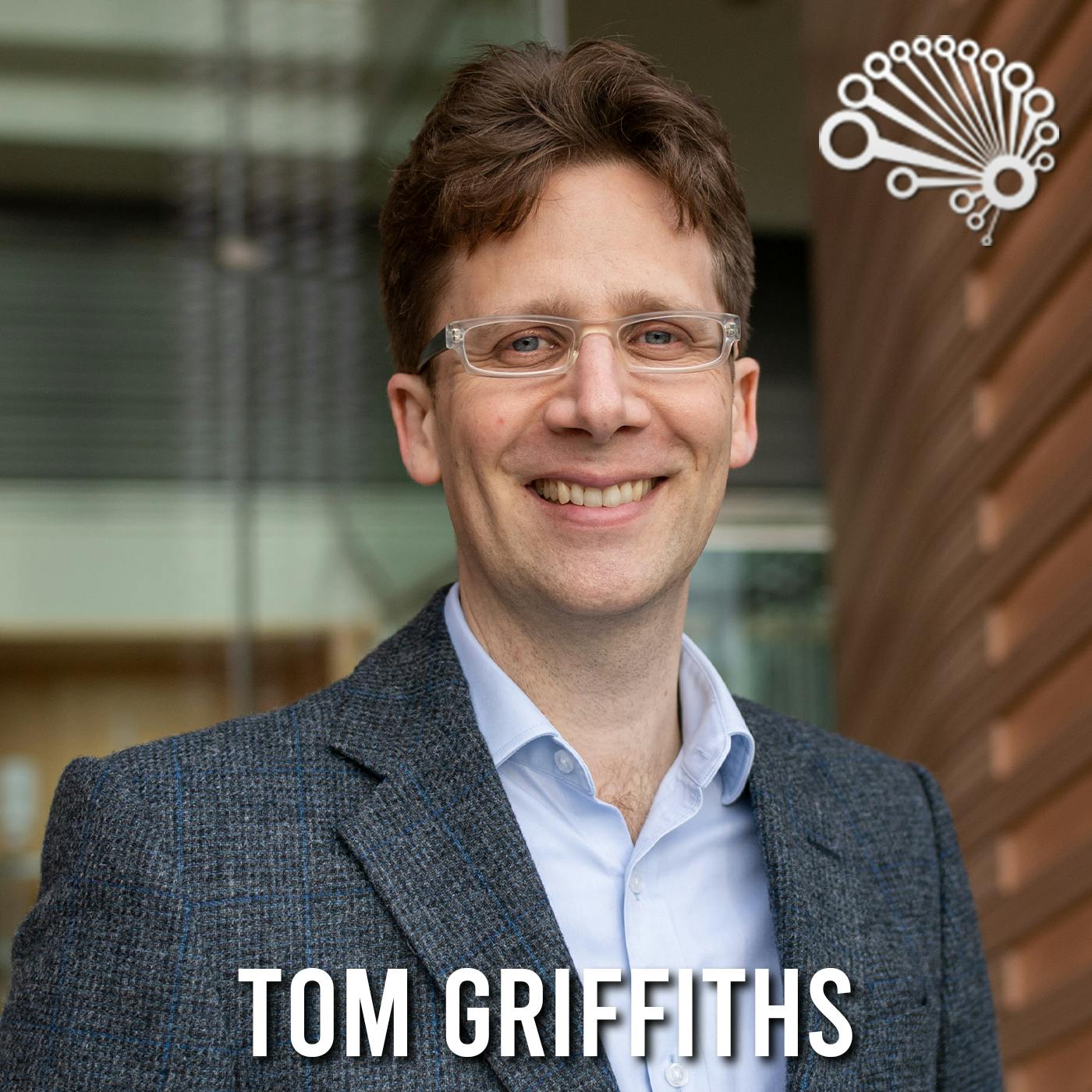
Human intelligence is shaped by limitations like a finite lifespan and small brain, forcing efficient learning from sparse data. AI lacks these constraints, learning from lifetimes of data with massive compute. This fundamental difference means AI will naturally evolve into a distinct, non-human form of intelligence unless we explicitly engineer human-like biases into it.

Raoul Pal posits that Artificial General Intelligence (AGI) represents the replacement of the 'Apex Intelligence.' Consequently, it will be the last technology of scale that humans invent, as all future innovation will be driven by AI itself, marking a fundamental turning point for humanity.