Get your free personalized podcast brief
We scan new podcasts and send you the top 5 insights daily.
AI isn't an independent creation but an extension of Earth's evolutionary history. It's a complex structure that could only be produced by a long-standing living system, making it a "signature of life" rather than a separate, non-living entity.

Related Insights
Agency emerges from a continuous interaction with the physical world, a process refined over billions of years of evolution. Current AIs, operating in a discrete digital environment, lack the necessary architecture and causal history to ever develop genuine agency or free will.
Intelligence is not a single trait but the culmination of a causal chain. The sequence begins with evolution enabling sensing, which necessitates memory. This leads to consciousness and imagination, which finally allows for free will — the sum total of which is intelligence.
The principle of evolution extends beyond biology to inanimate systems like minerals, cities, and AI. All these systems tend toward greater complexity and pattern over time, with Darwin's theory being a specific application for living organisms with genetic transfer.

Assembly theory bypasses ambiguous definitions of life by providing a quantifiable metric: the "assembly index." This measures an object's complex construction history. A high index, even in a molecule on Mars, would be strong evidence of life without directly seeing an organism.
We often think of "human nature" as fixed, but it's constantly redefined by our tools. Technologies like eyeglasses and literacy fundamentally changed our perception and cognition. AI is not an external force but the next step in this co-evolution, augmenting what it means to be human.

Consciousness isn't an emergent property of computation. Instead, physical systems like brains—or potentially AI—act as interfaces. Creating a conscious AI isn't about birthing a new awareness from silicon, but about engineering a system that opens a new "portal" into the fundamental network of conscious agents that already exists outside spacetime.

Human intelligence is fundamentally shaped by tight constraints: limited lifespan, brain size, and slow communication. AI systems are free from these limits—they can train on millennia of data and scale compute as needed. This core difference ensures AI will evolve into a form of intelligence that is powerful but alien to our own.
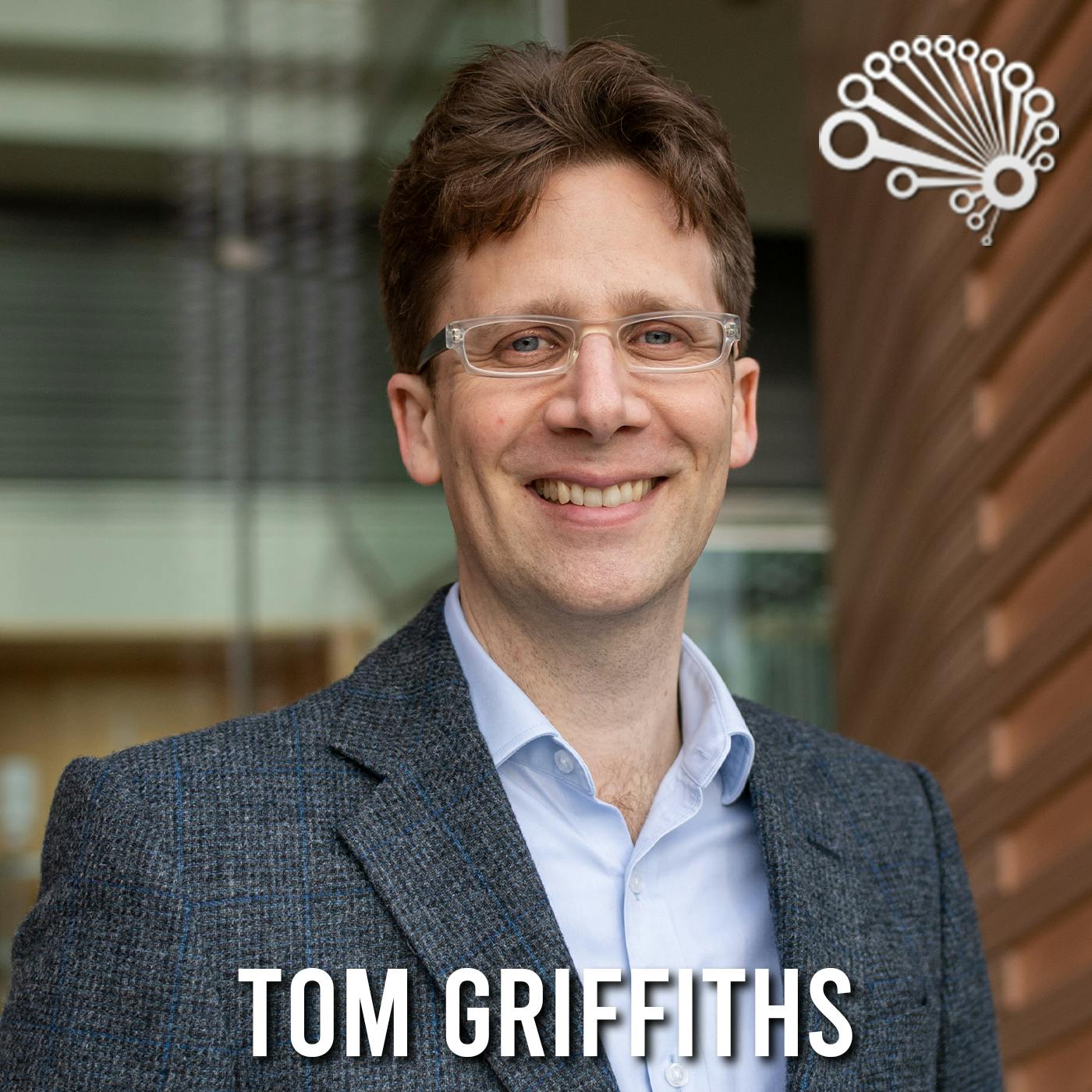
Human intelligence is shaped by limitations like a finite lifespan and small brain, forcing efficient learning from sparse data. AI lacks these constraints, learning from lifetimes of data with massive compute. This fundamental difference means AI will naturally evolve into a distinct, non-human form of intelligence unless we explicitly engineer human-like biases into it.

Karpathy cautions against direct analogies between AI and animal intelligence. Animals are products of evolution, an optimization process that bakes in hardware and instinct. In contrast, AIs are "ghosts" trained by imitating human-generated data online, resulting in a fundamentally different, disembodied kind of intelligence.

A more effective way to define life is not by its internal components (like RNA or metabolism) but by its unique capability. Life is any system that can recursively produce many identical copies of highly complex objects, a feat only achievable through evolution.