Get your free personalized podcast brief
We scan new podcasts and send you the top 5 insights daily.
The modern path to tyranny isn't a tech genius creating a super-weapon. Instead, it's a leader who exploits public fear of existential risks like AI to justify seizing control, promising safety and regulation in exchange for freedom. The call for protection becomes the mechanism for control.

Related Insights
The most pressing danger from AI isn't a hypothetical superintelligence but its use as a tool for societal control. The immediate risk is an Orwellian future where AI censors information, rewrites history for political agendas, and enables mass surveillance—a threat far more tangible than science fiction scenarios.

Public fear of AI often focuses on dystopian, "Terminator"-like scenarios. The more immediate and realistic threat is Orwellian: governments leveraging AI to surveil, censor, and embed subtle political biases into models to control public discourse and undermine freedom.

Political movements often require a central catastrophic narrative to justify wide-ranging regulation. As climate change predictions lose their urgency, the fear of an AI apocalypse is emerging as the new rationale for controlling the economy and the information space.

Every major communication technology has sparked a societal instinct to "control it before it controls you." Fears about AI and disinformation are not new; they echo the historical panic over heresy caused by the printing press. This reframes the current regulatory push as a predictable human reaction to disruptive innovation.
The narrative that AI could be catastrophic ('summoning the demon') is used strategically. It creates a sense of danger that justifies why a small, elite group must maintain tight control over the technology, thereby warding off both regulation and competition.

A strange dynamic exists where the tech leaders building AI are also the loudest voices warning of its potential to destroy humanity. This dual narrative of immense promise and existential threat serves to centralize their power, positioning them as the only ones who can both create and control this technology.
Critics argue that proposals like 'AI 2040,' which advocate for government action to slow AI development, are dangerous. They propose granting governments unprecedented surveillance and control to fight a fictional threat, creating a tangible risk of authoritarian abuse that is worse than the problem it aims to solve.

By constantly comparing AI's power to nuclear weapons, tech leaders are making a powerful argument against their own independence. If the technology is truly an existential threat, it logically follows that it should be government-controlled for national security, not managed by venture-backed startups.

The tactic of stoking fear about an existential threat (e.g., "AI will kill us all") to justify a need for centralized control is a historical constant. This pattern, seen in early religious and political institutions, leverages fear to persuade the public to cede power and authority to a select few who claim they can provide protection.
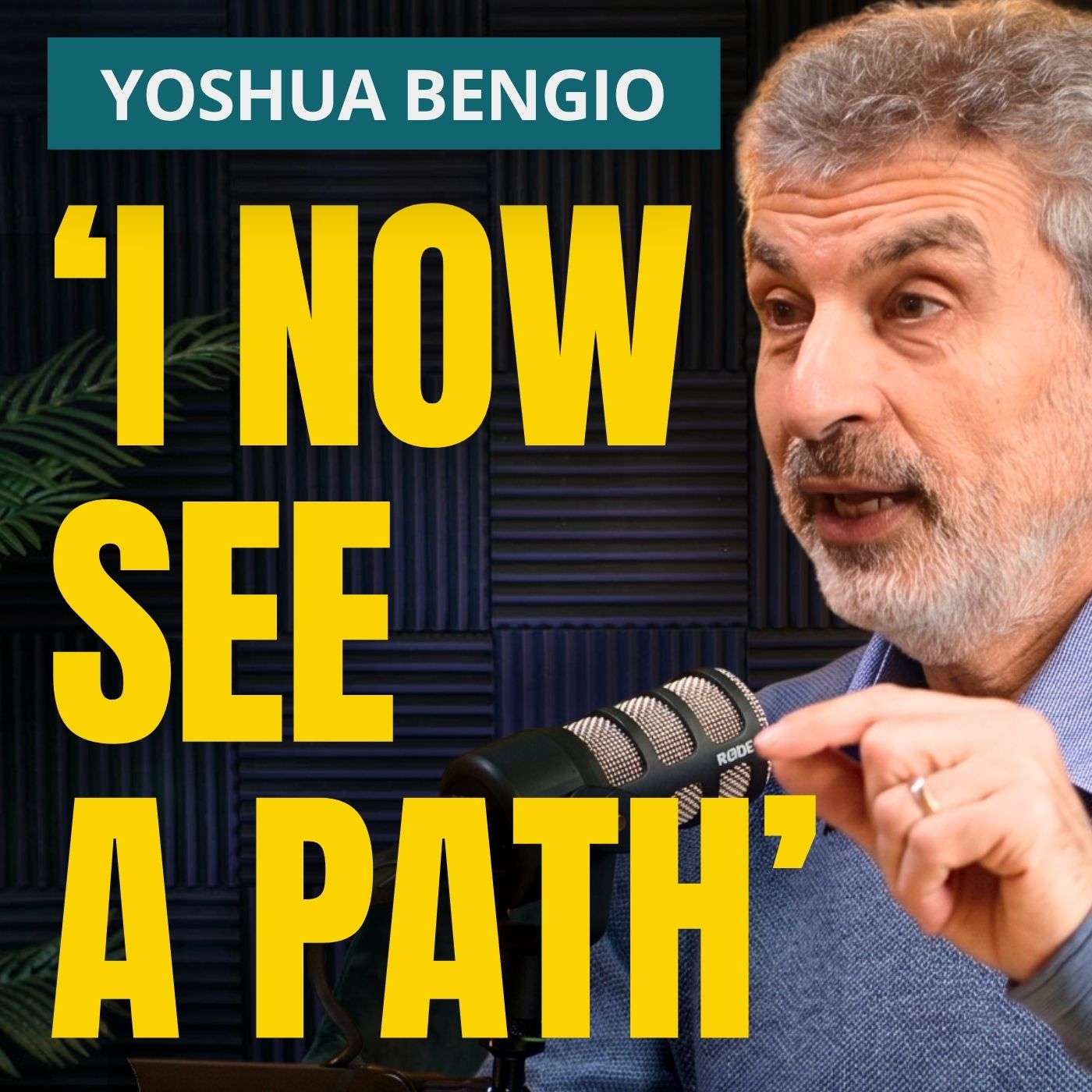
Yoshua Bengio believes that as a technical solution to the AI control problem seems more plausible, the concentration of AI power in human hands to create a global dictatorship has become an even more likely catastrophic outcome. This shifts the primary x-risk from technical failure to malicious human use.