Get your free personalized podcast brief
We scan new podcasts and send you the top 5 insights daily.
Jane Austen's work is deeply influenced by Adam Smith's *Theory of Moral Sentiments*. Her narrative techniques, particularly the management of character perspective, are designed to guide the reader in developing an "impartial spectator"—an internal moral compass—which is a central Smithian concept.

Related Insights
To make early novels feel like true accounts, authors like Jane Austen used em dashes to redact sensitive information like names or locations. This stylistic choice mimicked protecting real identities, adding a layer of authenticity and intrigue for readers.

Famous opening lines like 'It is a truth universally acknowledged...' are not the author's voice but an ironic representation of a small community's foolish consensus. These authoritative statements are almost always questionable or wrong, a device Austen uses to critique social gossip and groupthink.
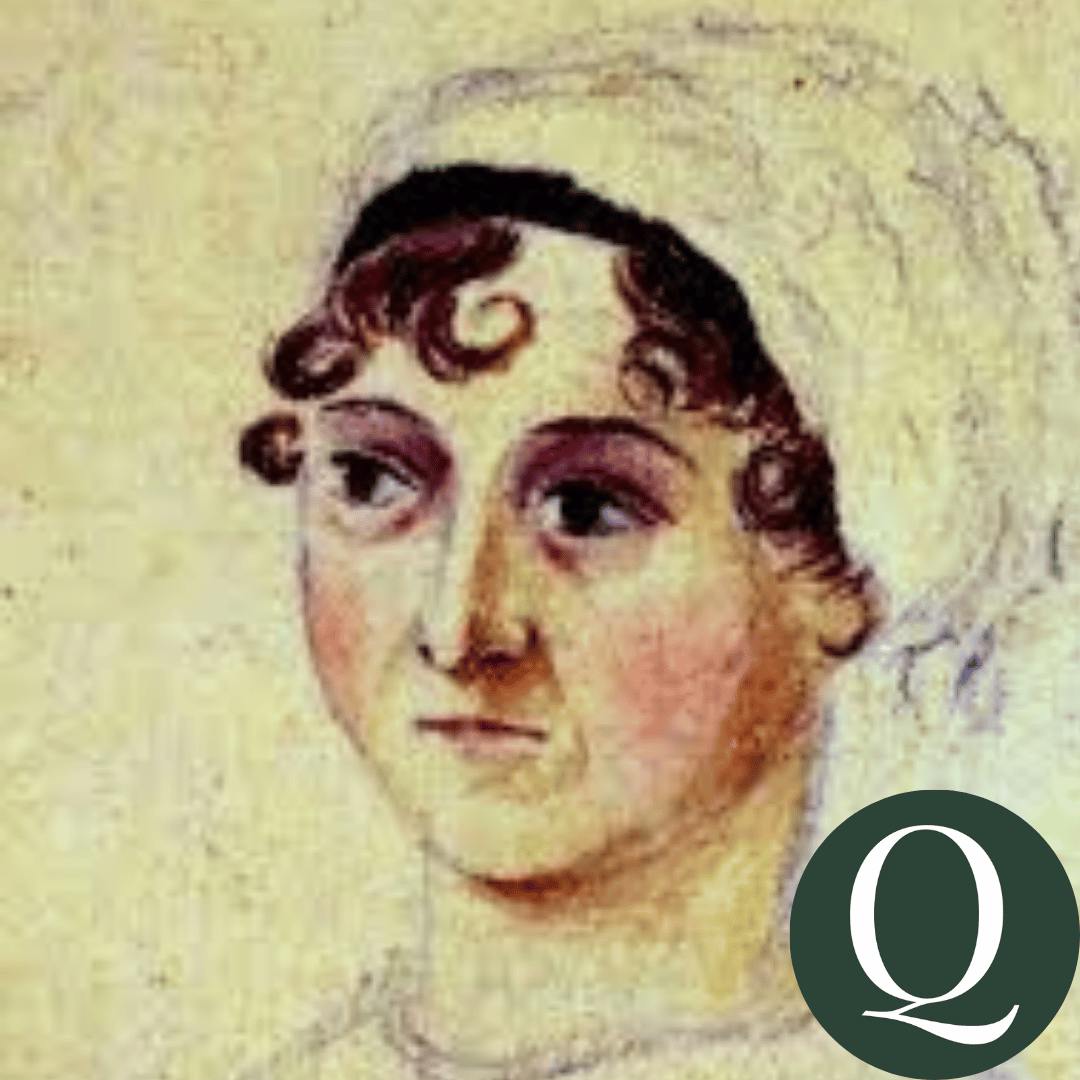
18th-century novels created a new literary form that explored the passions and ordinary lives of individuals. This cultural shift elevated the private sphere, previously considered unimportant, into a subject of value, fascination, and social anxiety.

Major philosophical texts are not created in a vacuum; they are often direct products of the author's personal life and historical context. For example, Thomas Hobbes wrote 'Leviathan,' which argues for an authoritarian ruler, only after fleeing the chaos of the English Civil War as a Royalist. This personal context is crucial for understanding the work.

Austen pioneered the 'free indirect style,' where the third-person narrative adopts a character's thoughts, feelings, and—crucially—their delusions. This forces the reader to actively distinguish a character's biased perspective from reality, a technique used powerfully to show internal conflict in novels like 'Persuasion' and 'Emma.'
The modal verb "must" is a key tell in Austen's writing. When a character's internal monologue insists something "must" be true, it often reveals they are trying to force a belief upon themselves against their true feelings. This simple word exposes a deep psychological struggle and internal conflict.
Despite her reputation for conservative subject matter, Austen's technical audacity was unprecedented. She introduced narrative techniques like free indirect style to English fiction, making her a true experimental writer of her time, developing these innovations in isolation without a literary community for feedback.
Adam Smith is often miscast as the originator of laissez-faire economics. In reality, his work viewed markets as embedded in human-created institutions like law and power structures, a perspective closer to institutionalism than modern neoclassical theory. The phrase "invisible hand" appears only once in his 800-page book.

In a move of supreme confidence, Austen sometimes concludes a chapter with a definitive statement from a character's perspective that the reader must discern is completely false. The line 'Her power with him was gone forever' in 'Persuasion' is the opposite of the truth, a trick that rewards attentive readers.
Austen's work possesses a unique duality: it is accessible enough for a 13-year-old to enjoy, yet so layered with technical and psychological complexity that scholars can reread it for a lifetime and continually discover new nuances. This blend of superficial simplicity and deep sophistication is her singular achievement.