Get your free personalized podcast brief
We scan new podcasts and send you the top 5 insights daily.
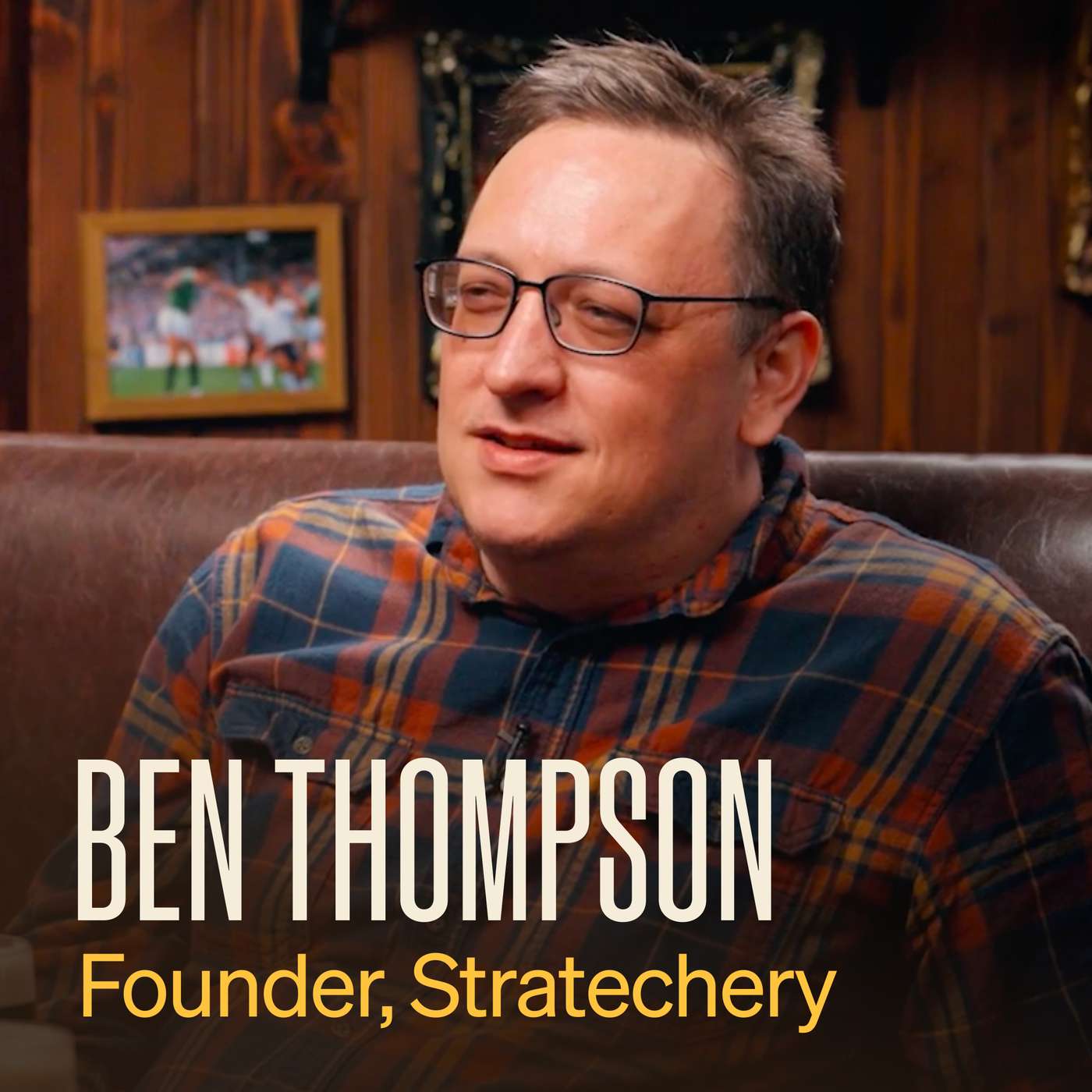
Ben Thompson advises that the key to success isn't fixing weaknesses, but hyper-focusing on strengths to generate exceptional value. Once successful, you can afford to hire people or use systems to manage the areas where you are weak, leading to a more optimized and effective outcome.
Related Insights
Counter to the 'hustle culture' narrative, business failure often isn't due to insufficient hard work. It stems from entrepreneurs expending immense energy on ineffective activities. Success requires focusing on a handful of the right strategic actions rather than trying to do everything at once.

A startup's success depends on many factors working in concert. Founders often default to their strengths (e.g., an engineer building the product). The correct, de-risking approach is to first tackle the biggest uncertainty or personal weakness, such as customer acquisition.

Early career advice focuses on fixing weaknesses. However, experienced leaders should shift their focus. While weaknesses must be mitigated so they don't become a liability, true effectiveness comes from understanding, amplifying, and deploying your core strengths, which is what ultimately makes you a great leader.

Drawing on Pareto's Principle, true growth isn't about working harder. It comes from identifying the 20% of your work that creates the most impact and having the courage to strategically eliminate the other 80%. This disciplined pursuit of less leads to exceptional results rather than diluted focus.

Shift your problem-solving mindset from personal execution to delegation and leverage. By seeking out mentors, coaches, or employees who have already solved your problem, you can achieve your goals more efficiently and avoid common pitfalls.

The most impactful career advice is to focus on becoming world-class in your innate strengths rather than trying to become mediocre in areas of weakness. It's more effective to elevate a core skill to an 'A' grade than to struggle to raise a weakness from a 'D' to a 'B'.

Instead of trying to change your natural working style to fit a traditional leadership model, hire people whose styles are complementary. If you're a disorganized night owl, actively recruit organized night owls. This transforms perceived weaknesses into a unique cultural strength and attracts talent who thrive in that specific environment.

Founders are "unicorns" with unique skill sets impossible to hire for in a single person. To scale and remove yourself as a bottleneck, break your responsibilities into their component parts (e.g., sales, marketing, product) and hire specialists for each, assembling a team that approximates your output, even at a lower margin.

The common advice to "follow your strengths" is insufficient for high achievement. Truly ambitious goals require you to become something more and develop entirely new skills. High performers focus on the goal and then systematically "build into" it by acquiring the necessary abilities, regardless of their current strengths.

Most entrepreneurs are trapped doing things they believe they *should* do, leading to burnout with minimal results. The Pareto Principle suggests 80% of your results come from 20% of your efforts. By auditing your activities to find that 20%, you can eliminate busywork and focus only on what truly moves the needle.