Get your free personalized podcast brief
We scan new podcasts and send you the top 5 insights daily.
When a leader consistently capitulates to market pressure (e.g., reversing tariffs when stocks drop), their "stop loss" becomes public knowledge. Adversaries can then weaponize markets, pushing them to that known pain point to force the leader's hand in geopolitical conflicts.

Related Insights
China's key learning from the past year is not that the U.S. lacks economic leverage, but that it lacks the political will to use it. Beijing perceives an unwillingness in Washington to endure domestic consequences, like higher consumer prices during an election year, to win a trade war.
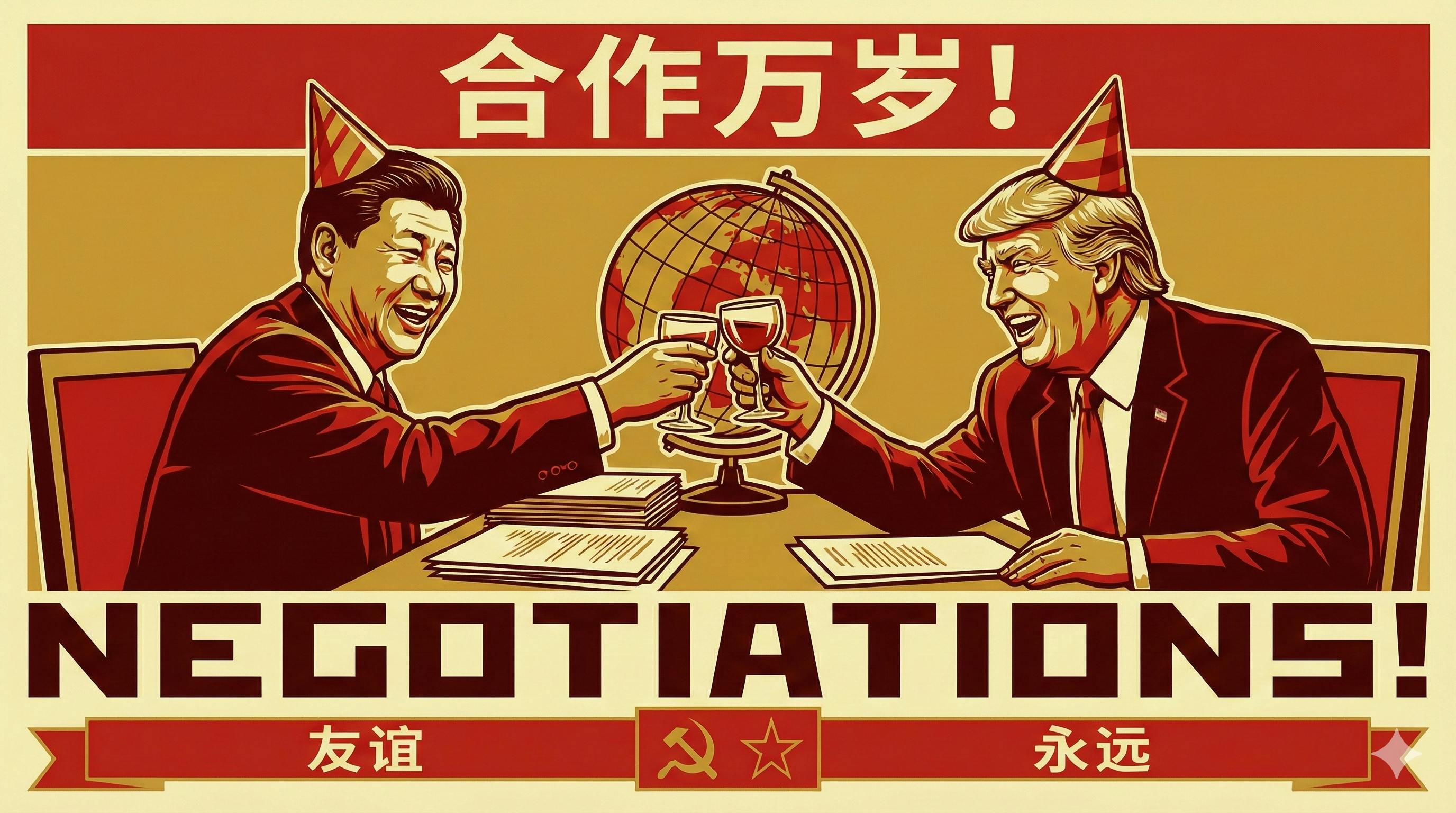
Modern global conflict is primarily economic, not kinetic. Nations now engage in strategic warfare through currency debasement, asset seizures, and manipulating capital flows. The objective is to inflict maximum financial damage on adversaries, making economic policy a primary weapon of war.
Analysis of President Trump's actions regarding Greenland reveals a pattern: he follows through on threats unless he receives significant pushback. The most effective pushback appears to be a negative financial market reaction, which has repeatedly caused him to de-escalate.

The European Union's most potent weapon against coercive US policy is not unified government action, which is slow and difficult. Instead, its true leverage lies in the ability of its large financial institutions, like pension funds, to signal moves that create market volatility and directly influence the White House.
The U.S. administration's attempt to acquire Greenland and subsequent tariff threats against European allies triggered a direct, named market reaction called the 'Sell America' trade. This saw countries like Denmark actively selling off U.S. treasuries, showing a direct link between diplomatic actions and investor behavior.

The market's reaction to prolonged conflict can pressure political leaders to de-escalate. Citing past policy reversals after market dips, this 'Trump put' theory suggests financial markets can effectively force an end to military engagements when they become too costly for the economy.
The "TACO" acronym serves as a predictive model for Trump's foreign policy. It suggests a pattern of aggressive posturing and military action followed by a rapid search for a diplomatic "off-ramp" once resistance is met. Markets and adversaries can anticipate this behavior, expecting a short conflict despite initial escalation.
Iran effectively weaponized the Strait of Hormuz not with mines, but by creating enough uncertainty to make UK-based insurance companies pull out. This demonstrates how financial systems can be leveraged as powerful geopolitical choke points.

Donald Trump's seemingly chaotic tariff policy functions as a 'mixed strategy' in game theory. By introducing randomness and forcing a response, he makes other nations reveal their true intentions, distinguishing allies willing to negotiate from rivals who default to immediate hostility, such as China.

Traditional protests are ineffective against an administration that prioritizes market performance above public opinion. The most potent form of resistance is to create economic instability, as this is the only language such leadership understands and responds to, forcing a reaction where outrage fails.
