Get your free personalized podcast brief
We scan new podcasts and send you the top 5 insights daily.
Trump's direct, aggressive actions often achieve immediate goals (first-order consequences). However, this approach frequently fails to anticipate the strategic, long-term responses from adversaries like China (second and third-order consequences), potentially creating larger, unforeseen problems down the road.

Related Insights
The dynamic between a rising power (China) and a ruling one (the U.S.) fits the historical pattern of the "Thucydides' trap." In 12 of the last 16 instances of this scenario, the confrontation has ended in open war, suggesting that a peaceful resolution is the exception, not the rule.

Trump's erratic approach isn't random; it's a strategy to create chaos and uncertainty. This keeps adversaries off-balance, allowing him to exploit openings that emerge, much like a disruptive CEO. He is comfortable with instability and uses it as a tool for negotiation and advantage.

The administration was influenced by bearish Wall Street analyses after China's zero-COVID policy and the "Peak China" narrative in the strategic community. This led them to believe China was economically weaker than it was, causing them to miscalculate China's ability and willingness to retaliate in a trade war.
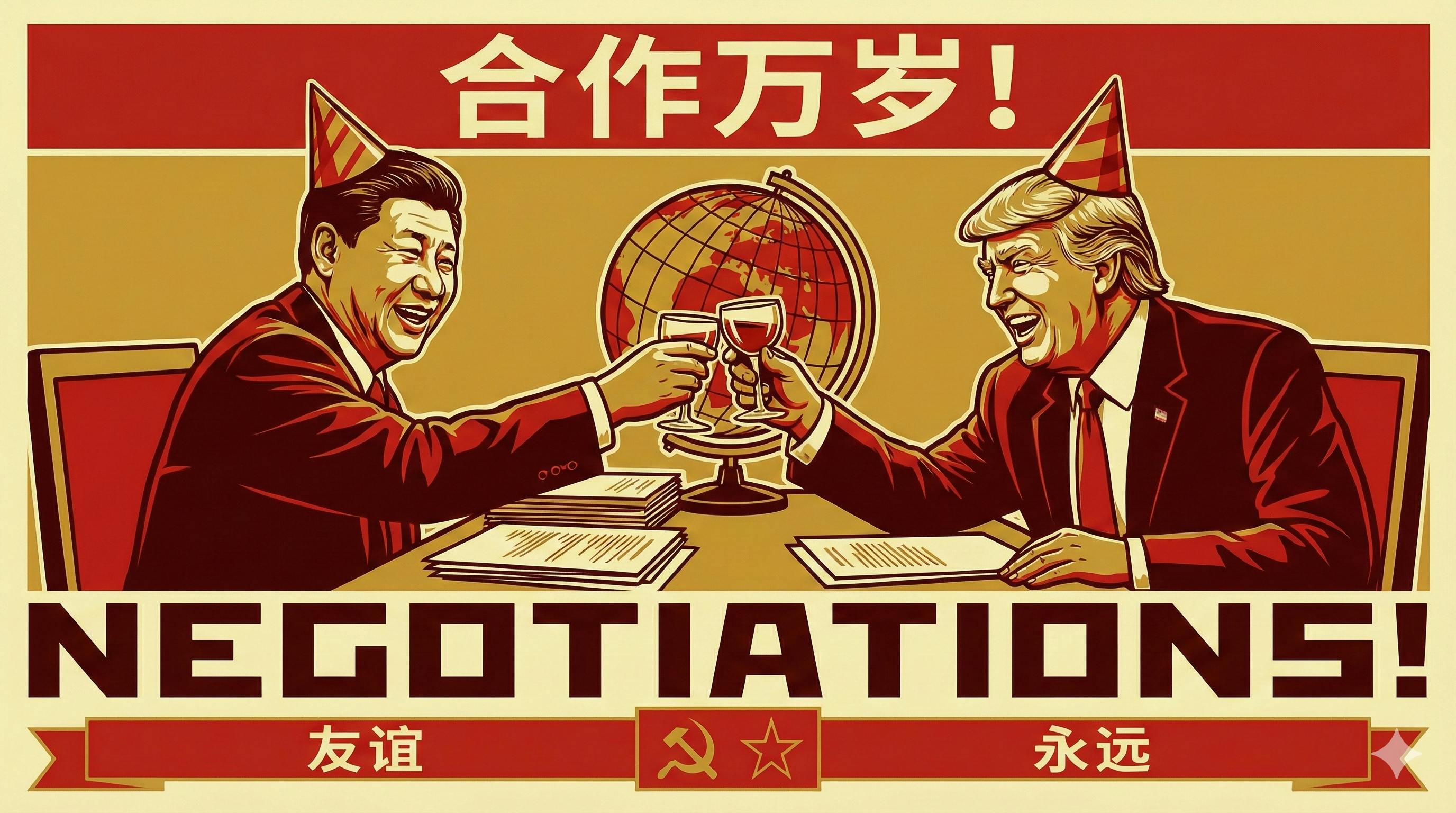
The core driver of a 'Thucydides Trap' conflict is the psychological distress experienced by the ruling power. For the U.S., the challenge to its identity as '#1' creates a disorienting fear and paranoia, making it prone to miscalculation, independent of actual military or economic shifts.

Trump's 'hokey pokey' with tariffs and threats isn't indecisiveness but a consistent strategy: make an agreement, threaten a severe and immediate penalty for breaking it, and actually follow through. This makes his threats credible and functions as a powerful deterrent that administrations lacking his perceived volatility cannot replicate.

President Trump repeatedly takes actions that foreign policy experts predict will be catastrophic. When these gambles do not result in the worst-case scenario, it reinforces his unconventional approach in the public eye and erodes the credibility of traditional institutions and their warnings.
Trump's seemingly chaotic approach is best understood as a CEO's leadership style. He tells his staff what to do rather than asking for opinions, uses disruption as a negotiation tactic, and prioritizes long-term outcomes over short-term public opinion or procedural harmony.

A former National Security Council staffer observed that President Trump's decisions often seemed counterintuitive in the moment but were later revealed as brilliant strategic "chess moves." This pattern built a high degree of trust among staff, enabling them to execute his vision without always understanding the immediate rationale.

Donald Trump's seemingly chaotic tariff policy functions as a 'mixed strategy' in game theory. By introducing randomness and forcing a response, he makes other nations reveal their true intentions, distinguishing allies willing to negotiate from rivals who default to immediate hostility, such as China.

True strategic decision-making involves evaluating trade-offs and understanding the opportunity cost of the chosen path. If you cannot articulate what you chose *not* to do, you didn't make a conscious decision; you simply reacted to a situation and applied a strategic label in retrospect.
