Get your free personalized podcast brief
We scan new podcasts and send you the top 5 insights daily.
The AI agent startup Hey Clicky employs a sophisticated harness. It uses the fast and cheap GPT real-time model to interpret user intent and then route the request to a more capable but expensive model like Fable 5, optimizing both cost and performance.

Related Insights
Enterprises are currently overspending on tokens by sending all queries to the most powerful LLMs. A new software category will emerge to intelligently route requests to smaller, cheaper models when possible, creating a critical efficiency and cost-saving layer between companies and foundational model providers.

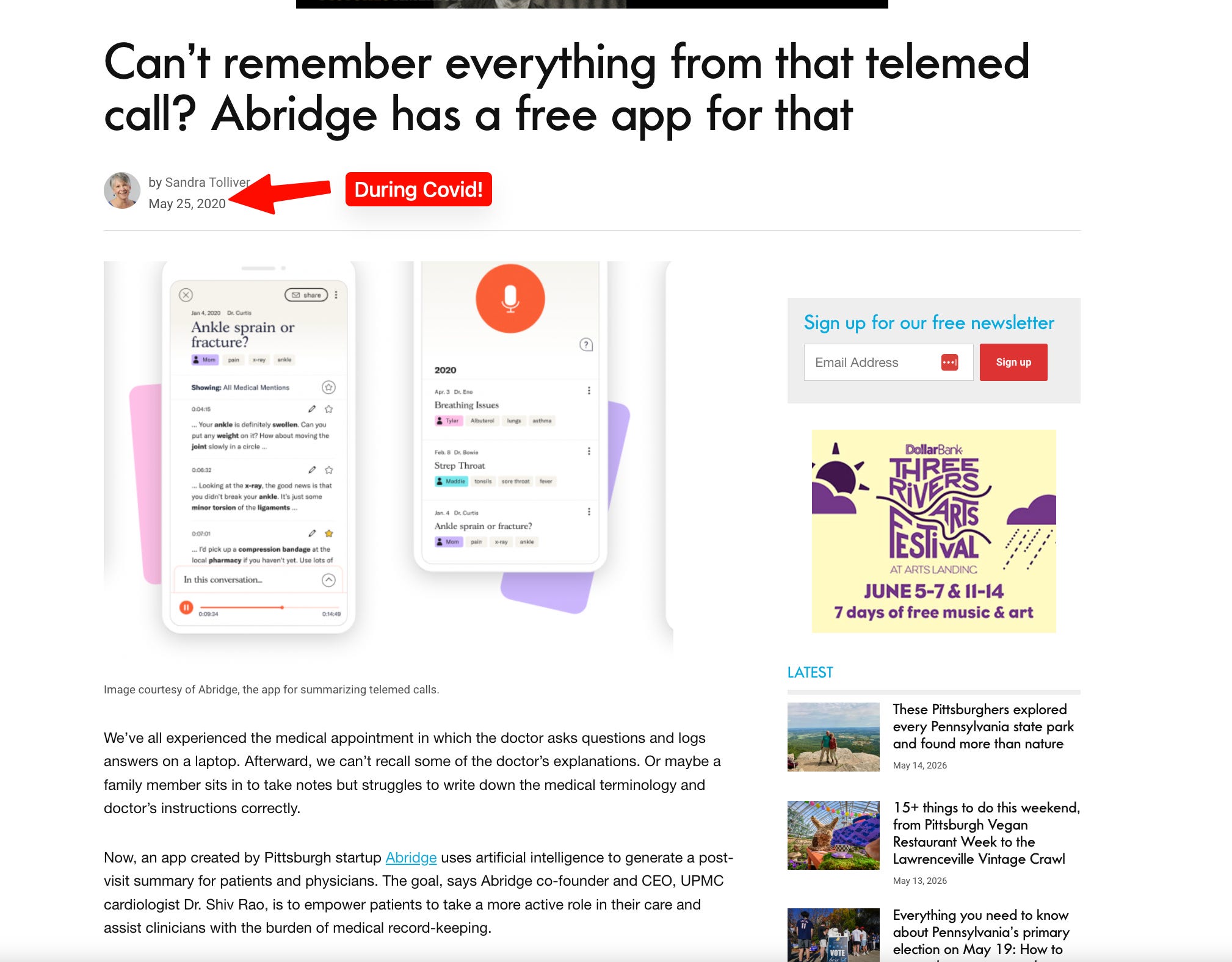
To provide high-quality AI insights in real-time without prohibitive costs, Abridge employs a "fast and slow" thinking approach. It uses a constellation of models, where a cheaper, faster model first triages a situation and then hands off complex tasks to a more powerful, expensive model only when necessary.
An effective cost-saving strategy for agentic workflows is to use a powerful model like Claude Opus to perform a complex task once and generate a detailed 'skill.' This skill can then be reliably executed by a much cheaper and faster model like Sonnet for subsequent use.

Advanced AI architectures will use small, fast, and cheap local models to act as intelligent routers. These models will first analyze a complex request, formulate a plan, and then delegate different sub-tasks to a fleet of more powerful or specialized models, optimizing for cost and performance.
Legal AI firm Harvey proved a hybrid system—using a smaller model as a primary worker and routing selectively to a frontier model as an "advisor"—can beat a frontier-only approach on both quality and cost. This demonstrates that intelligent orchestration is a more effective strategy than simply using the most powerful model for every task.

Companies are building intelligent systems that analyze a user's prompt and automatically route it to the most cost-effective model that can handle the task. This avoids using expensive frontier models for simple requests, with some companies like Coinbase successfully keeping costs flat despite exponential usage growth.

To optimize costs, users configure powerful models like Claude Opus as the 'brain' to strategize and delegate execution tasks (e.g. coding) to cheaper, specialized models like ChatGPT's Codec, treating them as muscles.
A hybrid approach to AI agent architecture is emerging. Use the most powerful, expensive cloud models like Claude for high-level reasoning and planning (the "CEO"). Then, delegate repetitive, high-volume execution tasks to cheaper, locally-run models (the "line workers").
Top-tier language models are becoming commoditized in their excellence. The real differentiator in agent performance is now the 'harness'—the specific context, tools, and skills you provide. A minimalist, well-crafted harness on a good model will outperform a bloated setup on a great one.

To manage high API costs, a hybrid architecture is emerging. Startups use powerful models like Anthropic's Fable 5 to generate reusable 'skills' (as simple text files), which are then executed by cheap, efficient local models running on-device.