Get your free personalized podcast brief
We scan new podcasts and send you the top 5 insights daily.
While training AI models is a compute-bound problem where more flops yield better results, inference (running the model) is memory-bound. Each token generation requires reading all model weights from memory, making memory bandwidth, not raw processing power, the primary performance bottleneck.

Related Insights
A "roofline analysis" reveals that LLM performance is limited by the slower of two factors: the time it takes to fetch model parameters from memory (memory-bound) or the time it takes to perform matrix multiplications (compute-bound). Optimizing performance requires identifying and addressing the correct bottleneck.

The "memory wall" is a growing chasm between compute power and memory access. In the last decade, GPU flops improved 120-fold, but memory bandwidth only increased 17-fold. This divergence makes memory-bound workloads like AI inference an increasingly severe bottleneck for modern hardware.
AI workloads are limited by memory bandwidth, not capacity. While commodity DRAM offers more bits per wafer, its bandwidth is over an order of magnitude lower than specialized HBM. This speed difference would starve the GPU's compute cores, making the extra capacity useless and creating a massive performance bottleneck.

Top inference frameworks separate the prefill stage (ingesting the prompt, often compute-bound) from the decode stage (generating tokens, often memory-bound). This disaggregation allows for specialized hardware pools and scheduling for each phase, boosting overall efficiency and throughput.
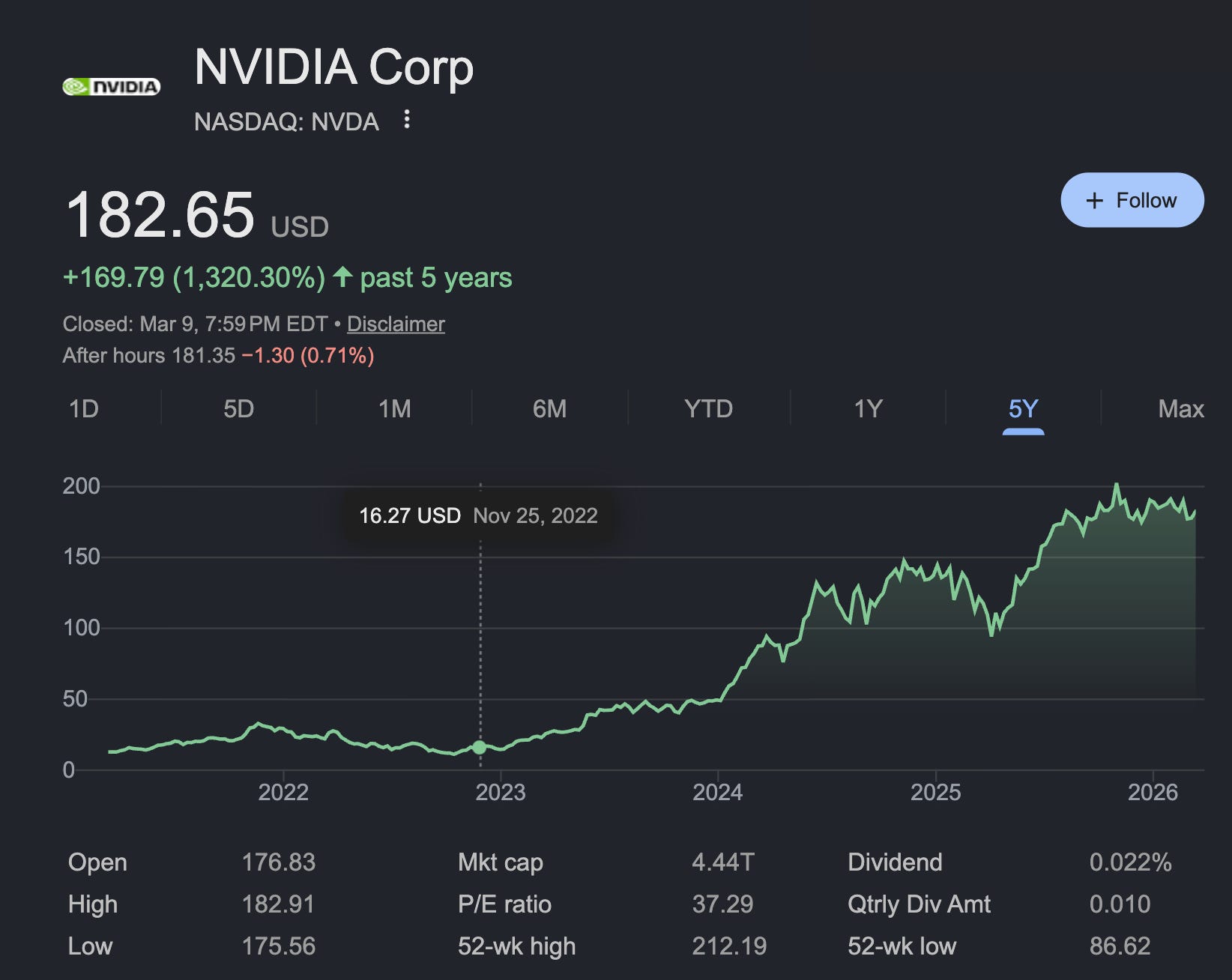
As AI models evolve to mirror the human brain, their memory requirements are skyrocketing, creating a 'RAMpocalypse.' The industry's focus will shift from being purely compute-centric to a dual focus on memory and compute, making high-bandwidth memory a critical and scarce resource.

For any given hardware, there is a fundamental lower bound on inference latency. This "latency floor" is the time required to load the model's total parameters from memory (e.g., HBM) onto the chip. This process cannot be sped up by reducing batch size or other software tricks.
While many focus on compute metrics like FLOPS, the primary bottleneck for large AI models is memory bandwidth—the speed of loading weights into the GPU. This single metric is a better indicator of real-world performance from one GPU generation to the next than raw compute power.

While speed benchmarks are flashy, a model's memory usage is the true determinant of its viability. In real-world applications, AI models must share limited resources with other processes, making a low memory footprint more critical than a marginal speed advantage for successful deployment.

Previously, the biggest constraint in AI was compute for training next-gen models. Now, the critical bottleneck is providing enough compute for *inference*—the real-time processing of queries from a rapidly growing user base.

GPUs are ill-suited for generating output tokens because they process models in discrete chunks called "kernels." This method requires constant data transfer to and from external memory, creating a significant bottleneck limited by memory bandwidth, which ultimately slows down real-time inference.