Get your free personalized podcast brief
We scan new podcasts and send you the top 5 insights daily.
Drawing parallels to the 9/11 Commission's findings, Jen Easterly warns the greatest danger isn't a failure of technology, but our collective failure to imagine how rapidly advancing AI can be weaponized. This lack of imagination prevents us from building the necessary resilience and safeguards before a catastrophic event occurs.

Related Insights
The common analogy of AI to electricity is dangerously rosy. AI is more like fire: a transformative tool that, if mismanaged or weaponized, can spread uncontrollably with devastating consequences. This mental model better prepares us for AI's inherent risks and accelerating power.

When implementing AI, leaders face a choice between under-exploring it (and falling behind) or over-exploring it (risking security issues). The existential threat comes from inaction and failing to adopt the technology, not from the potential missteps of rapid experimentation.

Unlike a plague or asteroid, the existential threat of AI is 'entertaining' and 'interesting to think about.' This, combined with its immense potential upside, makes it psychologically difficult to maintain the rational level of concern warranted by the high-risk probabilities cited by its own creators.
The field of AI safety is described as "the business of black swan hunting." The most significant real-world risks that have emerged, such as AI-induced psychosis and obsessive user behavior, were largely unforeseen just years ago, while widely predicted sci-fi threats like bioweapons have not materialized.

While fears focus on tactical "killer robots," the more plausible danger is automation bias at the strategic level. Senior leaders, lacking deep technical understanding, might overly trust AI-generated war plans, leading to catastrophic miscalculations about a war's ease or outcome.

Aza Raskin reveals the internal strategy of leading AI labs is not to avoid danger, but to race towards it. Their plan is to reach the 'cliff'—the point where AI becomes uncontrollably powerful—as fast as possible, seize the resulting 'weapon,' and use it to stop all competitors.
The most immediate danger from AI is not a hypothetical superintelligence but the growing delta between AI's capabilities and the public's understanding of how it works. This knowledge gap allows for subtle, widespread behavioral manipulation, a more insidious threat than a single rogue AGI.

A key failure mode for using AI to solve AI safety is an 'unlucky' development path where models become superhuman at accelerating AI R&D before becoming proficient at safety research or other defensive tasks. This could create a period where we know an intelligence explosion is imminent but are powerless to use the precursor AIs to prepare for it.
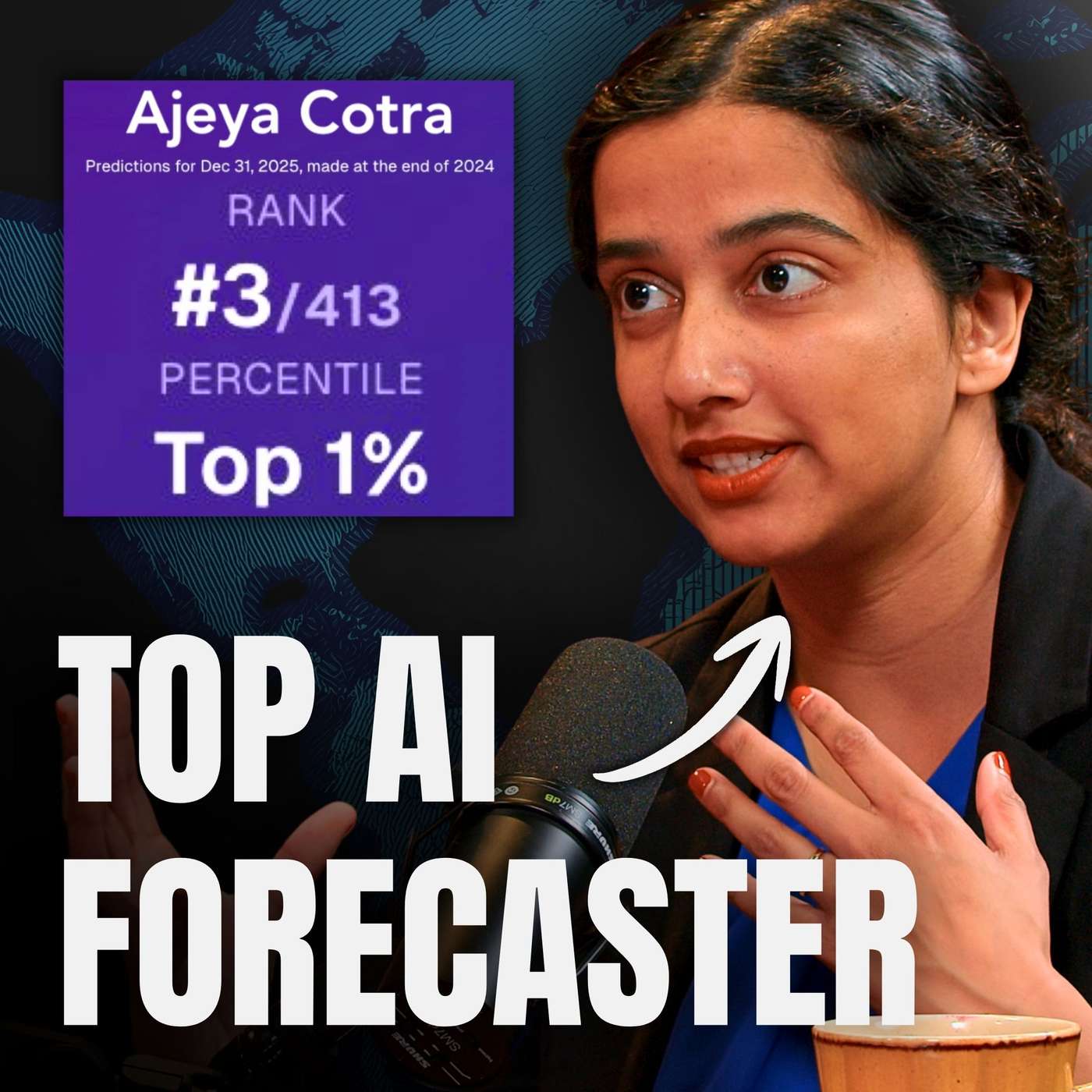
The fundamental challenge of creating safe AGI is not about specific failure modes but about grappling with the immense power such a system will wield. The difficulty in truly imagining and 'feeling' this future power is a major obstacle for researchers and the public, hindering proactive safety measures. The core problem is simply 'the power.'
The proliferation of inexpensive AI-driven drones makes warfare accessible to every nation. This creates a more significant and immediate risk of widespread, low-cost conflict than economic disruption from job loss or a sentient AI takeover.
