Get your free personalized podcast brief
We scan new podcasts and send you the top 5 insights daily.
OpenAI is not building a broad suite of apps. Brockman clarifies their product focus is on anything that ladders up to a singular vision: an AGI that serves as a trustworthy partner in a user's life. This AI will proactively help users define and achieve goals across work, health, finance, and career pursuits.
Related Insights
OpenAI initially experimented broadly with 'side quests' like a hyperscaler (e.g., Google), launching many initiatives. Facing intense competition and the need to scale compute, it's now consolidating its focus on the 'main quest' of core productivity for business and coding users, marking a significant strategic shift.

OpenAI's vision extends beyond the chatbot. While natural language chat is a powerful way for users to express intent, the final deliverable shouldn't be a wall of text. True value comes when the AI produces a tangible artifact, like a travel plan, or a completed action.

OpenAI's Greg Brockman is shifting the narrative from a single, universal AGI to "Personal AGI." This concept describes an AI that, through deep memory and context, becomes so attuned to an individual that it effectively functions as a general intelligence for their specific life and work.
The future of work isn't just using AI as a tool, but managing it. Greg Brockman describes a paradigm where users act as high-level overseers, setting goals for a "fleet of agents" that handle the low-level execution, abstracting away details like clicking buttons or writing specific formulas.

Unlike prior tech waves where founders aimed to build companies, many top AI founders are singularly focused on achieving AGI. This unified "North Star" creates a unique tension between long-term research and near-term product goals, leading to unconventional founder and company dynamics.

Sam Altman describes his ideal product: a to-do list where adding a task triggers an AI agent to attempt completion. This model—where the AI proactively works, asks for clarification, and integrates with manual effort—represents a profound shift in productivity software.
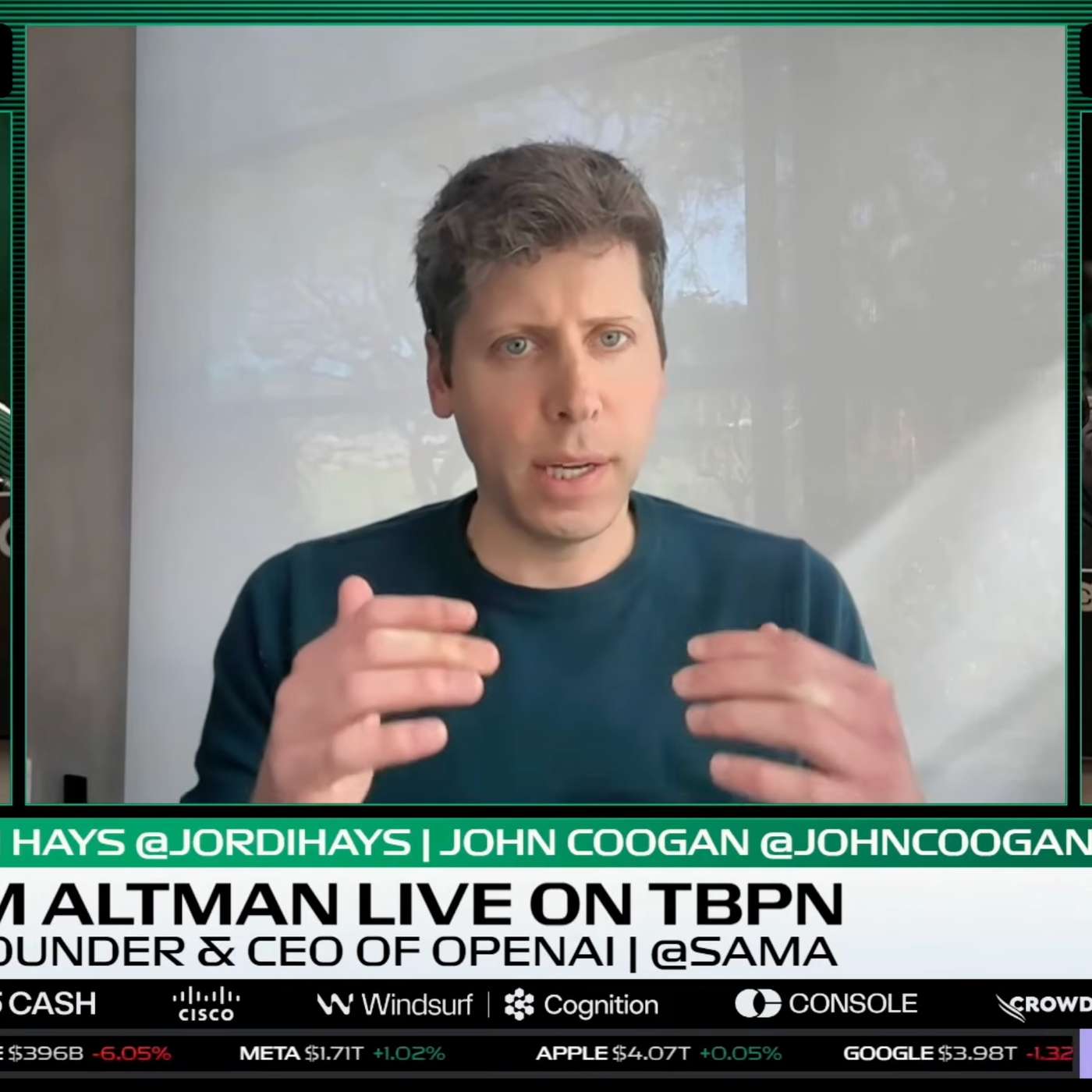
Sam Altman's ultimate vision for software isn't AI-assisted messaging but a proactive agent. Instead of managing Slack, users will state their goals for the day, and the AI will handle communication and tasks, providing batched updates. This signals a shift from augmenting existing workflows to replacing them entirely.
By shelving consumer-facing "side quests" like video generation, OpenAI's strategy now directly mirrors Anthropic's. This transforms the AI race from a consumer vs. enterprise competition into a direct fight to build the dominant "agentic" AI that can control devices and execute complex tasks for users.
The planned Superapp combining coding, browsing, and chat is more than a UI consolidation. The deeper, more critical goal is to merge multiple backend systems into a single, unified 'AI harness' that manages context, actions, and interaction loops. This creates a powerful, efficient AI layer for various applications.
The philosophical AGI debate is being replaced by a pragmatic focus on 'Work AGI.' Companies like OpenAI are orienting their entire strategy around automating and accelerating the economy by executing complex chains of knowledge work tasks, not just single, discrete actions.
