Get your free personalized podcast brief
We scan new podcasts and send you the top 5 insights daily.
Upon taking over in 1984, Michael Eisner and Frank Wells immediately raised stagnant theme park prices. This generated high-margin, incremental cash flow which they used to fund the live-action film studio's revival, proving that pricing power in one division can fuel growth in another.

Related Insights
Unlike a tech or service business, the core value of a theme park is the physical, irreplaceable asset itself. This provides a margin of safety against management mistakes. While poor decisions can hurt performance, it is difficult to permanently destroy the value of a well-located, branded physical park, making it a more durable investment.

Despite strong performance in Parks and streaming, Disney's stock is flat because the market values the entire conglomerate based on its weakest segment: declining linear networks. Spinning off these "bad bank" assets would unlock the true value of the high-growth divisions.

The argument that Disney's market cap is less than its acquisition costs presents a flawed picture of value creation. This analysis fails to account for the approximately $70 billion returned to shareholders via dividends and buybacks over the same period. A true assessment of an M&A strategy's success must include capital returned, not just final enterprise value.

The predictable, massive cash flow from ESPN's cable affiliate fees became Disney's engine for strategic growth. This separate, non-core business provided the billions needed to acquire the IP giants of Pixar, Marvel, and Lucasfilm, effectively bankrolling the modern Disney empire.
While theatrical films define Disney in the public consciousness, they represent a tiny fraction of its business. The box office now serves as a marketing engine for the true profit centers: streaming subscriptions, parks, cruises, and merchandise, which together make up 97% of the company's revenue.
At Parks America, Ralph Moliner's team used a framework from a Disney consultant to predict attendance based on regional factors like school breaks and traffic patterns. This allowed them to right-size capital expenditures and marketing, successfully turning around an unprofitable asset.

Despite producing the vast majority of billion-dollar blockbusters, Disney's film studio profits have collapsed 60% since pre-pandemic levels. This reveals that box office success is not a reliable indicator of financial health. Disney has become a theme park company where the film division, despite its cultural impact, is no longer the primary profit driver.

In the decades after the deaths of Walt and Roy Disney, the company's creative core rotted. By 1984, the once-dominant film and TV division was barely breaking even, while parks and consumer products generated a quarter-billion in profit. Disney had become a company that simply harvested its past successes.
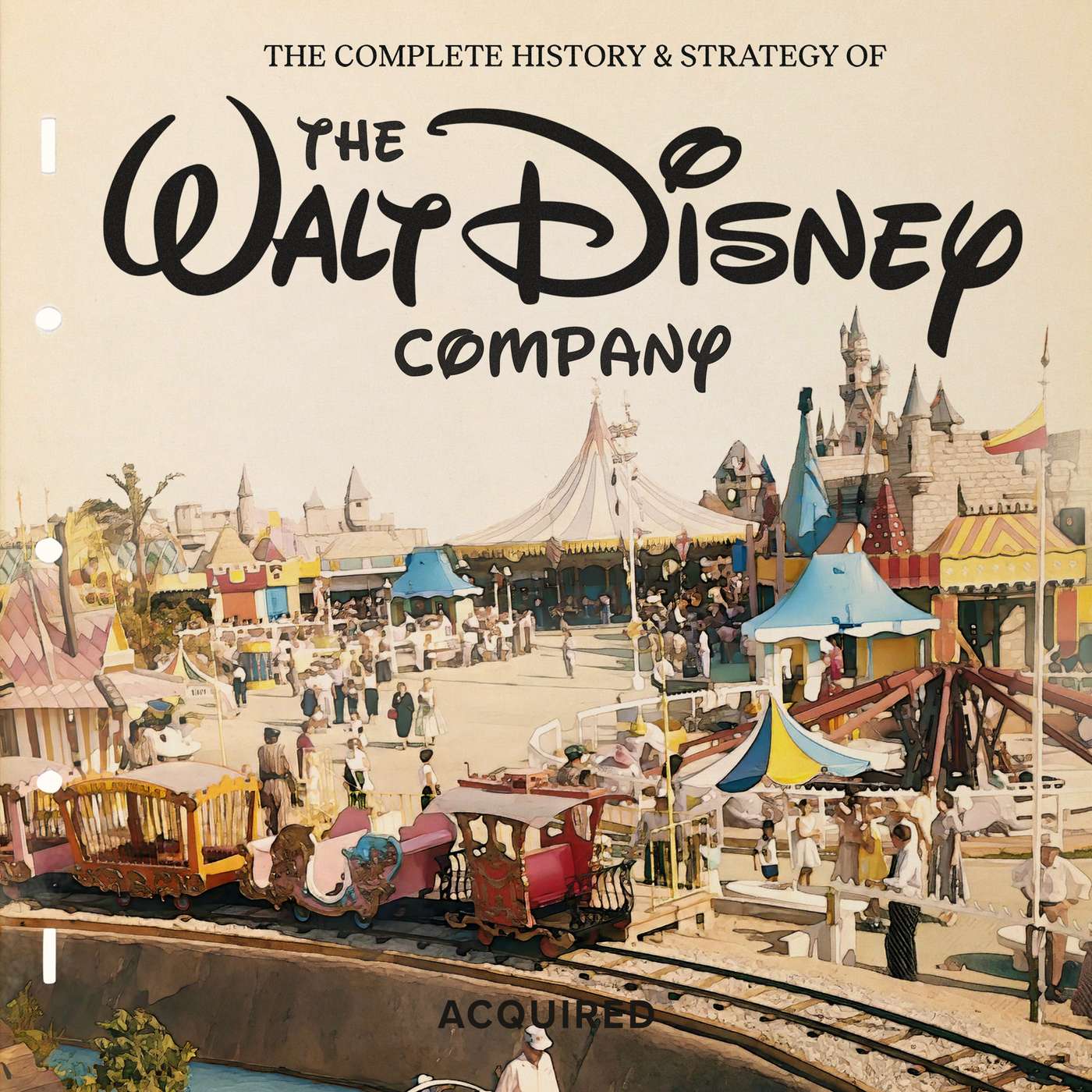
While other studios feared TV as a threat to theaters, Walt Disney embraced it as a strategic tool. He leveraged a partnership with the struggling ABC network, trading a weekly TV show for the crucial financing and nationwide marketing needed to launch the ambitious Disneyland park.
Even with world-class IP and a booming parks business, Disney's stock trades below its 2016 levels. This mismatch between asset value and market performance creates a significant opening for an activist investor to force a major restructuring or sale.