Get your free personalized podcast brief
We scan new podcasts and send you the top 5 insights daily.
To better engage retail investors, Robinhood transformed its quarterly earnings calls into live, video events modeled on post-game NBA press conferences. This format is more engaging for viewers, allows retail shareholder questions, and is now attracting other public companies to follow suit.

Related Insights
Instead of quietly fixing a slow 3-day settlement period, Robinhood bundled the fix with other improvements and marketed it as a major new product called "Robinhood Instant." This strategy of "productizing" a feature meant to catch up to competitors successfully tripled their trading volume.

Robinhood's CEO contrasts the COVID-era retail trading craze, driven by 'ephemeral' theses like nostalgia, with today's more 'meaningful' activity. He observes that current retail investors are focused on substantive tech waves like AI, backing companies with real revenue, indicating a market maturation.
To better engage its retail investor base, Opendoor's IR team rapidly shifted from traditional audio calls to video livestreams on platforms like Robinhood. This strategy meets modern investors where they are, rather than forcing them into staid, institutional Wall Street forums, demonstrating that even compliance functions can innovate.

The term 'webinar' carries negative connotations. Simply changing the name to something more exclusive or engaging, like a 'live panel' or 'live insider session,' can significantly increase sign-ups for the exact same content and marketing plan.

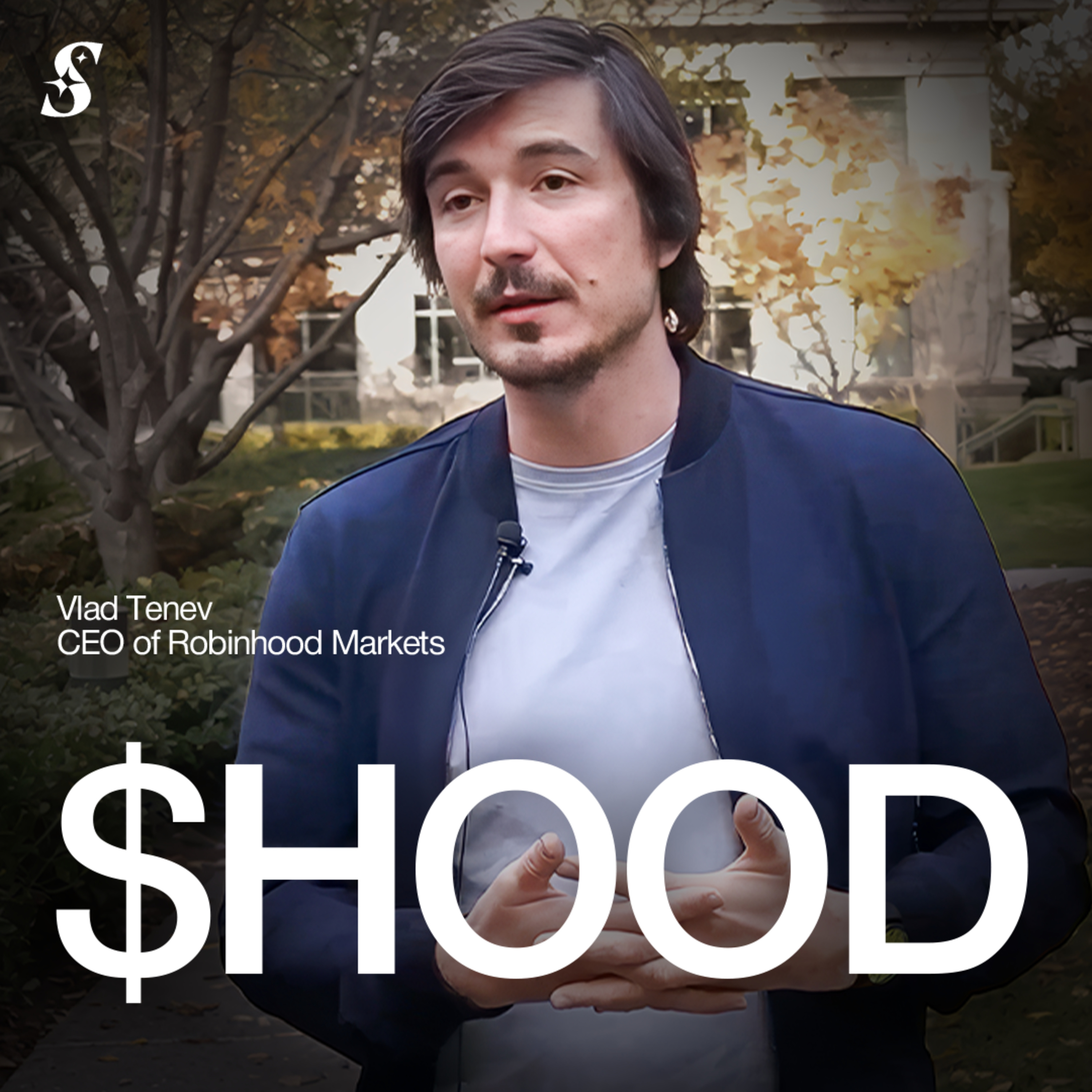
By reimagining dull earnings calls as engaging media events with live video and retail investor Q&A, Robinhood increased its audience from hundreds to over 100,000. CEO Vlad Tenev borrowed from the entertaining, unscripted format of NBA post-game interviews to better connect with all shareholders.
To overcome adverse selection and win competitive private market deals, Robinhood differentiates itself from traditional VCs. Its pitch to hot startups is unique access to a base of 'mom and pop' retail investors as stakeholders, a value proposition no other venture capital firm can offer.

CEO Vlad Tenev considers 2022 the "refounding" of Robinhood. The business model strategically shifted from catering primarily to first-time investors to focusing on more sophisticated, resilient active traders. This pivot drove a 5x increase in product velocity (from one to five major new products per year) and built a more cycle-agnostic business.
![Robinhood: Mobile First, Margins Later - [Business Breakdowns, EP.233] thumbnail](https://megaphone.imgix.net/podcasts/943e2e96-b60b-11f0-9176-5bf614c23973/image/074f062475dc76689adfc59319a4e04d.jpg?ixlib=rails-4.3.1&max-w=3000&max-h=3000&fit=crop&auto=format,compress)
To avoid the fate of legacy financial firms struggling to attract young customers, Robinhood heavily recruits interns and early-career talent. This ensures the company's internal culture and product perspective remains connected to the younger generation it aims to serve, embedding their point of view directly into the business.

Despite private capital availability, the scrutiny of being a public company imposes healthy discipline. It forces better prioritization and maturity, which is ultimately beneficial for long-term growth and provides access to the world's deepest capital pools.

Beyond providing access to late-stage private companies, CEO Vlad Tenev's ultimate ambition is to enable retail investors to participate in the earliest stages of company formation. He believes the first capital into a company should have retail participation, a radical shift from the current accredited-investor model.