Get your free personalized podcast brief
We scan new podcasts and send you the top 5 insights daily.
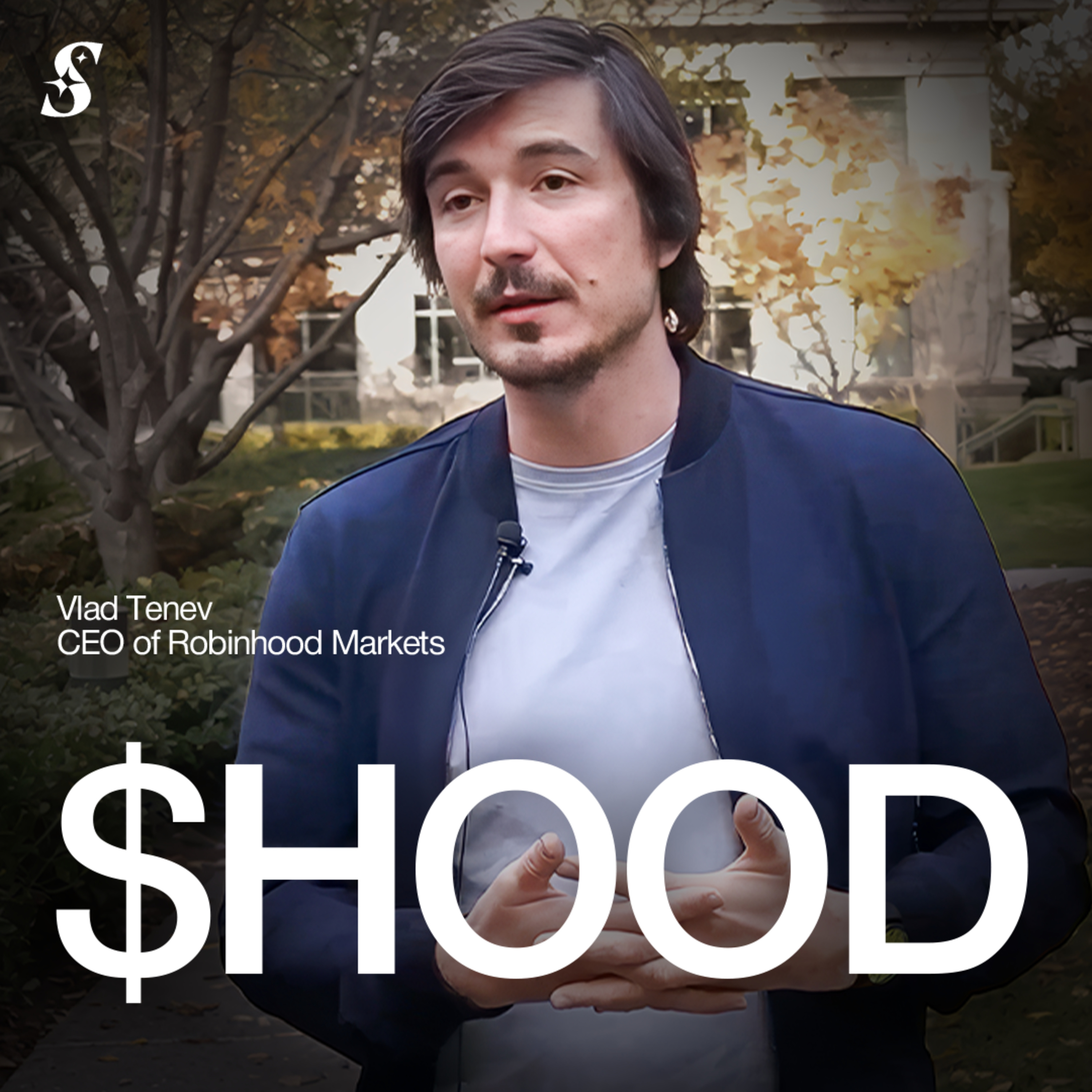
Robinhood's CEO contrasts the COVID-era retail trading craze, driven by 'ephemeral' theses like nostalgia, with today's more 'meaningful' activity. He observes that current retail investors are focused on substantive tech waves like AI, backing companies with real revenue, indicating a market maturation.
Related Insights
Vlad Tenev argues that unlike crypto, which built a powerful grassroots advocacy block through widespread retail ownership, the AI industry is vulnerable to negative sentiment and regulation because it lacks a "retail army" of investors. With no financial stake, the public is more susceptible to fear-based narratives.
Robinhood's AI tools intentionally avoid full automation. They focus on assisting with labor-intensive tasks like research and pattern identification, which helps users optimize trades while preserving the sense of personal accomplishment they get from executing the final decision themselves.

After years of inflated promises, the market is moving past the initial AI hype cycle. Leaders realize that simply attaching "AI" to a company name is not a strategy. This shift leads to a more realistic understanding of where AI provides practical value, which will stabilize hiring and investment.

The traditional dynamic has flipped. Institutional investors are no longer the sole trendsetters; they now observe and institutionalize strategies, like zero-day options, that originate with retail traders. Professionals are now playing catch-up to understand and replicate what the public is doing.

Robinhood strategically expanded from a trading-focused, cyclical business into one with 11 revenue lines over $100M each. This pivot to a more diversified, "all-weather" model was a direct response to the risk of rising interest rates and market downturns, ensuring resilience beyond bull markets.
Contrary to the stereotype of a hyperactive day trader, the average Robinhood user trades 40 times per year—the same as a Schwab self-directed customer. With 95% retention and 5x account balance growth over three years, their behavior indicates a more traditional, long-term approach to investing, not reckless gambling.
![Robinhood: Mobile First, Margins Later - [Business Breakdowns, EP.233] thumbnail](https://megaphone.imgix.net/podcasts/943e2e96-b60b-11f0-9176-5bf614c23973/image/074f062475dc76689adfc59319a4e04d.jpg?ixlib=rails-4.3.1&max-w=3000&max-h=3000&fit=crop&auto=format,compress)
CEO Vlad Tenev considers 2022 the "refounding" of Robinhood. The business model strategically shifted from catering primarily to first-time investors to focusing on more sophisticated, resilient active traders. This pivot drove a 5x increase in product velocity (from one to five major new products per year) and built a more cycle-agnostic business.
To navigate regulatory hurdles and build user trust, Robinhood deliberately sequenced its AI rollout. It started by providing curated, factual information (e.g., 'why did a stock move?') before attempting to offer personalized advice or recommendations, which have a much higher legal and ethical bar.
Public market investors feel compelled to buy into major AI IPOs, even if they doubt a company's fundamentals. The strategy is driven by market dynamics: the expectation of a 'pop' from massive retail investor demand forces funds to participate to avoid underperforming their benchmarks.

The AI narrative has evolved beyond tech circles to family Thanksgiving discussions. The focus is no longer on the technology's capabilities but on its financial implications, such as its impact on 401(k)s. This signals a maturation of the hype cycle where public consciousness is now dominated by market speculation.