Get your free personalized podcast brief
We scan new podcasts and send you the top 5 insights daily.
In an unusual collaboration, Anthropic's Chris Ola spoke at the Vatican's AI encyclical launch. He argued that AI labs need external critics from outside the tech industry to provide accountability, as internal commercial and geopolitical pressures can conflict with ethical considerations.

Related Insights
To genuinely shape AI's trajectory beyond rhetoric, the Catholic Church should establish its own technical research lab. This would allow it to develop alignment techniques based on its theological priors, benchmark against secular labs, and influence technology at the core architectural level, not just surface applications.

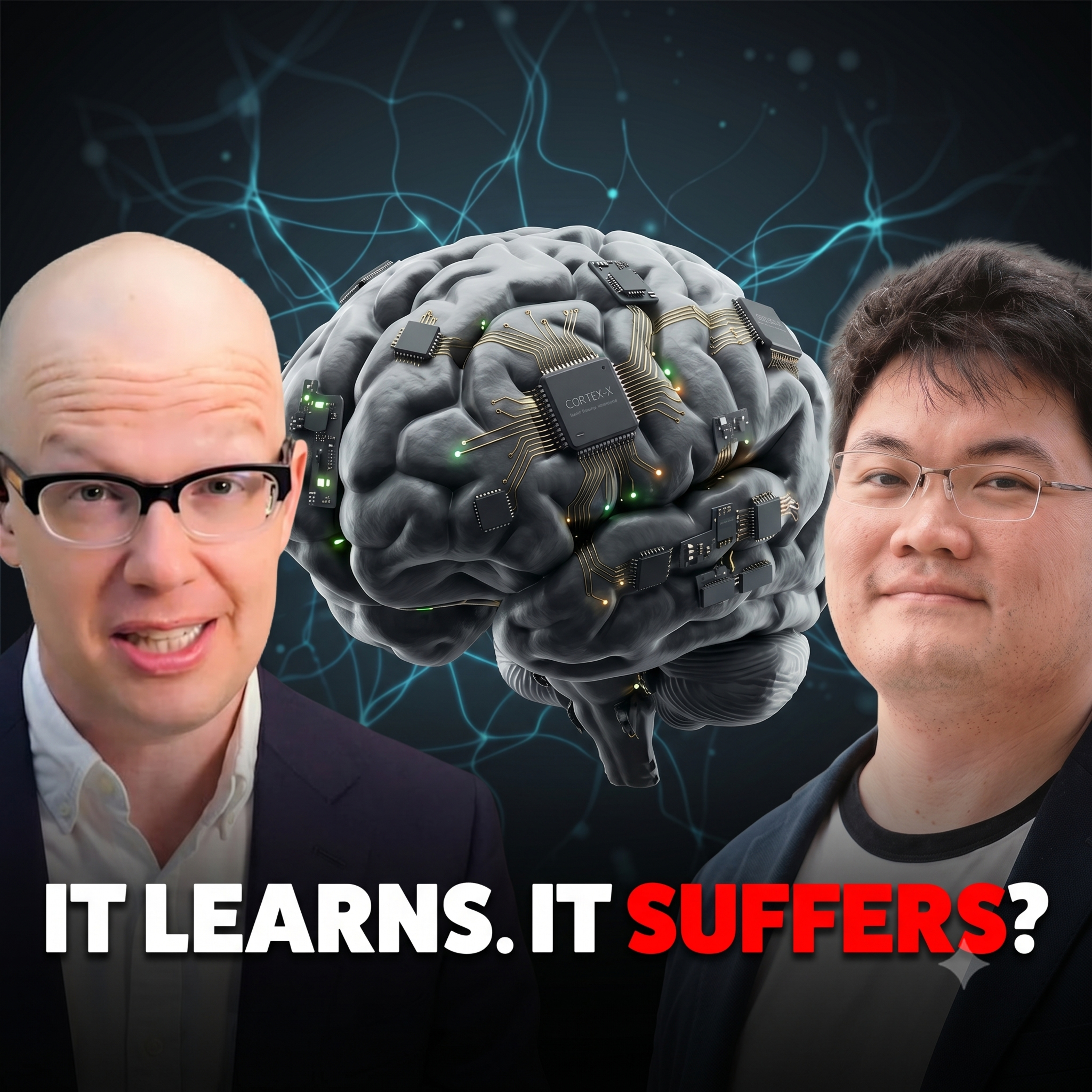
Cortical Labs preemptively addressed ethical concerns about fusing neurons with chips by engaging directly with bioethicists and religious institutions, which helped them navigate potential backlash and build trust.
An Anthropic co-founder's prominent appearance alongside the Pope during his AI encyclical is framed as a marketing coup. This move potentially undermined the church's intended neutral message, turning a global ethical discussion into a branding opportunity for a single AI company.

Dario Amodei suggests a novel approach to AI governance: a competitive ecosystem where different AI companies publish the "constitutions" or core principles guiding their models. This allows for public comparison and feedback, creating a market-like pressure for companies to adopt the best elements and improve their alignment strategies.

Anthropic is publicly warning that frontier AI models are becoming "real and mysterious creatures" with signs of "situational awareness." This high-stakes position, which calls for caution and regulation, has drawn accusations of "regulatory capture" from the White House AI czar, putting Anthropic in a precarious political position.
The AI industry faces a major public relations problem. Its two most visible leaders are Anthropic's CEO, who promotes "doomer" narratives, and OpenAI's CEO, dogged by accusations of being a sociopath, creating a negative public image for the entire field.

With no major Western country establishing comprehensive AI policy, the Vatican is filling the void. It has set its own national AI rules and, given its neutral moral standing, is positioning itself as a global referee for what is real versus fake.

Christopher Olah's presence at the Vatican's AI event was the result of a ten-year effort to engage Silicon Valley. OpenAI was chosen for taking the Vatican's ethical questions seriously, a decision solidified after what was described as a courageous stand during a "dust up with the Pentagon."

The Pope's call to "disarm AI" is not limited to autonomous weapons. It broadly critiques the "mentality of armed competition" driving the race for geopolitical and commercial dominance, challenging the assumption that technical superiority confers the right to govern societies or industries.
With pronouncements on AI's impact on human dignity, Pope Leo XIV is framing the technology as a critical religious and ethical issue. This matters because the Pope influences the beliefs of 1.4 billion Catholics worldwide, making the Vatican a powerful force in the societal debate over AI's trajectory and regulation.