Get your free personalized podcast brief
We scan new podcasts and send you the top 5 insights daily.
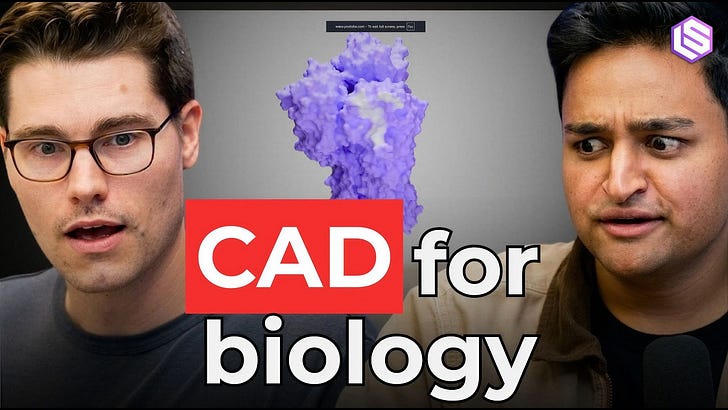
Traditional protein engineering relies on slow, serial single-residue substitutions in wet labs to preserve stability. Machine learning models trained on evolutionary datasets can predict multiple coordinated amino acid changes simultaneously, cutting optimization rounds down from dozens to a handful.

Related Insights
Unlike traditional methods that simulate physical interactions like a key in a lock, ProPhet's AI learns the fundamental patterns governing why certain molecules and proteins interact. This allows for prediction without needing slow, expensive, and often impossible physical or computational simulations.

Diffusion models were a breakthrough for protein generation because they reframe the problem. Instead of a one-shot generation, they learn to make many small, iterative refinements ("make it slightly better"). This "time to think" approach proved more effective for complex biological structures than previous methods like VAEs.

Historically, biological discovery relied on harvesting naturally occurring proteins from bacteria or organisms like CRISPR and PCR. By training large language models on sequential protein data instead of natural text, Retro Biosciences and OpenAI demonstrated that bio-native models can generate completely new, functional human proteins at will. This transition shifts protein engineering from scrounging natural biology to an exponential, de novo generative paradigm.
Models like AlphaFold don't solve protein folding from physics alone. They heavily rely on co-evolutionary data, where correlated mutations across species provide strong hints about which amino acids are physically close. This dramatically constrains the search space for the final structure.
Traditional antibody optimization is a slow, iterative process of improving one property at a time, taking 1-3 years. By using high-throughput data to train machine learning models, companies like A-AlphaBio can now simultaneously optimize for multiple characteristics like affinity, stability, and developability in a single three-month process.

As biologics evolve into complex multi-specific and hybrid formats, the number of design parameters (valency, linkers, geometry) becomes too vast for experimental testing. AI and computational design are becoming essential not to replace scientists, but to judiciously sample the enormous design space and guide engineering efforts.

Novonesis has shifted enzyme discovery from the lab to computers. Using AI tools like AlphaFold, they predict protein structures and identify new enzyme families based on structural motifs rather than sequence similarity. This allows them to find novel functionalities much faster than traditional methods.
Generate Biomedicines' AI learns the fundamental rules of protein structure and function, much like a language's grammar. This allows it to design entirely new proteins by generating novel "sentences" (sequences) that are biologically coherent and functional, rather than just mimicking existing ones found in nature.

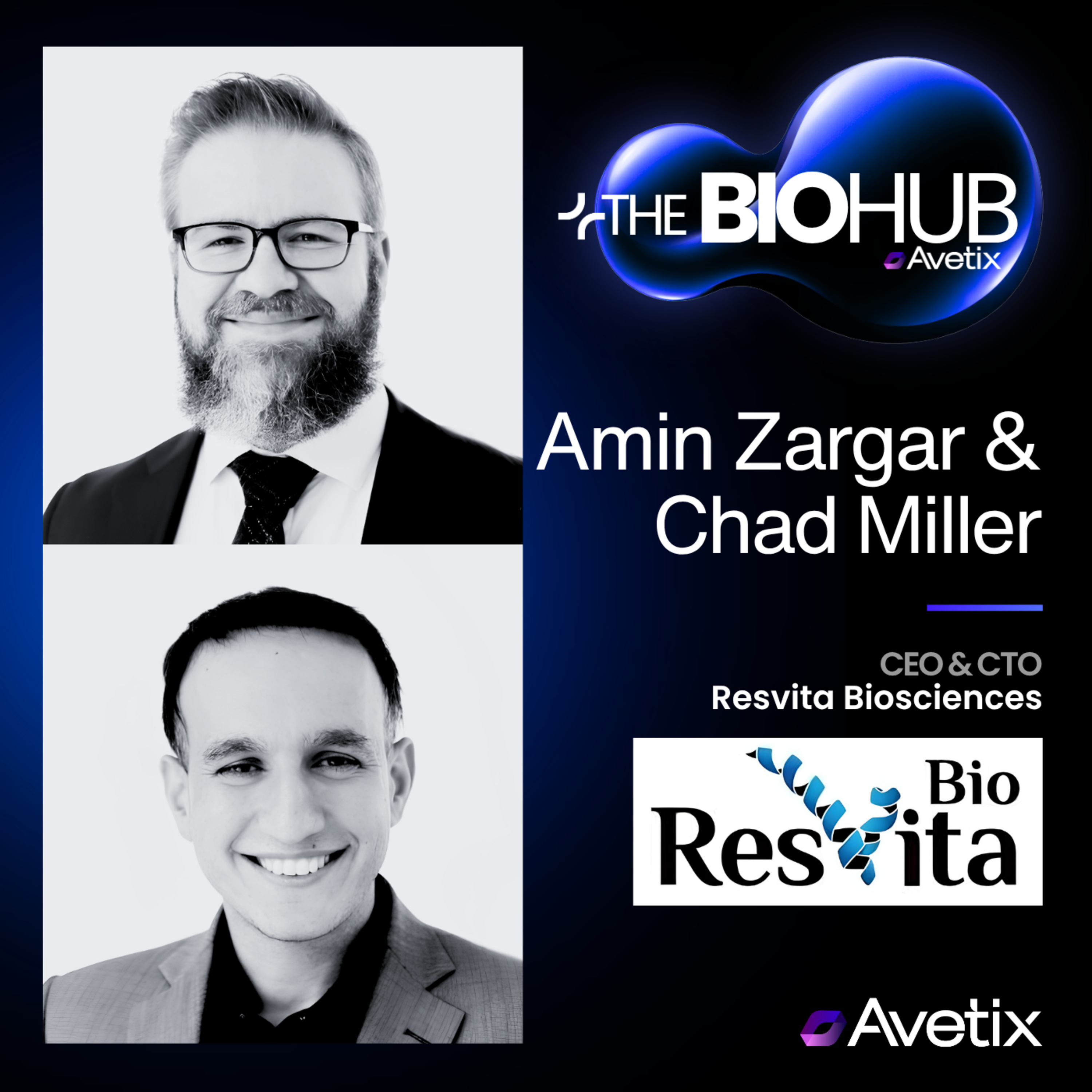
Resvita Bio's approach isn't about creating proteins from scratch. Instead, they use machine learning to 'read the book of life comprehensively,' analyzing how different organisms have evolved to solve the same biological problem. This allows them to synthesize nature's best solutions into an ideal therapeutic protein.
The primary obstacle in advancing protein design isn't creating better models, but the multi-week or multi-month delay in getting experimental validation from wet labs. This slow feedback loop fundamentally constrains the speed of research and model iteration, a problem the entire field is trying to solve.