Get your free personalized podcast brief
We scan new podcasts and send you the top 5 insights daily.
In the DB09 trial, the median progression-free survival (40 months) was double the median duration of TDXD treatment (20 months). This discrepancy suggests many patients discontinued the cytotoxic component and effectively entered a maintenance phase, validating the induction-maintenance model even within a continuous therapy trial design.

Related Insights
The standard practice of a 6-8 cycle chemotherapy induction followed by maintenance wasn't a deliberate trial design. It evolved organically from patient intolerance to cumulative toxicities like neuropathy, a limitation newer, less toxic drugs like TDXD don't necessarily share.
Due to cumulative toxicity concerns with TDXD, particularly ILD, clinicians express more comfort with the shorter 4-cycle neoadjuvant course from DESTINY-Breast11 than the prolonged 14-cycle adjuvant therapy in DESTINY-Breast05, favoring front-loading the treatment.
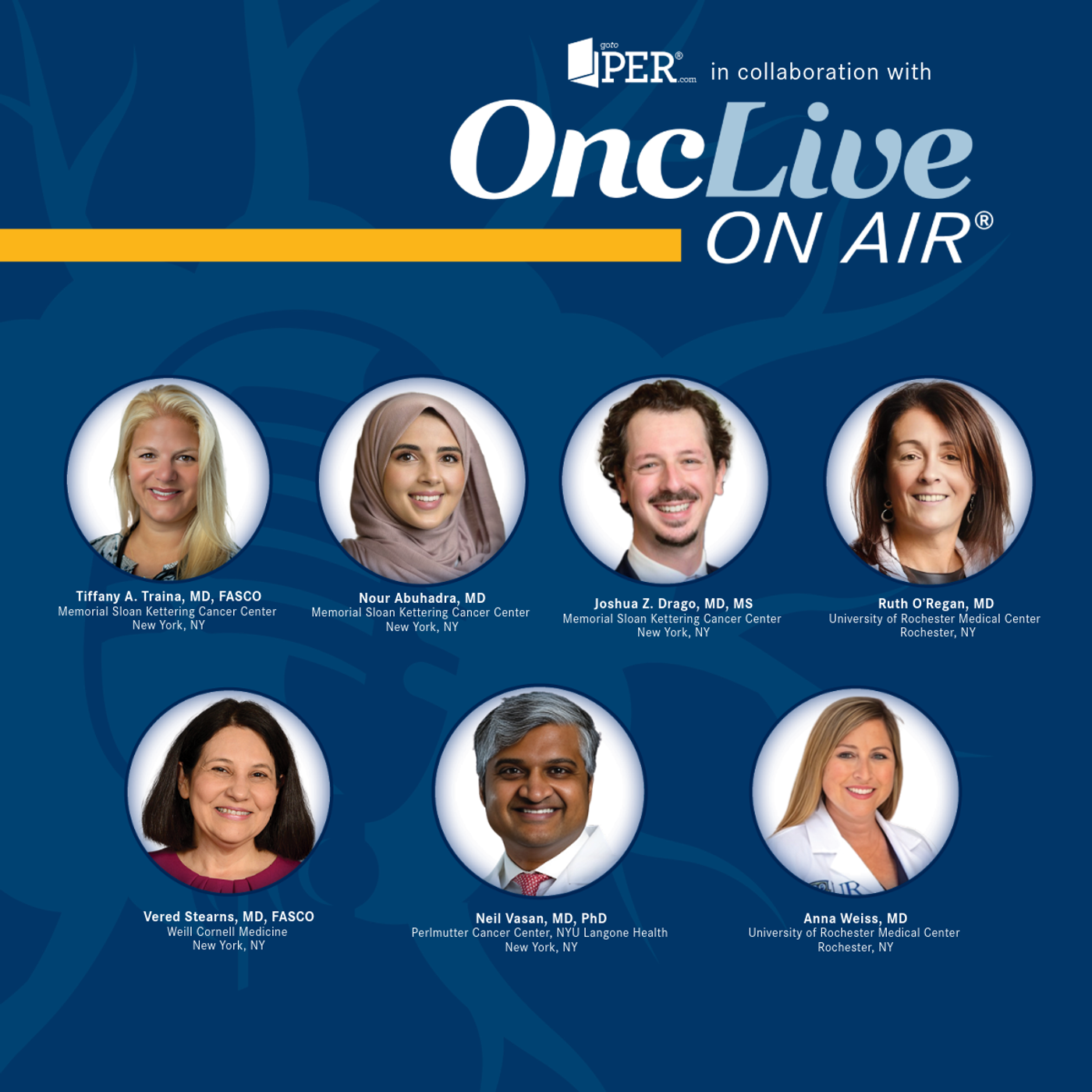
A patient on trastuzumab deruxtecan (TDXD) for seven years with no evidence of disease and no toxicity chose to continue the drug, declining to switch to a standard maintenance regimen. This illustrates a real-world challenge where patient preference and excellent outcomes can override the clinical logic of treatment de-escalation.
Data from DESTINY-Breast09 shows TDXD plus pertuzumab dramatically improved progression-free survival in first-line metastatic HER2+ breast cancer. This unprecedented efficacy raises new questions about optimal treatment duration and the potential for de-escalated maintenance therapy after induction.
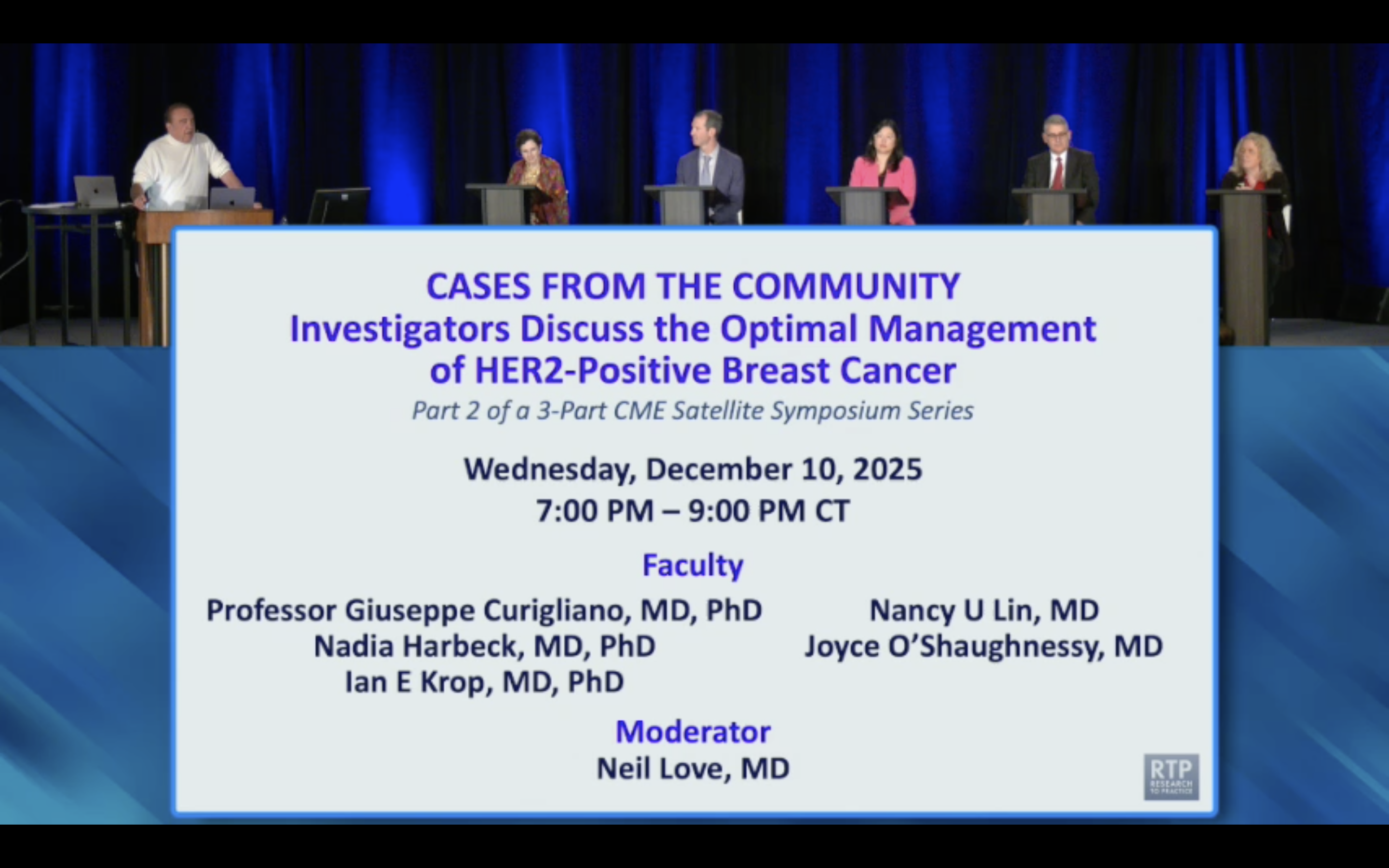
Positive data from both DESTINY-Breast09 (TDXD-based) and PATINA (CDK4/6i maintenance) create a new dilemma. With similar PFS outcomes, the first-line choice for metastatic HER2+/HR+ patients now hinges on toxicity profiles and patient preference rather than a single efficacy winner.
The core conflict in choosing breast cancer therapy is whether to prioritize immediate tumor shrinkage (pathological complete response) or long-term cure (event-free survival). One trial (DB11) excels at shrinkage but isn't designed to prove survival, while another (DB05) proves survival, crystallizing a fundamental debate about clinical trial endpoints and treatment goals.
Traditional endpoints like progression-free survival (PFS) incentivize continuous treatment. The NCI group proposes "treatment-free survival," a novel metric that quantifies time spent *off* therapy. This endpoint better captures the patient experience and rewards treatments that provide durable responses after a finite course.
The DESTINY-Breast11 trial showed a neoadjuvant regimen of TDXD followed by THP achieved a 67.3% pathologic complete response (pCR) rate in high-risk HER2+ breast cancer. This is the highest pCR rate seen in a registrational trial, signaling a potential new standard of care.
A subtle finding in the DESTINY-Breast11 trial, where TDXD alone underperformed TDXD followed by THP, suggests that taxane-based chemotherapy might remain effective even after a patient's HER2-positive cancer becomes resistant to the antibody-drug conjugate TDXD.
To mitigate long-term toxicity from TDXD, oncologists are proposing an "induction/maintenance" approach. Patients receive TDXD for an initial period to achieve maximal response, then switch to a less toxic maintenance regimen for a "chemotherapy holiday," improving quality of life.