Get your free personalized podcast brief
We scan new podcasts and send you the top 5 insights daily.
According to Bill Gates's definition, a true platform enables participants to earn more revenue than the platform itself. With AI startups' revenue being overwhelmingly captured by model providers like OpenAI and Anthropic (reportedly 89%), they currently function more as vendors than true ecosystem-enabling platforms.

Related Insights
By building a feature that competes directly with startups using its own API, Anthropic demonstrates the "platform risk" inherent in the AI ecosystem. Like Amazon with its Basics line, foundation model companies can observe usage, identify valuable applications, and integrate them, creating a kill-zone for dependent companies.

OpenAI embraces the 'platform paradox' by selling API access to startups that compete directly with its own apps like ChatGPT. The strategy is to foster a broad ecosystem, believing that enabling competitors is necessary to avoid losing the platform race entirely.

Startups building on OpenAI or Anthropic APIs face a major platform risk. Their usage data trains the underlying foundational models, enabling the platform owners to eventually absorb their features natively and make the startups obsolete.

Data reveals an extreme power law where model labs OpenAI and Anthropic capture nearly all AI startup revenue, and their share is growing. This indicates value is accruing to the foundational layer, posing an existential threat to the long-term viability of application-focused startups.

The AI value stack has evolved from chips (NVIDIA) to models (OpenAI). The next critical phase is the application layer. It's unclear if value will be captured by new application companies or if the underlying model providers will absorb all the profits, a key question for investors and founders.

A true platform enables its users to generate more revenue than the platform itself captures. AI companies like Anthropic are currently failing this test, as their revenue from token sales far exceeds the revenue generated by the startups building on them, creating an unsustainable circular economy.

Despite a booming AI startup ecosystem, revenue is intensely concentrated. Foundational model providers OpenAI and Anthropic capture nearly 90% of the market, and their share is growing, squeezing out application-layer companies.
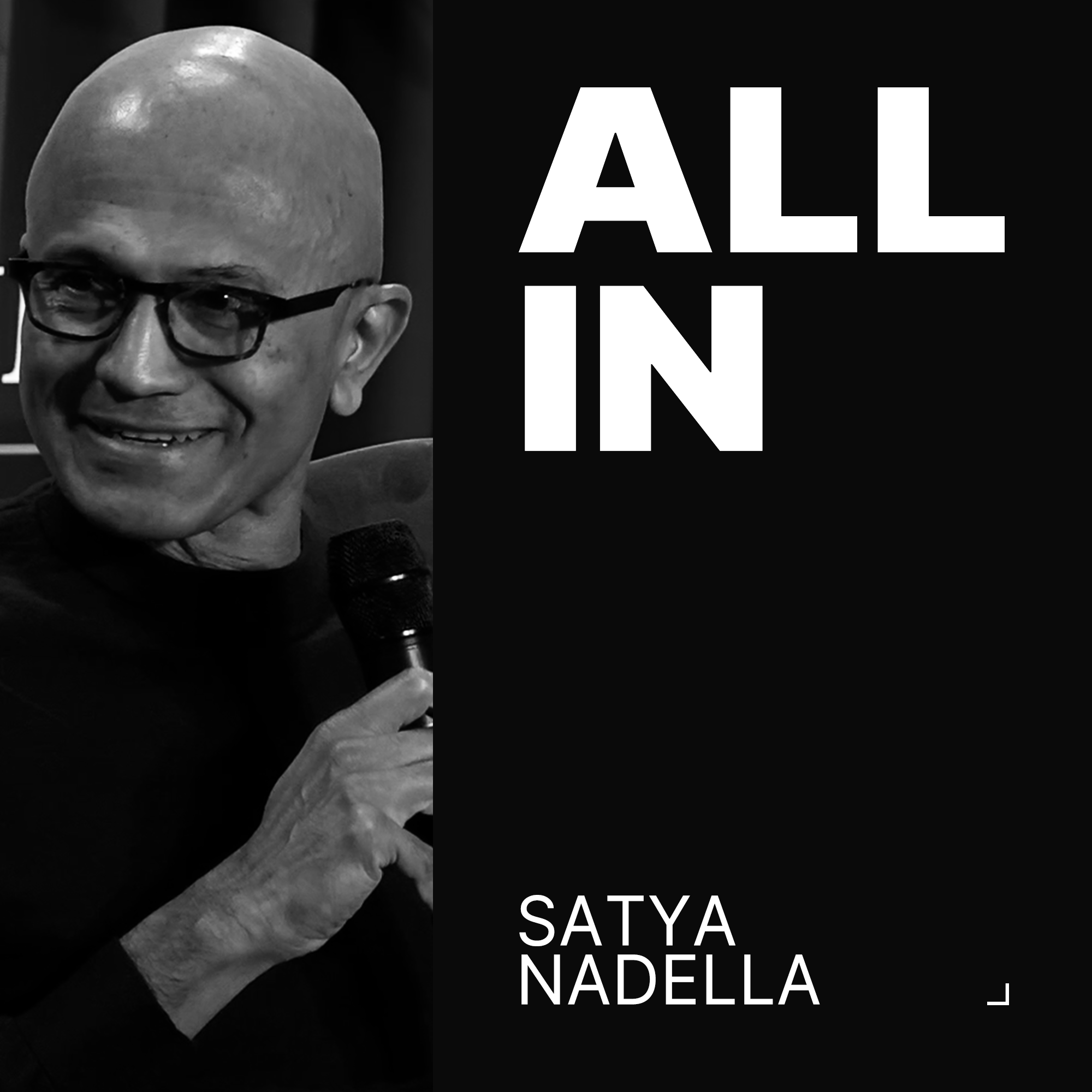
Microsoft CEO Satya Nadella argues that the ultimate measure of a platform's success isn't its own revenue, but the economic value created by its ecosystem. A platform thrives when partners and developers generate multiples of the platform's own revenue, creating a durable competitive advantage and fostering global trust.
In the AI era, Microsoft could shift from being a high-margin software 'creator' to a lower-margin 'distributor' of AI models. Like Spotify, which has thin margins because music labels capture most revenue, Microsoft's platform may facilitate AI usage while model providers capture the majority of the economic value.

The long-term success of AI business models depends on a central tension: can providers like Anthropic control the 'dials' on token usage to maximize profit, or will transparent marketplaces and user choice commoditize compute? This determines whether AI becomes an incredible business or a low-margin utility.