Get your free personalized podcast brief
We scan new podcasts and send you the top 5 insights daily.
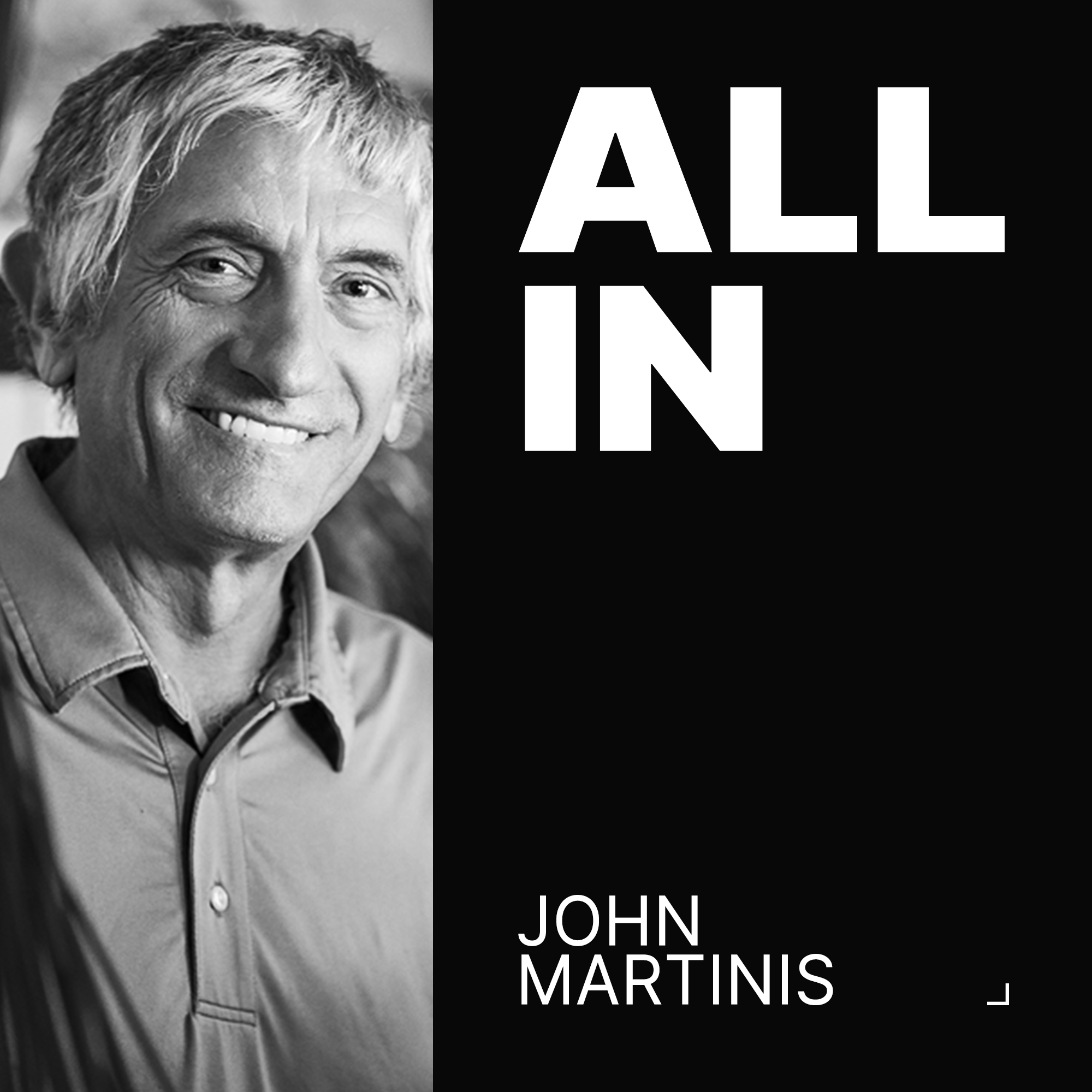
The entire field of quantum computing was sparked by physicist Anthony Leggett's provocative question: "Do macroscopic objects behave quantum mechanically?" This question directly inspired John Martinis's Nobel-winning experiment, which proved it was possible and laid the groundwork for the field.
Related Insights
Nobel laureate John Martinis attributes his success to growing up building things with his father. This hands-on experience gave him an intuitive, empirical understanding of physics that proved invaluable for designing and building novel experiments, highlighting the value of practical skills in a theoretical field.
John Martinis's 1985 experiment demonstrating quantum mechanics at a macro scale was noteworthy but not seen as a Nobel-worthy breakthrough at the time. Its significance grew over decades as it became the foundation for the burgeoning field of quantum computing, showing the long-tail impact of foundational research.
Pure, curiosity-driven research into quantum physics over a century ago, with no immediate application in sight, became the foundation for today's multi-billion dollar industries like lasers, computer chips, and medical imaging. This shows the immense, unpredictable ROI of basic science.
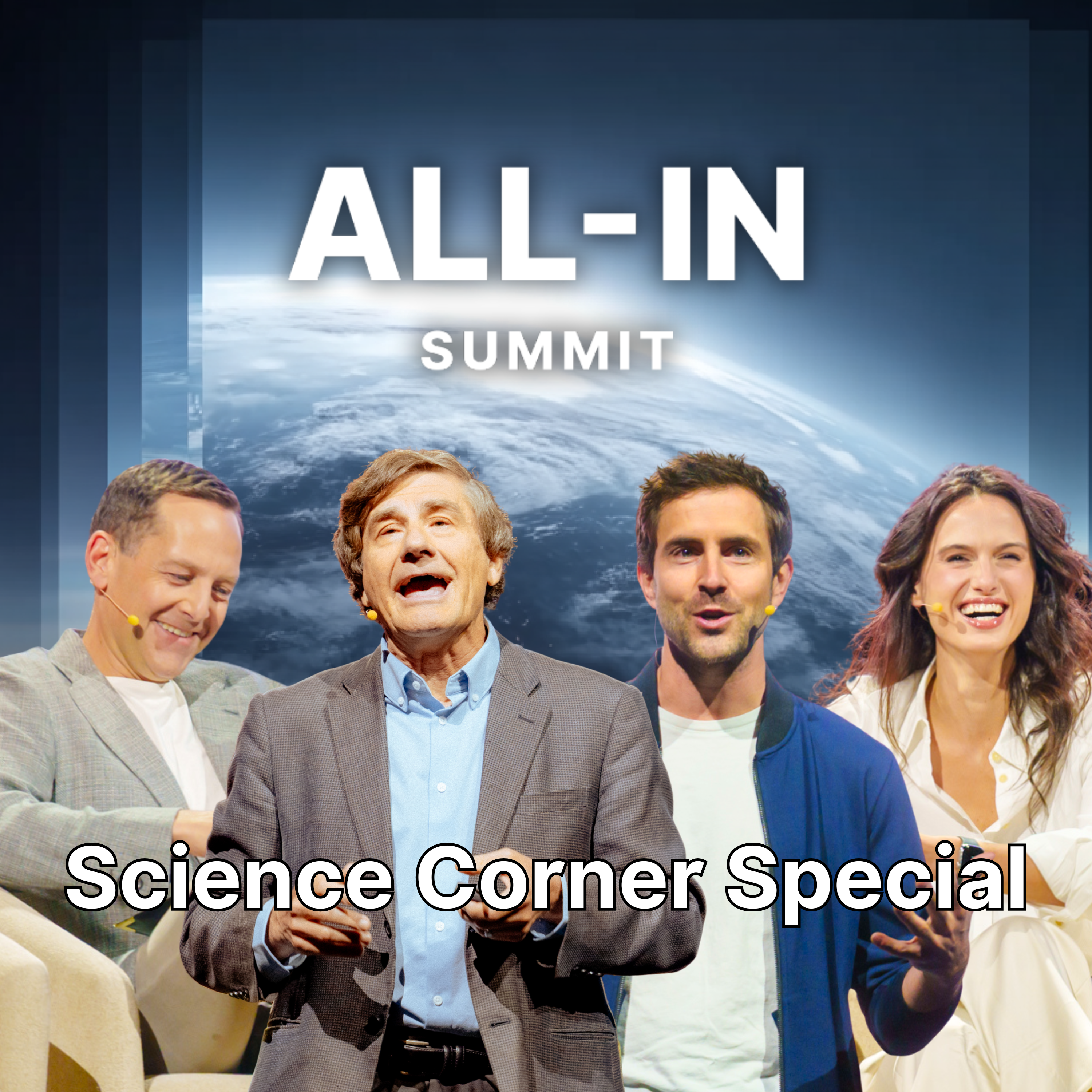
After proving quantum mechanics at a macro scale, John Martinis was inspired by a Richard Feynman talk on quantum computation. Feynman's vision for a practical application provided the motivation for Martinis to dedicate his career to building a quantum computer, transforming an abstract discovery into a world-changing goal.
To accelerate progress and maintain a competitive lead over China, John Martinis's new company is partnering with Applied Materials. They are leveraging modern, 300mm semiconductor fabrication tools—which are restricted from China—to build next-generation quantum devices with higher quality and scalability.
To move beyond current paradigms, one must simultaneously engage in rigorous mathematical thinking and the practice of letting go of all concepts through deep meditation (silence). This mirrors quantum computing, which requires precise setup followed by non-interference. Sloppy, middle-ground thinking yields no reward; only the two extremes push boundaries.

While AI dominates current conversations, Techstars' David Cohen believes Quantum Computing represents a far larger future paradigm shift. He posits that a single quantum computer will eventually surpass the combined power of all AI-driven classical computers. The "killer app" for this new era will be in healthcare, enabling truly personalized medicine.
Nvidia CEO Jensen Huang's public stance on quantum computing shifted dramatically within months, from a 15-30 year timeline to calling it an 'inflection point' and investing billions. This rapid reversal from a key leader in parallel processing suggests a significant, non-public breakthrough or acceleration is underway in the quantum field.
A symbiotic relationship exists between AI and quantum computing, where AI is used to significantly speed up the optimization and calibration of quantum machines. By automating solutions to the critical 'noise' and error-rate problems, AI is shortening the development timeline for achieving stable, powerful quantum computers.
Physicist Anthony Leggett argued that the Schrödinger's Cat paradox only exists if one assumes a macroscopic object can be in a quantum superposition. He pointed out there was no experimental evidence for this, reframing the famous paradox as a testable scientific question that spurred real-world research.