Get your free personalized podcast brief
We scan new podcasts and send you the top 5 insights daily.
To compete with agent tools like OpenClaw, Microsoft CEO Satya Nadella reorganized by combining consumer and enterprise Copilot teams. This unified effort, with executives reporting directly to Nadella, signals a top-level priority to develop more autonomous, 'always-on' AI agents and centralize the company's response.

Related Insights
True AI agents take autonomous action. However, connecting a tool like Microsoft Copilot to internal data (e.g., SharePoint) provides "agentic" capabilities. It can independently scan, select, and synthesize relevant resources to create finished deliverables, blurring the line between tool and autonomous assistant.

Nadella has delegated management responsibilities to embed himself directly in AI product development. He now spends his time in internal Teams channels, emailing engineers with specific flaws, and holding weekly product grillings to accelerate Copilot's improvement, acting as a hands-on product leader.
Satya Nadella suggests a fundamental shift in enterprise software monetization. As autonomous AI agents become prevalent, the value unit will move from the human user ("per seat") to the AI itself. "Agents are the new seats," signaling a future where companies pay for automated tasks and outcomes, not just software access for employees.

Microsoft CEO Satya Nadella's move to personally oversee Copilot suggests the AI assistant is severely underperforming against competitors like ChatGPT. The restructuring aims to get the critical product "real serious about co-pilot real quick" by bringing it closer to the CEO.

Microsoft's M365 Copilot allows users to describe a workflow in natural language, which the AI then constructs and deploys as a triggered agent. This demonstrates a key industry trend: the capability to build personal automations is becoming a standard feature for all users, not just developers.

Microsoft restructured its AI division by combining its consumer and commercial Co-pilot teams under a single executive reporting to the CEO. This move directly addresses customer confusion caused by multiple, misaligned product versions and signals an admission that the previous fragmented approach failed.

Microsoft CEO Satya Nadella views AI's trajectory in two distinct paths. The first is "cognitive enhancement" tools that assist users, like Copilot. The second, more ambitious path is a "guardian angel," an AGI-like system that oversees and manages tasks. This framework signals a deeper belief in AGI's potential than is commonly associated with him.

The race in enterprise AI isn't just about agent capabilities, but about owning the central dashboard where employees direct agents across all applications (Salesforce, Jira, etc.). Companies like OpenAI and Microsoft are vying to become this primary interface, controlling the customer relationship and relegating other apps to the background.
Nadella frames the progression of AI tools for knowledge workers as following the same path as coding assistants: from simple suggestions, to chat interfaces, to executing actions, and finally to fully autonomous agents. This provides a clear roadmap for product development and user adoption in the AI space.
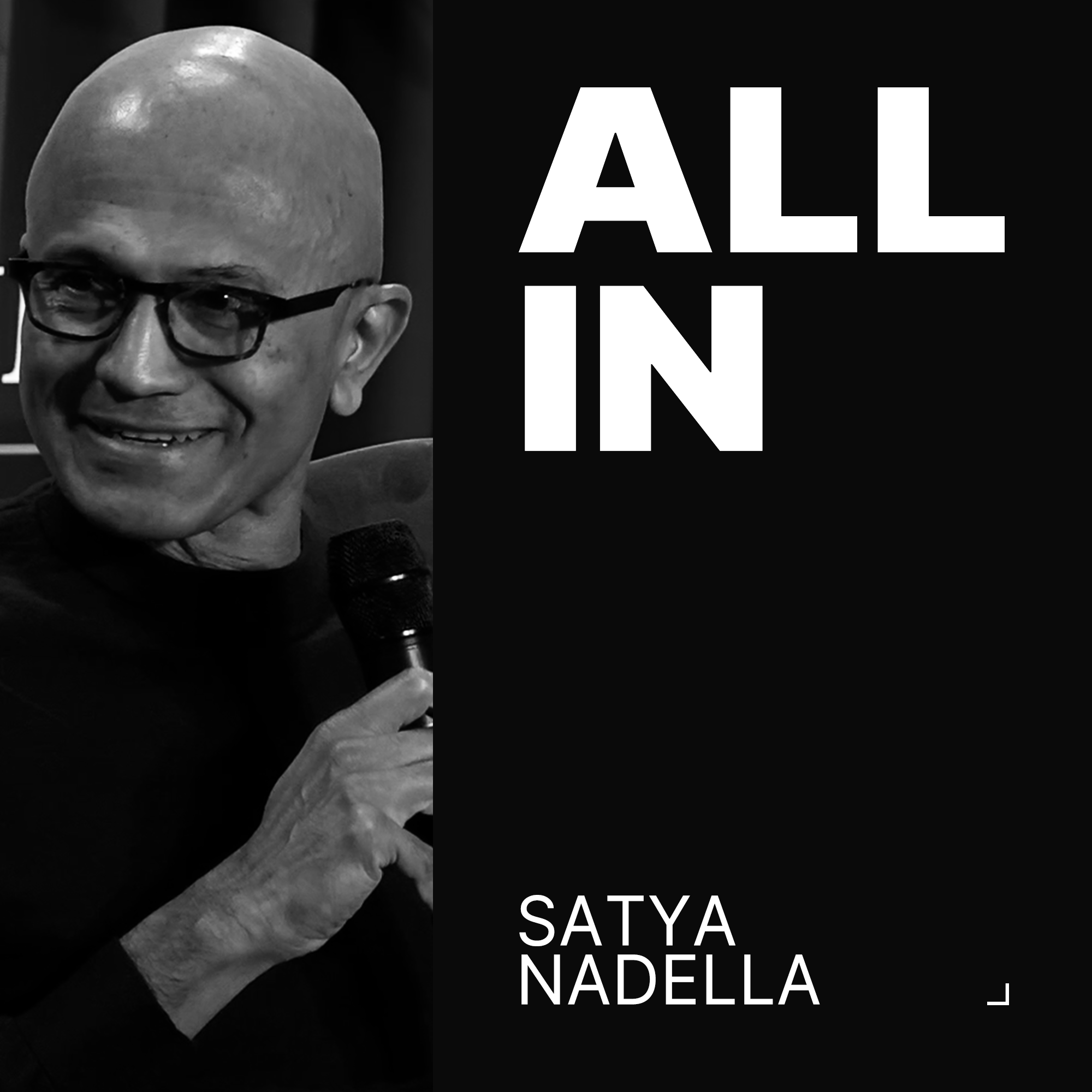
Microsoft CEO Satya Nadella is personally experimenting with Anthropic's AI tools, including the open-source project "Maltbot." He is actively sharing his findings with deputies, using the rival's cross-application agent capabilities as a direct challenge and source of inspiration for improving Microsoft's own 365 Copilot product.