Get your free personalized podcast brief
We scan new podcasts and send you the top 5 insights daily.
Microsoft restructured its AI division by combining its consumer and commercial Co-pilot teams under a single executive reporting to the CEO. This move directly addresses customer confusion caused by multiple, misaligned product versions and signals an admission that the previous fragmented approach failed.

Related Insights
To accelerate AI adoption, Block intentionally dismantled its siloed General Manager (GM) structure, which had given autonomy to units like Cash App. They centralized into a functional organization to drive engineering excellence, unify policies, and create a strong foundation for a company-wide AI transformation.

Microsoft is not solely reliant on its OpenAI partnership. It actively integrates competitor models, such as Anthropic's, into its Copilot products to handle specific workloads where they perform better, like complex Excel tasks. This pragmatic "best tool for the job" approach diversifies its AI capabilities.
Nadella has delegated management responsibilities to embed himself directly in AI product development. He now spends his time in internal Teams channels, emailing engineers with specific flaws, and holding weekly product grillings to accelerate Copilot's improvement, acting as a hands-on product leader.

To adapt to AI-driven workflows, Microsoft's LinkedIn combined product managers, designers, and engineers into a single "full stack builder" role. This structural change eliminates communication bottlenecks and empowers individuals to leverage AI tools for end-to-end product development, drastically increasing speed.
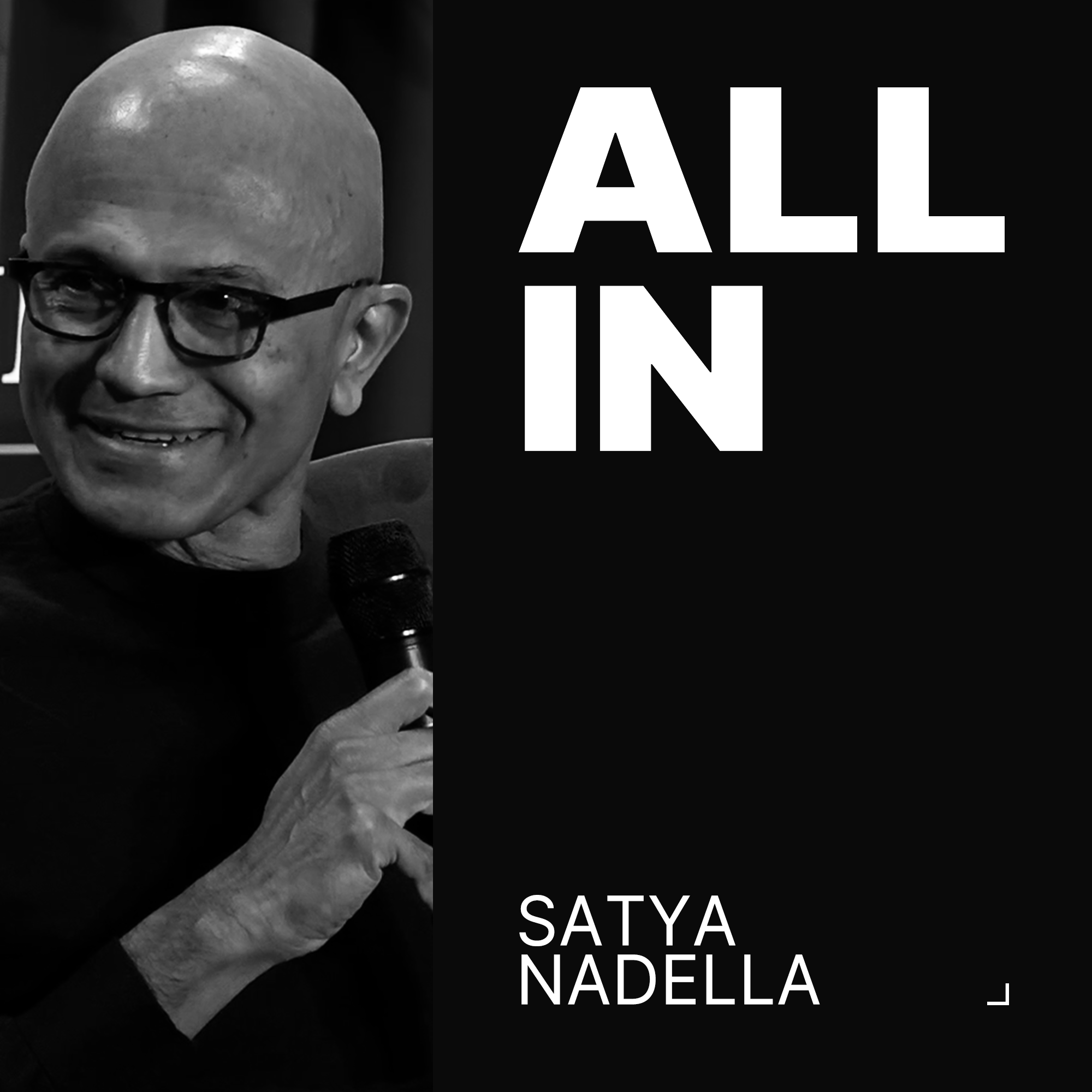
Despite its market position, Microsoft Copilot has failed to capture user enthusiasm. This creates a strategic vulnerability. A competitor who delivers a superior natural language interface for productivity tasks could disrupt Microsoft's dominance, potentially reducing it to a "data center company."

A one-size-fits-all AI assistant is suboptimal. The host's system splits responsibilities: "Holmes" focuses on personalized AI tool recommendations for individual employees' workflows, while "Mycroft" handles the company's overarching AI strategy, governance, and roadmap. This separation ensures both micro and macro-level needs are met effectively.
An effective AI strategy requires a bifurcated plan. Product leaders must create one roadmap for leveraging AI internally to improve tools and efficiency, and a separate one for external, customer-facing products that drive growth. This dual-track approach is a new strategic imperative.

Despite premier access to OpenAI's models, Microsoft is failing to integrate them effectively and quickly. This execution problem is so severe it's deemed a "skill issue." CEO Satya Nadella’s personal focus on Copilot is viewed as a sign of existential crisis rather than strategic leadership.
Block restructured from divisional GMs to a functional organization (Engineering, Product, Design) across all brands. This creates a single shared roadmap and forces alignment, enabling cross-unit collaboration that was difficult when incentives were siloed in separate P&Ls.
Microsoft CEO Satya Nadella is personally experimenting with Anthropic's AI tools, including the open-source project "Maltbot." He is actively sharing his findings with deputies, using the rival's cross-application agent capabilities as a direct challenge and source of inspiration for improving Microsoft's own 365 Copilot product.