Get your free personalized podcast brief
We scan new podcasts and send you the top 5 insights daily.
The resurgence in hardware value and margins is due to fundamental physical constraints, not an immature software market. Insufficient power, a severe shortage of memory chips (with prices up 700%), and manufacturing bottlenecks create real scarcity. These are hard physical problems that cannot be improved "overnight" like software.

Related Insights
The demand for HBM memory for AI is causing a global shortage because of a ~4:1 manufacturing trade-off: each bit of HBM produced consumes capacity that could have made four bits of standard DRAM. This supply crunch will raise prices for all electronics, from phones to PCs.

The AI buildout is unlikely to suffer a massive oversupply crash because it is constrained by real-world factors beyond chips: a lack of power, data centers, and even skilled trades like electricians. This acts as a natural governor, creating a longer, more durable investment cycle.

AI software models advance every few months, creating exponential demand. However, the hardware infrastructure like chip fabs operates on two-to-four-year development cycles. This timeline disconnect between software's rapid pace and hardware's slow build-out creates a persistent supply crunch that money alone cannot instantly solve.
The intense competition for memory chips between AI data centers and consumer product manufacturers like Apple is creating a massive shortage. This forces companies to pass on record-high component costs to consumers, reversing the long-term trend of cheaper electronics.

For the next few years, the primary constraint on memory production is not a shortage of manufacturing equipment. Rather, it's the physical lack of clean room space. Memory companies, burned by years of low margins, failed to build new fabs, which have a two-year construction lead time.

The semiconductor supply chain has extremely long lead times. Even with unprecedented demand signals for AI hardware, new memory fabrication plants ordered today will not come online until 2027 or 2028. This multi-year lag guarantees that supply bottlenecks and high prices for components like DRAM will persist.
![Dylan Patel - The Infinite Demand for Tokens, Claude Mythos, and Supply Constraints - [Invest Like the Best, EP.468] thumbnail](https://megaphone.imgix.net/podcasts/ceb34422-3ec7-11f1-97a5-8bd036d5980c/image/e8a75bd4ab83f059c746a594afd471a8.jpg?ixlib=rails-4.3.1&max-w=3000&max-h=3000&fit=crop&auto=format,compress)
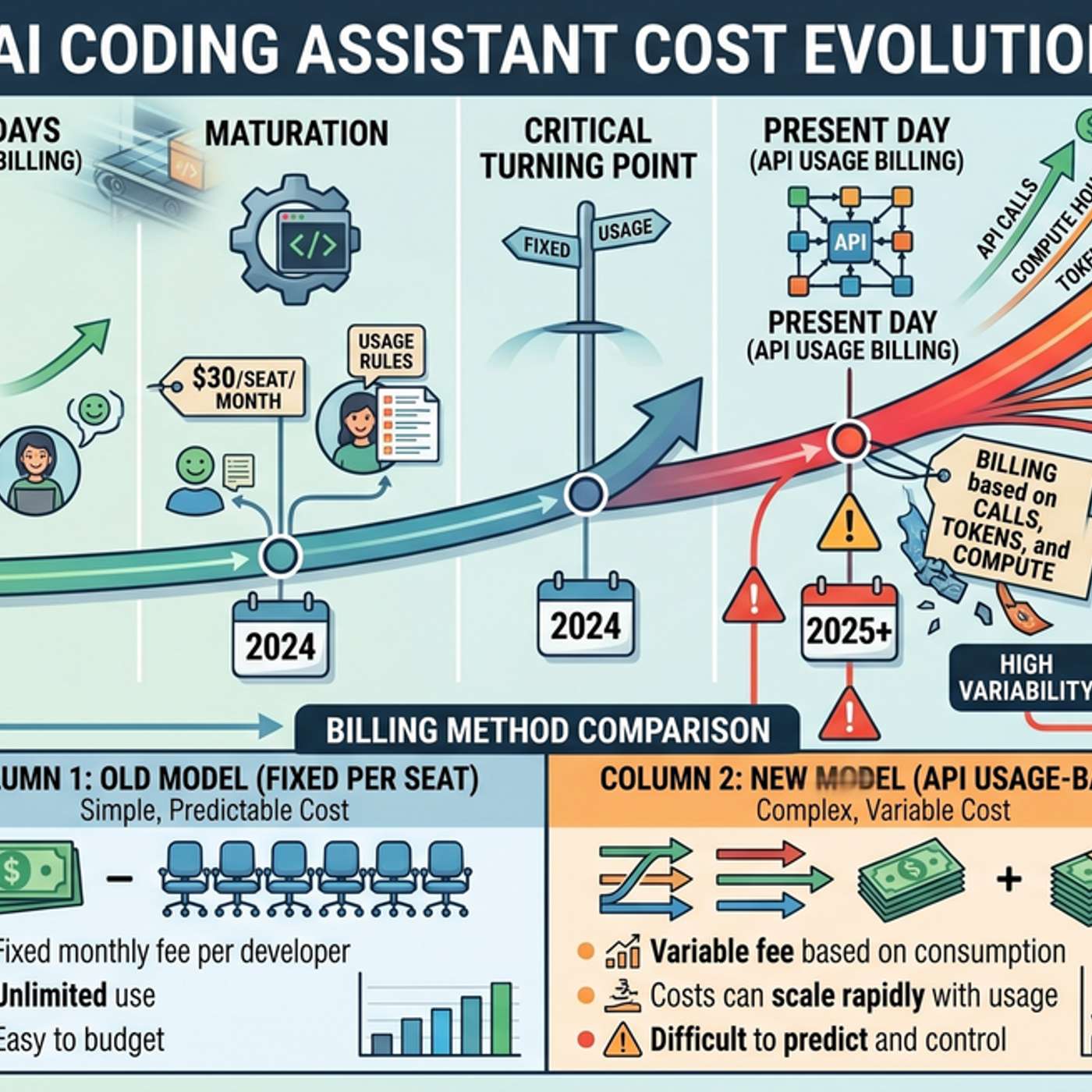
Rising AI API costs are not merely a vendor strategy but a direct result of real-world bottlenecks. These include surging electricity prices for data centers, a structural shortage of high-bandwidth memory (HBM), and constrained hardware supply chains, which are fundamentally altering the cost basis for AI compute.
The value unlocked by frontier AI models is expanding so rapidly that there isn't enough hardware to meet demand. This scarcity ensures that not just the top lab (like OpenAI), but also second and third-tier competitors, will operate at full capacity with strong margins.

The intense demand for memory chips for AI is causing a shortage so severe that NVIDIA is delaying a new gaming GPU for the first time in 30 years. This demonstrates a major inflection point where the AI industry's hardware needs are creating significant, tangible ripple effects on adjacent, multi-billion dollar consumer markets.

The insatiable demand for high-bandwidth memory (HBM) from AI data centers is creating a supply crunch. This forces consumer electronics companies like Apple to compete for limited DRAM, leading to significant price increases on products like MacBooks as the cost of essential memory components skyrockets.
