Get your free personalized podcast brief
We scan new podcasts and send you the top 5 insights daily.
Quoting author Derek Thompson, the host argues that there is so little real-world data on AI's economic effects that most serious conversations are speculative storytelling, not genuine analysis. Even top executives and economists are operating in a vacuum of uncertainty, guessing at a future no one can truly predict.

Related Insights
Echoing economist Robert Solow's 1987 observation about computers, thousands of CEOs now admit AI has no measurable productivity impact. This suggests history is repeating, where major technological shifts have a long, multi-year lag before their economic benefits are truly realized and measured.

A core debate in AI is whether LLMs, which are text prediction engines, can achieve true intelligence. Critics argue they cannot because they lack a model of the real world. This prevents them from making meaningful, context-aware predictions about future events—a limitation that more data alone may not solve.

Analysts projecting markets decades out, like Morgan Stanley's $5T humanoid robotics market by 2050, are effectively admitting profound uncertainty. These predictions are too far-reaching to be credible and serve more as speculative placeholders than as actionable intelligence for investors.

Despite widespread adoption, Patrick Collison notes that AI has not yet produced measurable gains in macroeconomic productivity. He points to recent studies and the lack of corresponding GDP growth outside the U.S. as evidence that the diffusion of these technologies through the economy is slow and complex.

With past shifts like the internet or mobile, we understood the physical constraints (e.g., modem speeds, battery life). With generative AI, we lack a theoretical understanding of its scaling potential, making it impossible to forecast its ultimate capabilities beyond "vibes-based" guesses from experts.
Economists skeptical of explosive AI growth use a recent 'outside view,' noting that technologies like the internet didn't cause a productivity boom. Proponents of rapid growth use a much longer historical view, showing that growth rates have accelerated over millennia due to feedback loops—a pattern they believe AI will dramatically continue.
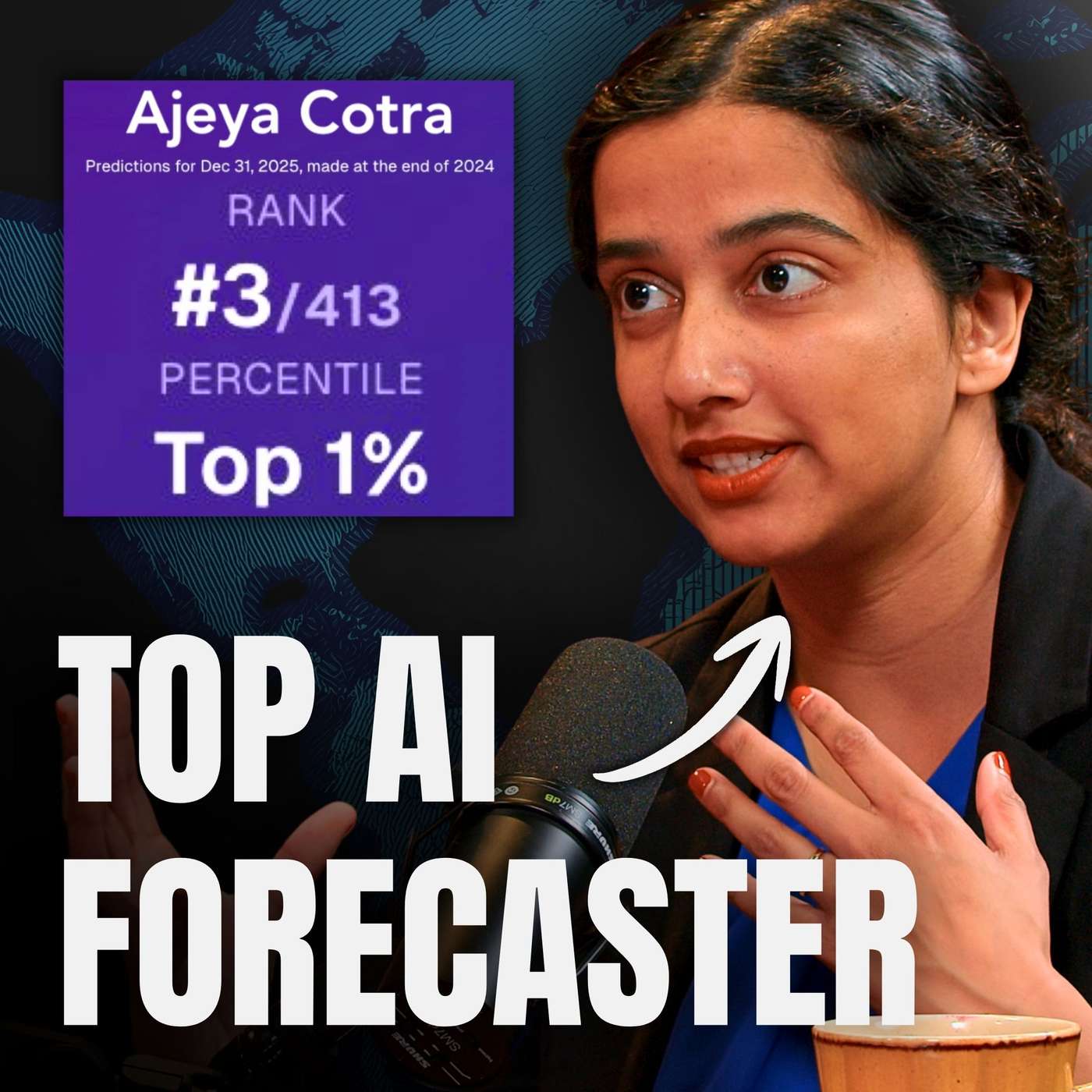
Derek Thompson argues that due to extreme uncertainty and a lack of real-world data, even high-level conversations about AI's economic effects are essentially storytelling, not rigorous analysis. Nobody, not even insiders, truly knows what will happen.

While AI investment has exploded, US productivity has barely risen. Valuations are priced as if a societal transformation is complete, yet 95% of GenAI pilots fail to positively impact company P&Ls. This gap between market expectation and real-world economic benefit creates systemic risk.

Due to extreme uncertainty and a lack of real-time data, discussions about AI's future, even among top executives, are fundamentally about storytelling. The void of concrete knowledge is being filled by narratives of either utopia or dystopia, making the discourse more literary than purely analytical.
A significant disconnect exists between AI's market valuation, which prices in massive future GDP growth, and its current real-world economic impact. An NBER study shows 80% of US firms report no productivity gains from AI, highlighting that market hype is far ahead of actual economic integration and value creation.