Get your free personalized podcast brief
We scan new podcasts and send you the top 5 insights daily.
Q3D Sensing identified a market gap between expensive, high-precision LiDAR systems (costing $20k-$150k) and low-range consumer devices like the iPhone. Their product offers centimeter-level precision—sufficient for many professional use cases—at an affordable price, creating a new category for customers who were previously priced out or over-served by existing options.

Related Insights
Q3D Sensing's key software differentiator is processing 3D scans locally on the device (at the edge). This allows users to immediately validate their work on-site, ensuring they haven't missed any areas. This workflow innovation directly solves a major customer pain point: discovering errors only after returning to the office and waiting hours for cloud processing, which would necessitate a costly trip back to the site.
In autonomous systems, LIDAR is invaluable during R&D to provide per-pixel depth data. This data trains models so that cheaper, camera-only production vehicles can accurately infer depth. This makes LIDAR a temporary means to an end, not the final sensor suite.

Large companies often focus R&D on high-ticket items, neglecting smaller accessory categories. This creates a market gap for focused startups to innovate and solve specific problems that bigger players overlook, allowing them to build a defensible niche.

For consumer robotics, the biggest bottleneck is real-world data. By aggressively cutting costs to make robots affordable, companies can deploy more units faster. This generates a massive data advantage, creating a feedback loop that improves the product and widens the competitive moat.

A*Star's Kevin Hartz explains that massive investment in autonomous driving has caused the price of LIDAR sensors to plummet. This technological dividend is now enabling new applications in unrelated fields. His firm is betting on high-end home security, which can now affordably use LIDAR for superior object tracking.

Waive treats the sensor debate as a distraction. Their goal is to build an AI flexible enough to work with any configuration—camera-only, camera-radar, or multi-sensor. This pragmatism allows them to adapt their software to different OEM partners and vehicle price points without being locked into a single hardware ideology.

High-end LiDAR systems suffer from more than just cost; they are often large, heavy, and require specialized training. Q3D's strategy to democratize access focuses on a trifecta of value propositions: a lower price point, a portable form factor that fits in difficult spaces (e.g., manholes), and a simple 'plug and play' user experience, removing the operational barriers that limit adoption to only specialized teams.
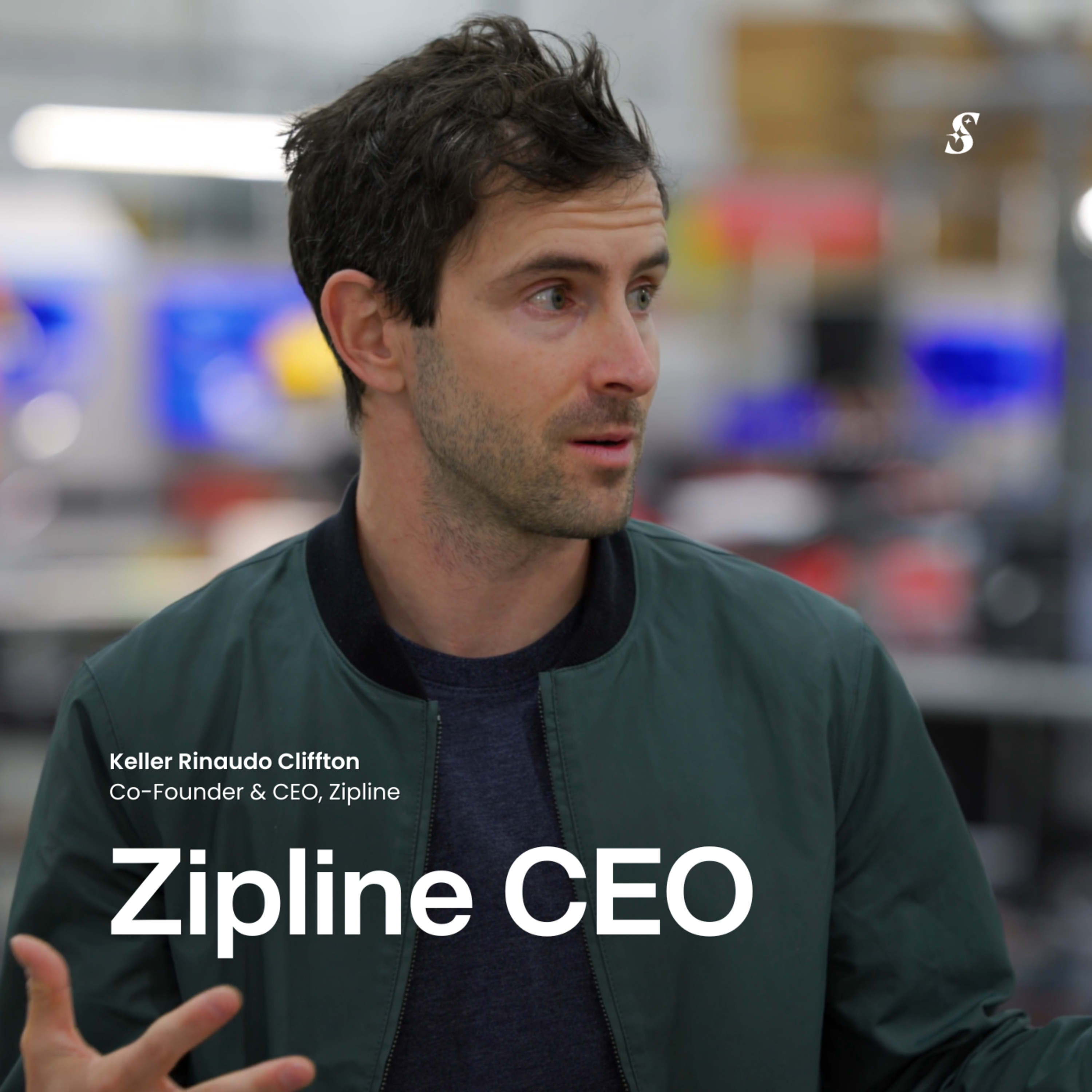
Zipline had to build its own components because the market only offered two extremes: cheap, unreliable consumer drone parts or prohibitively expensive military-grade systems. This "automotive grade" gap for reliable, cost-effective components forced them to vertically integrate to achieve their performance and cost goals.
Instead of replacing expensive high-end scanners, Q3D Sensing's affordable device can be used in concert with them. A business can perform an initial, highly accurate scan with a professional system, then use the more portable device for frequent (e.g., weekly) interim scans to capture changes. This 'augmentation' strategy accelerates adoption by fitting into existing workflows and solving a different job-to-be-done.
Shure prices its service at $100/month vs. the industry's ~$600. This isn't just to compete with incumbents like Deel, but to serve a massive pool of smaller companies for whom traditional EORs were prohibitively expensive, thereby expanding the total addressable market.
