Get your free personalized podcast brief
We scan new podcasts and send you the top 5 insights daily.
Instead of chasing a primary trend, analyze its second-order effects. Ask who supplies the successful players or what behavioral shifts will occur. This systems thinking approach led Kevin Ryan's team to predict YouTube's success based on the second-order effect of falling bandwidth costs.

Related Insights
Don't just observe a successful business; actively deconstruct it. When you see a line for a taco shop, immediately calculate potential revenue, research rent costs, and estimate margins. This habit of taking immediate analytical action on real-world observations turns passive curiosity into a powerful pattern-matching skill for identifying new ventures.

To find investment opportunities, don't try to cover an entire industry. Instead, concentrate capital and research where change is happening most quickly and dramatically. This is where incumbents are most vulnerable and new value is created, as disruption equals opportunity.

If your primary industry is struggling, identify adjacent markets that are still thriving. Analyze the outcomes your product delivers and find where else those outcomes are valuable. This is a targeted way to expand your prospect list beyond your usual niche.

Instead of waiting for pitches, Method co-founder Eric Ryan's investment strategy is to proactively identify major consumer trends over a 3-5 year horizon. He then uses 'pattern matching' to scout for founders building businesses aligned with those predicted shifts.

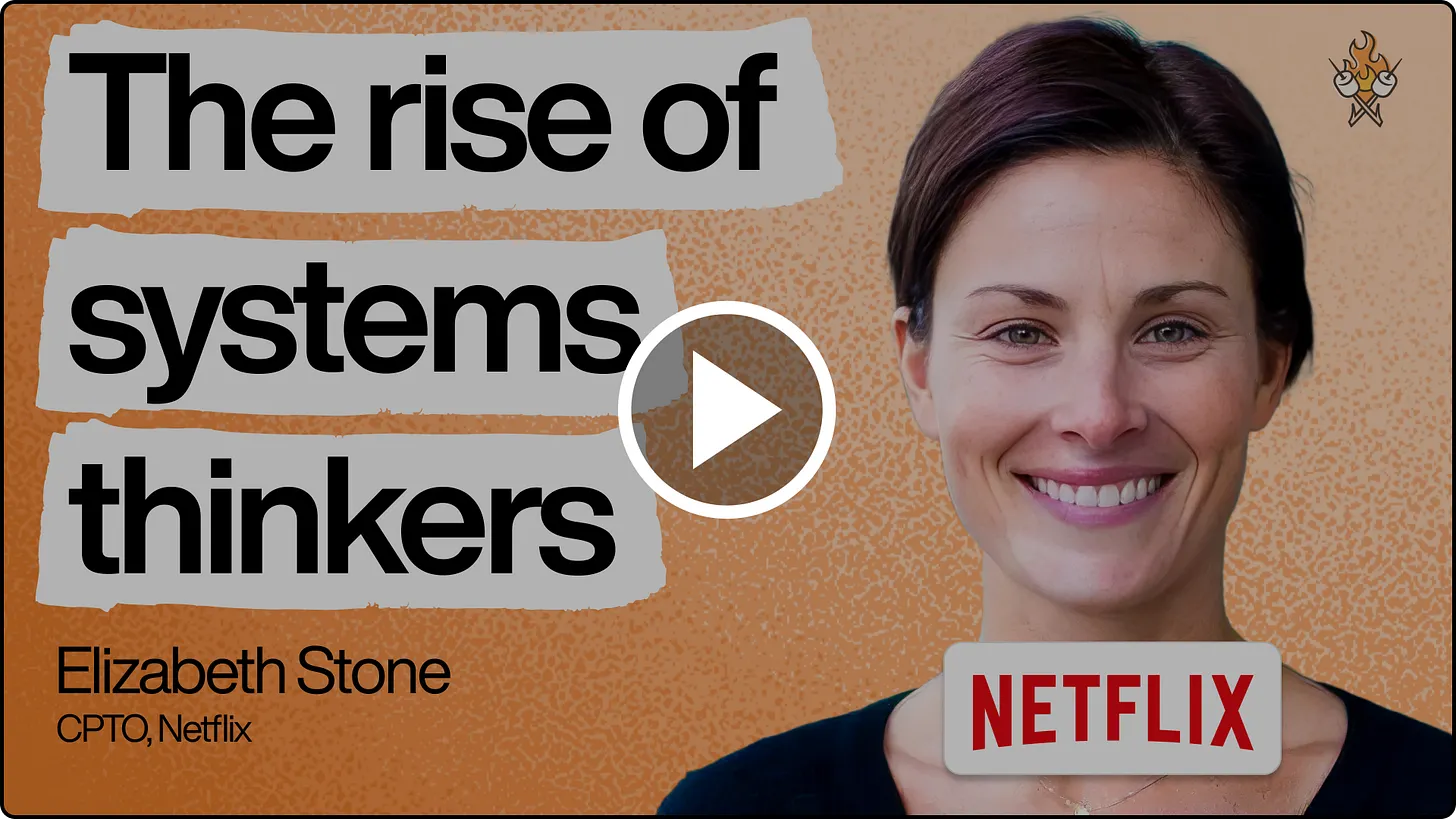
To cultivate systems thinking, Netflix's CPTO suggests a simple trick: for any task, take one step back and question your assumptions about the broader context. Consider the larger consumer problem or how your solution could scale. This "one zoom out" exercise helps build a more strategic perspective.
Instead of seeking inspiration from disparate fields, 'fractal' down your own supply chain. A fashion designer meeting the sheep herders or a marketeer meeting the suppliers' supplier can uncover deep, relevant insights that spark powerful, practical innovation within your own domain.

To find the next big market, look for what people on the fringes are doing with high intensity. The observation of students sleeping overnight to sign up for MIT's AI courses in 2017 was a powerful leading indicator of massive, latent demand that would eventually become mainstream.

Building a major company takes a decade. Therefore, founders must identify and bet on trends with a 10-year lifespan, not short-term hype. This long-term view is crucial for sustainable growth and market leadership, as practiced by serial entrepreneur Kevin Ryan.
Instead of predicting short-term outcomes, focus on macro trends that seem inevitable over a decade (e.g., more e-commerce, more 3D interaction). This framework, used by Tim Ferriss to invest in Shopify and by Roblox for mobile, helps identify high-potential areas and build with conviction.
Instead of focusing on the immediate impact of a trend (e.g., weight loss drugs on the food industry), analyze the subsequent, less obvious ripple effects. This "zooming out" reveals overlooked opportunities, such as the rising demand for cosmetic surgery to address side effects of rapid weight loss.
