Get your free personalized podcast brief
We scan new podcasts and send you the top 5 insights daily.
Contrary to the idea of a single AI agent, Google's Liz Reid suggests the future involves more specialized UIs across devices (laptops, phones, watches, glasses). The goal is to optimize for the task and form factor, leading to more access points, not convergence into one.

Related Insights
The dominant AI interface will be a universal conversational layer (chat/voice) for any task. This will be supplemented by specialized graphical UIs for power users needing deep functional control, much like an executive sometimes needs to edit a document directly instead of dictating to an assistant.
AI will soon create a unique user interface for every individual, adapted to their needs. For designers, this means shifting from creating fixed systems to defining flexible boundaries within which form and function can blend, balancing personalization with brand identity and usability.

The ultimate winner in the AI race may not be the most advanced model, but the most seamless, low-friction user interface. Since most queries are simple, the battle is shifting to hardware that is 'closest to the person's face,' like glasses or ambient devices, where distribution is king.

Major AI platforms are becoming "super agents" that connect to a user's software (e.g., email, YouTube) and use "skills" to perform complex, autonomous tasks. This convergence means the choice of platform is becoming a matter of user interface and integration preference rather than unique functionality.

The proliferation of AI development tools points to a future of billions of hyper-specialized applications. This could end the concept of a single, consistent user experience, creating a reality where every digital product is uniquely customized for each individual user.

AI agents will likely proliferate not as a single, all-knowing assistant, but as specialized, single-purpose products that excel at one task. The tool NoScroll exemplifies this trend, offering a "magical experience" by focusing narrowly on monitoring specific topics and delivering briefings, suggesting a shift towards a suite of micro-agents in daily life.

The current chatbot model is a primitive state for AI interaction. The next evolution lies in "ambient AI" that integrates seamlessly into daily life, moving beyond reactive conversation to proactively assist, anticipate needs, and surface information, much like the original vision for Google Now.

The next evolution for autonomous agents is the ability to form "agentic teams." This involves creating specialized agents for different tasks (e.g., research, content creation) that can hand off work to one another, moving beyond a single user-to-agent relationship towards a system of collaborating AIs.
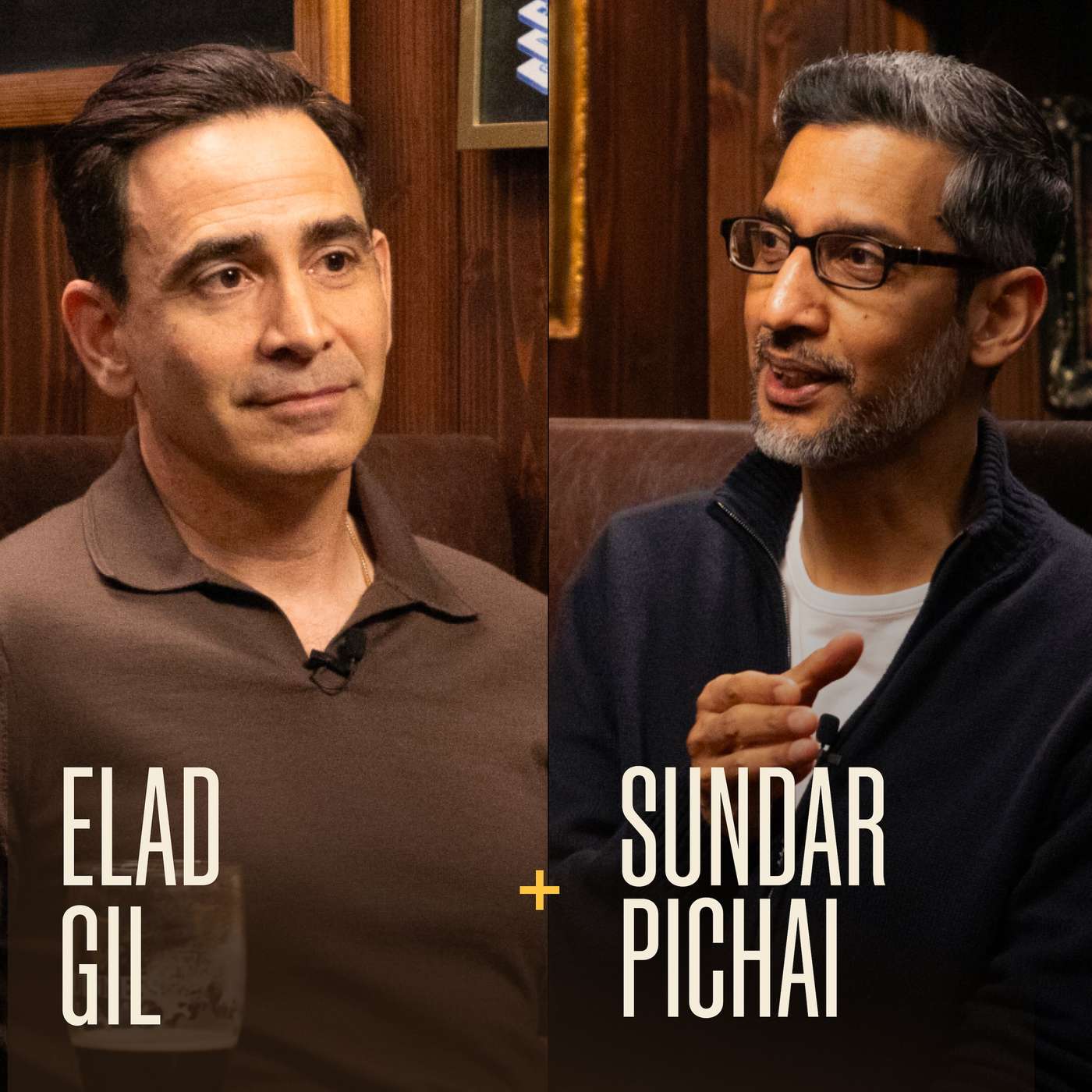
Instead of being replaced by AI chatbots or agents, Pichai believes Search will evolve to manage them. Users will run multiple, long-running tasks, and Search will become the interface to orchestrate these agentic flows, expanding its capabilities rather than becoming obsolete.
The future of AI interaction won't be a multitude of specialized apps. Instead, it will likely converge into a smaller number of powerful, generalized input boxes that intelligently route user intent, much like the Chrome address bar or Google's main search page.
