Get your free personalized podcast brief
We scan new podcasts and send you the top 5 insights daily.
The long-promised arrival of practical quantum computing is getting closer due to a two-sided convergence. Software advancements are drastically reducing the number of qubits needed for useful calculations, while hardware progress is rapidly increasing the number of physical qubits available, with the two projected to meet around 2030.

Related Insights
BlackRock's Tony Kim observes that many frontier technologies, from quantum computing and AGI to small nuclear reactors and data centers in space, are independently targeting 2030 for major breakthroughs. This convergence suggests a potential step-change in technological capabilities around that time.
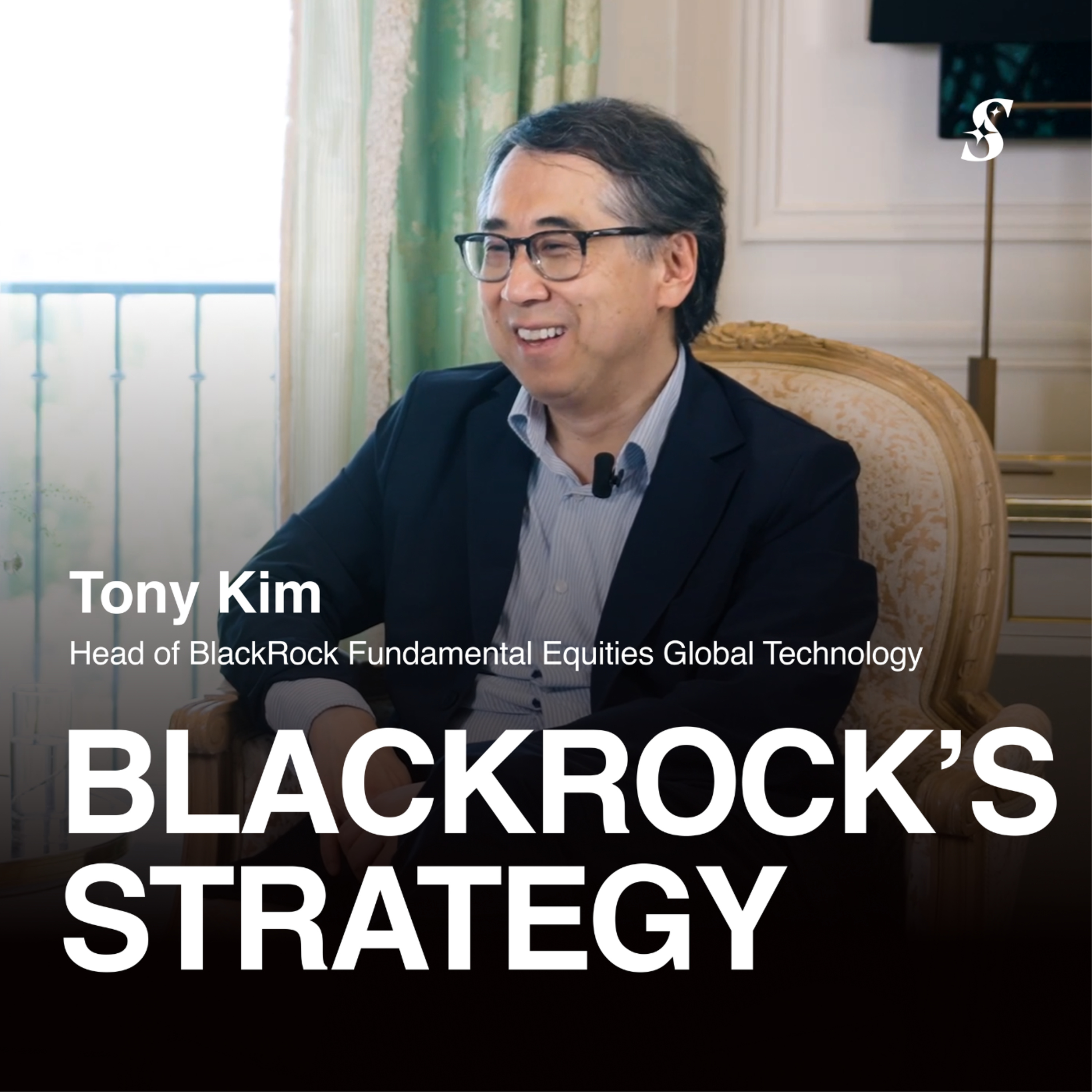
Progress in quantum computing is accelerating faster than most realize, with useful applications now expected within five years. A major milestone was achieving "below threshold error correction," where scaling up a quantum system now decreases error rates instead of increasing them, overcoming a fundamental barrier.

While the race for quantum computing hardware is underway, a major blind spot is the software. Quantum software doesn't exist yet, and current software giants are not prepared. The U.S. needs a strategic public-private effort to build this ecosystem from scratch to capitalize on future hardware breakthroughs.

No longer just a theoretical concept, quantum computing has transitioned from a physics problem to an engineering and scaling challenge. With multiple qubit modalities and error correction now proven, meaningful results that solve currently intractable problems in chemistry and logistics are expected within this decade.

The key inflection point for quantum was not a 'ChatGPT moment' but a foundational shift. Google's 2023 paper on error correction proved systems could become more stable as qubits are added, changing the question from 'if' to 'when' for useful quantum computers, similar to the 2017 paper that enabled LLMs.

The current approach of scaling a single type of qubit technology is inefficient. The founder of quantum startup Sigildry argues the future lies in a multi-modal architecture, architecting systems that combine various quantum hardware types (e.g., trapped ions, photonics) specifically tailored to AI workloads.

Nvidia CEO Jensen Huang's public stance on quantum computing shifted dramatically within months, from a 15-30 year timeline to calling it an 'inflection point' and investing billions. This rapid reversal from a key leader in parallel processing suggests a significant, non-public breakthrough or acceleration is underway in the quantum field.

Arvind Krishna expresses 100% confidence that quantum computers will be useful between 2028-2030. He frames the challenge as a manageable 10x improvement in both scale and error correction from today's prototypes, projecting a 'hundreds of billions' market opportunity for IBM.

Public announcements about quantum computing progress often cite high numbers of 'physical qubits,' a misleading metric due to high error rates. The crucial, error-corrected 'logical qubits' are what matter for breaking encryption, and their number is orders of magnitude lower, providing a more realistic view of the technology's current state.
A symbiotic relationship exists between AI and quantum computing, where AI is used to significantly speed up the optimization and calibration of quantum machines. By automating solutions to the critical 'noise' and error-rate problems, AI is shortening the development timeline for achieving stable, powerful quantum computers.