Get your free personalized podcast brief
We scan new podcasts and send you the top 5 insights daily.
Despite predictions of SaaS's collapse, leading AI companies like OpenAI and Anthropic are still significant customers of traditional SaaS tools. This suggests that AI agents are augmenting, not completely replacing, established enterprise software.

Related Insights
The market narrative suggests AI will decimate SaaS companies. However, current earnings data reveals a different story. Major players like Salesforce, GitLab, Snowflake, and Datadog are still reporting strong double-digit revenue growth. This highlights a significant disconnect between speculative fear about AI replacing software and the present-day financial performance of these companies.
Despite widespread narratives, business spending data shows no significant shift away from traditional SaaS models. The two core predictions of the "SaaSpocalypse"—the death of major SaaS players and a move away from seat-based pricing—are not supported by current business behavior.
Contrary to the "SaaS-pocalypse" theory, AI agents will become a new, high-volume user base for SaaS tools. This will drive massive growth for companies that adapt their products to be usable by both humans and AI agents simultaneously.

The idea that AI will kill SaaS is flawed. Instead, SaaS is evolving to integrate "agentic" capabilities. This creates a hybrid model where humans and AI agents collaborate within optimized workflows, delivering more value than either could alone. This fusion expands the market rather than destroying it.

SaaS products like Salesforce won't be easily ripped out. The real danger is that new AI agents will operate across all SaaS tools, becoming the primary user interface and capturing the next wave of value. This relegates existing SaaS platforms to a lower, less valuable infrastructure layer.
The panic in SaaS is over, but the market is now split. Companies whose products are leveraged by AI agents (like Twilio and Datadog) are re-accelerating. In contrast, traditional software selling more seats to humans is seeing stagnant growth as AI token spend cannibalizes those budgets.

The fear that AI agents will kill SaaS is overblown. Corporations will not replace mission-critical, supported software with AI-generated code from junior employees. The need for vendor accountability, reliability, and support creates a durable moat for enterprise software companies.

The idea that AI will eliminate SaaS is overblown because it incorrectly projects small startup behavior onto large enterprises. Fortune 100s face immense change management, security, and maintenance challenges, making replacing established vendors with internal AI-coded tools impractical.
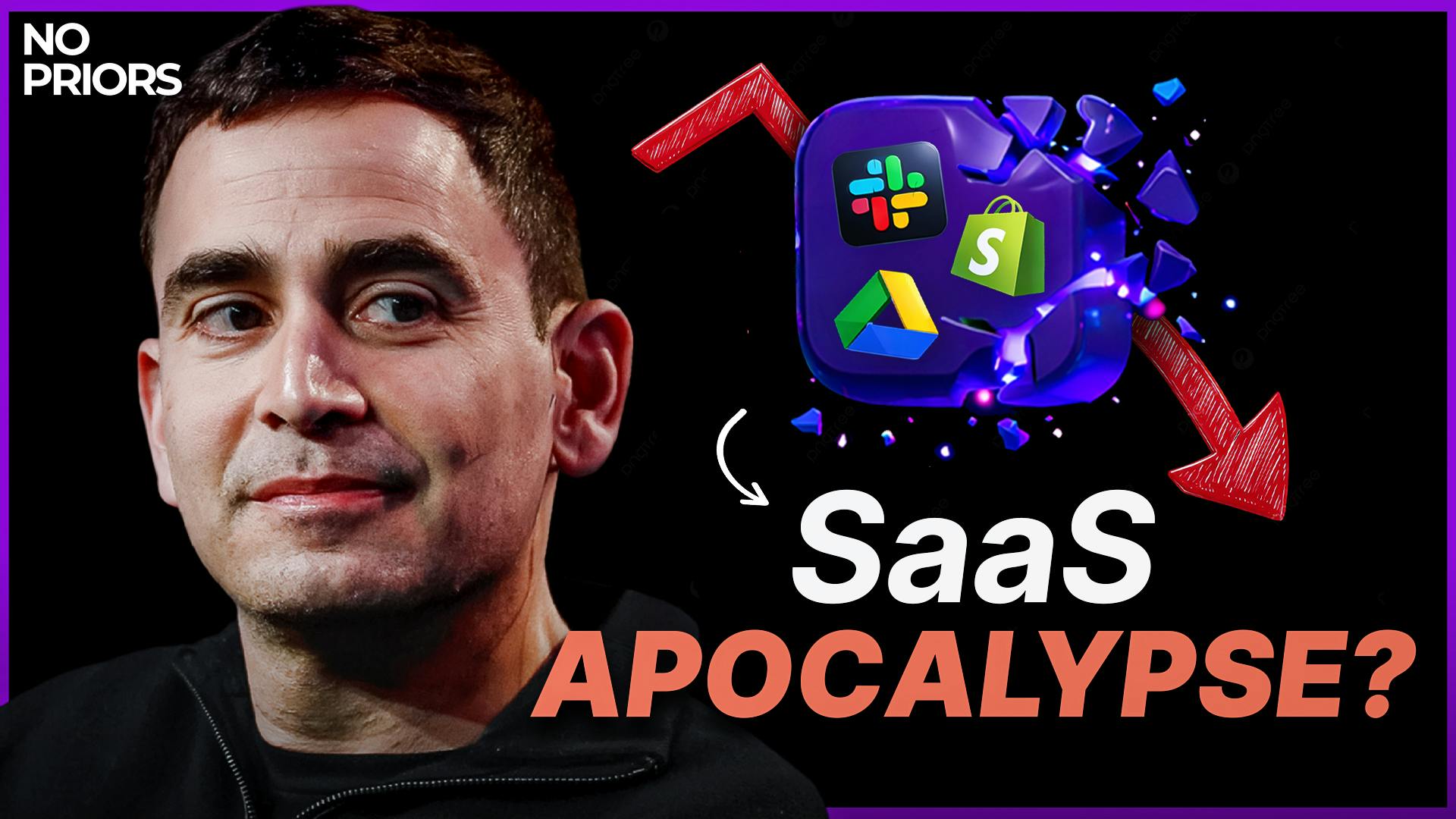
Contrary to the "SaaS-pocalypse" fear, Nvidia's CEO believes AI agents will boost the software industry. He argues agents will use existing tools like databases and calculators rather than replace them. This suggests a future of AI-driven augmentation, where agents become users of and distribution channels for specialized SaaS products.

Contrary to the 'SaaSpocalypse' narrative, Jensen Huang believes AI agents will use existing SaaS tools rather than replace them. This will increase demand for best-in-class software like databases, as it's more efficient for an agent to leverage an existing tool than to build one from scratch.