Get your free personalized podcast brief
We scan new podcasts and send you the top 5 insights daily.
Viewers won't commit to a long video unless the title promises a clear benefit or transformation. Vague, conceptual titles fail because they don't articulate what the viewer will gain from watching, making them easy for a user to scroll past.

Related Insights
The title makes a broad promise (e.g., 'How I motivate myself'). The thumbnail should add intrigue by hinting at the *how* with a named process (e.g., 'The CCC Method'). This makes viewers curious about the proprietary system they'll learn, compelling them to click to uncover the secret.

For videos longer than a minute, a single hook at the start isn't enough. Insert a 'mid-reel hook'—a statement that builds curiosity for the end of the video (e.g., 'Wait until you hear number five...'). This re-engages viewers and significantly boosts watch time, a key algorithm metric.
Initial hooks like thumbnails and opening lines are the entire battleground for capturing an audience. While the 'one-second economy' is hyperbole, we live in a '10-second economy' where the first few moments determine whether you earn a minute of someone's time or a year of their loyalty.

To succeed on video platforms like YouTube, podcasters must grab attention in the first minute. This incentivizes a style of front-loading exciting content, which fundamentally conflicts with the pacing and structure of traditional, narrative-driven podcasts that build suspense over time.

Don't create long, founder-led monologues for launch videos. The vast majority of viewer drop-off happens after the initial 30 seconds. Focus nearly all creative energy on making the first 30 seconds incredible by getting straight to the core value props. The rest of the video's length is secondary.

Dhar Mann believes a video idea isn't viable until a compelling title and thumbnail ("packaging") exist. He frames this not as 80% of success, but as the initial gatekeeper that requires the most effort. If the packaging fails to capture attention, the quality of the video content itself becomes irrelevant because no one will click.
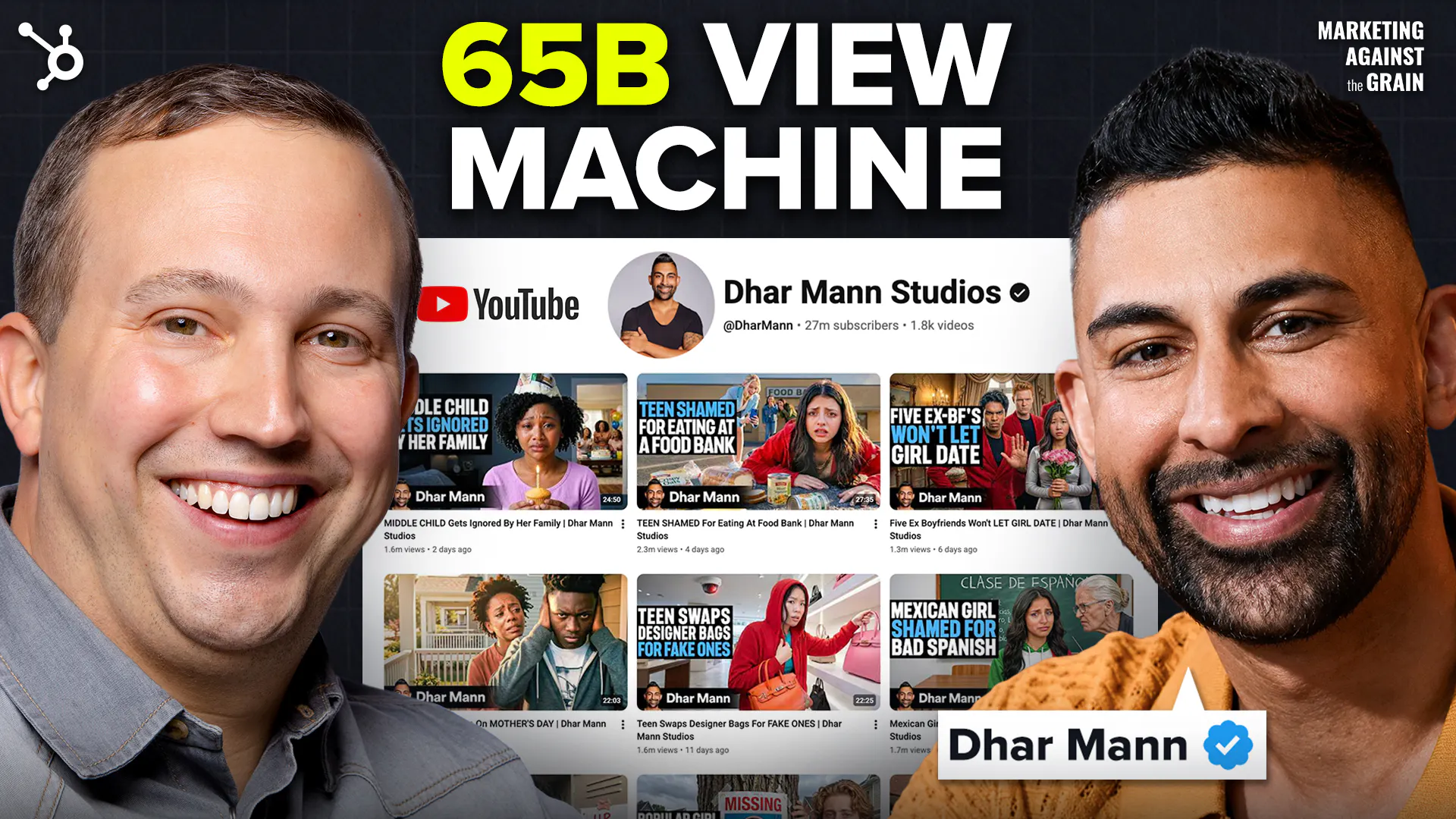
A video's "packaging" (its title and thumbnail) is critical and should be developed before production begins. Creating multiple distinct concepts upfront ensures you have a strong, data-informed marketing angle before investing time and money into filming and editing.
Amateurs film a video and then struggle to package it. Professionals reverse this. They first craft a compelling promise (the title) and visual hook (the thumbnail concept). Then, they create content specifically designed to fulfill that promise, ensuring perfect alignment and a stronger final product.
Many webinar titles and descriptions reveal too much, leaving no incentive for potential attendees to show up. Instead of detailing everything, craft titles that are curiosity-driven, much like a compelling email subject line. This piques interest and encourages registration and attendance to discover the answers.

When using outcome-based hooks (e.g., "how my client achieved X"), using realistic, attainable results can be more effective than unbelievable ones. While a massive number like "17 billion views" might be interesting, it can feel unrelatable, causing many viewers to scroll away because they believe it's impossible for them to achieve.