Get your free personalized podcast brief
We scan new podcasts and send you the top 5 insights daily.
The relationship between governments and AI labs is analogous to European powers and chartered firms like the British East India Company, which wielded immense, semi-sovereign power. This private company raised its own army and conquered India, highlighting how today's private tech firms shape new frontiers with opaque power.

Related Insights
While the public focuses on AI's potential, a small group of tech leaders is using the current unregulated environment to amass unprecedented power and wealth. The federal government is even blocking state-level regulations, ensuring these few individuals gain extraordinary control.

If AGI is concentrated in a few US companies, other nations could lose their economic sovereignty. When American AGI can produce goods far cheaper than local human labor, economies like the UK's could collapse. They would become economically dependent "client states," reliant on American technology for almost all production, with wealth accruing to Silicon Valley.

Unlike nuclear energy or the space race where government was the primary funder, AI development is almost exclusively led by the private sector. This creates a novel challenge for national security agencies trying to adopt and integrate the technology.

The principle that governments must hold a monopoly on overwhelming force should extend to superintelligence. AI at that level has the power to disorient political systems and financial markets, making its private control untenable. The state cannot be secondary to any private entity in this domain.
AI provides a structural advantage to those in power by automating government systems. This allows leaders to bypass the traditional unwieldiness of human bureaucracy, making it trivial for an executive to change AI parameters and instantly exert their will across all levels of government, thereby concentrating power.

The conversation around AI and government has evolved past regulation. Now, the immense demand for power and hardware to fuel AI development directly influences international policy, resource competition, and even provides justification for military actions, making AI a core driver of geopolitics.

OpenAI is lobbying the federal government to co-invest in its Stargate initiative, offering dedicated compute for public research. This positions OpenAI not just as a private company but as a key partner for national security and scientific advancement, following the big tech playbook of seeking large, foundational government contracts.

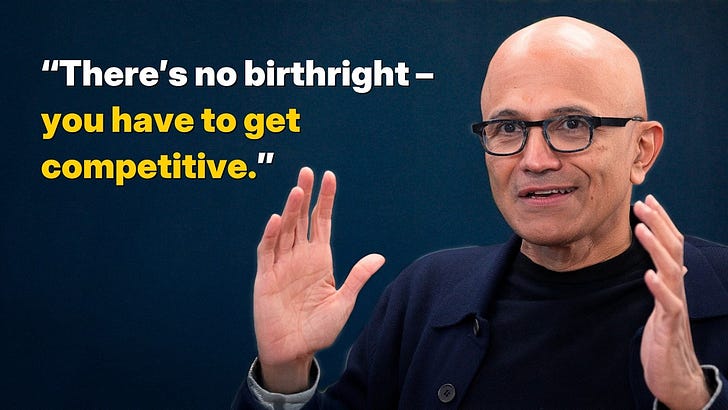
As countries from Europe to India demand sovereign control over AI, Microsoft leverages its decades of experience with local regulation and data centers. It builds sovereign clouds and offers services that give nations control, turning a potential geopolitical challenge into a competitive advantage.
The current market is unique in that a handful of private AI companies like OpenAI have an outsized, direct impact on the valuations of many public companies. This makes it essential for public market investors to deeply understand private market developments to make informed decisions.

The 1990s 'Sovereign Individual' thesis is a useful lens for AI's future. It predicts that highly leveraged entrepreneurs will create immense value with AI agents, diminishing the power of nation-states, which will be forced to compete for these hyper-productive individuals as citizens.
