Get your free personalized podcast brief
We scan new podcasts and send you the top 5 insights daily.
Rather than directly controlling behavior, the unconscious mind offers behavioral urges or inclinations as 'suggestions' to the conscious self. While we often summarily act on these, the conscious mind retains the ability to evaluate and decline them, though doing so can be a significant challenge if the suggestion is relentless.

Related Insights
Your subconscious mind doesn't judge, analyze, or question the inputs you provide. Like a computer, it simply accepts thoughts and affirmations as commands, files them, and returns them as your reality. This makes the conscious "programming" of your thoughts through repetition absolutely critical.

Bruce Lipton explains that 95% of our daily actions are driven by subconscious programs, not conscious desires. This "autopilot" mode is active whenever we are thinking, meaning we are often blind to the very behaviors that sabotage our goals.

Self-control is a trainable skill. Once your environment is optimized, the key is to analyze the "internal game" at the moment of choice. Identify the self-sabotaging thoughts (e.g., self-doubt) and learn to actively re-script them in real-time.

Your subconscious doesn't analyze or judge thoughts; it only registers the associated feelings. This is why consistent, positive self-talk can override negative beliefs, as the subconscious simply works to make repeated feelings a reality without logical scrutiny.

Our brains neurologically make choices that align with our established identity before we are even consciously aware of the decision. This subconscious process is why people often repeat familiar patterns despite their conscious desire to change, as the nervous system defaults to reinforcing its existing model of 'self'.

We all have two competing selves: the logical, conscious mind and the emotional, subliminal one. Misalignment, where subconscious needs (like the ego's desire to be right) override logic, leads to poor outcomes. Practices like meditation help you observe and align these two forces, ensuring your actions serve your true, logical goals.

Your subconscious mind, responsible for 95% of your behavior, is passively waiting for instructions. By consciously using 'I am' statements, you provide direct commands that shape your identity, which in turn creates your reality, much like a hypnotist's suggestion.

Experiments show the brain only continues working on a problem in the background if a goal is explicitly set (e.g., 'I will choose later'). If you tell yourself to forget the problem, background processing stops. You must actively assign a task to your 'hidden brain' for it to work.
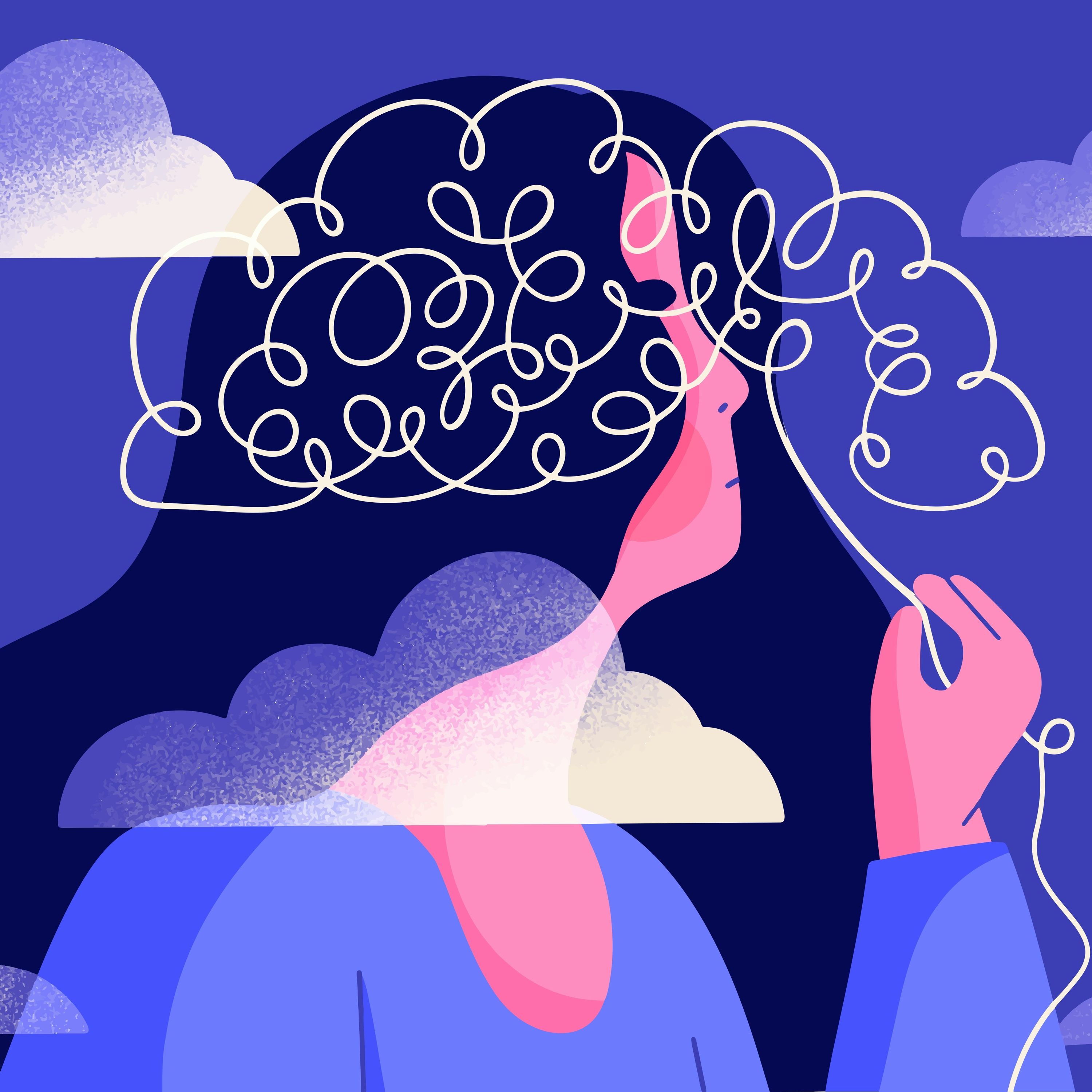
The mind automatically generates thoughts; you don't create them. The only thing you control is your response. True mental mastery isn't about stopping thoughts but about creating a space between a thought's appearance and your reaction to it.

Defusion is the practice of separating thoughts from their automatic emotional and behavioral influence. Techniques like saying a thought slowly, singing it, or imagining your younger self saying it can reduce its power. This allows you to *have* thoughts without letting your thoughts *have* you.