Get your free personalized podcast brief
We scan new podcasts and send you the top 5 insights daily.
Escalating restrictions from both the U.S. (export controls) and China (market access rules) are splitting the global AI market. This bifurcation will create distinct technology stacks, from hardware to models and data standards, forcing other nations and companies to align with one of the two competing systems.

Related Insights
The competition in AI infrastructure is framed as a binary, geopolitical choice. The future will be dominated by either a US-led AI stack or a Chinese one. This perspective positions edge infrastructure companies as critical players in national security and technological dominance.
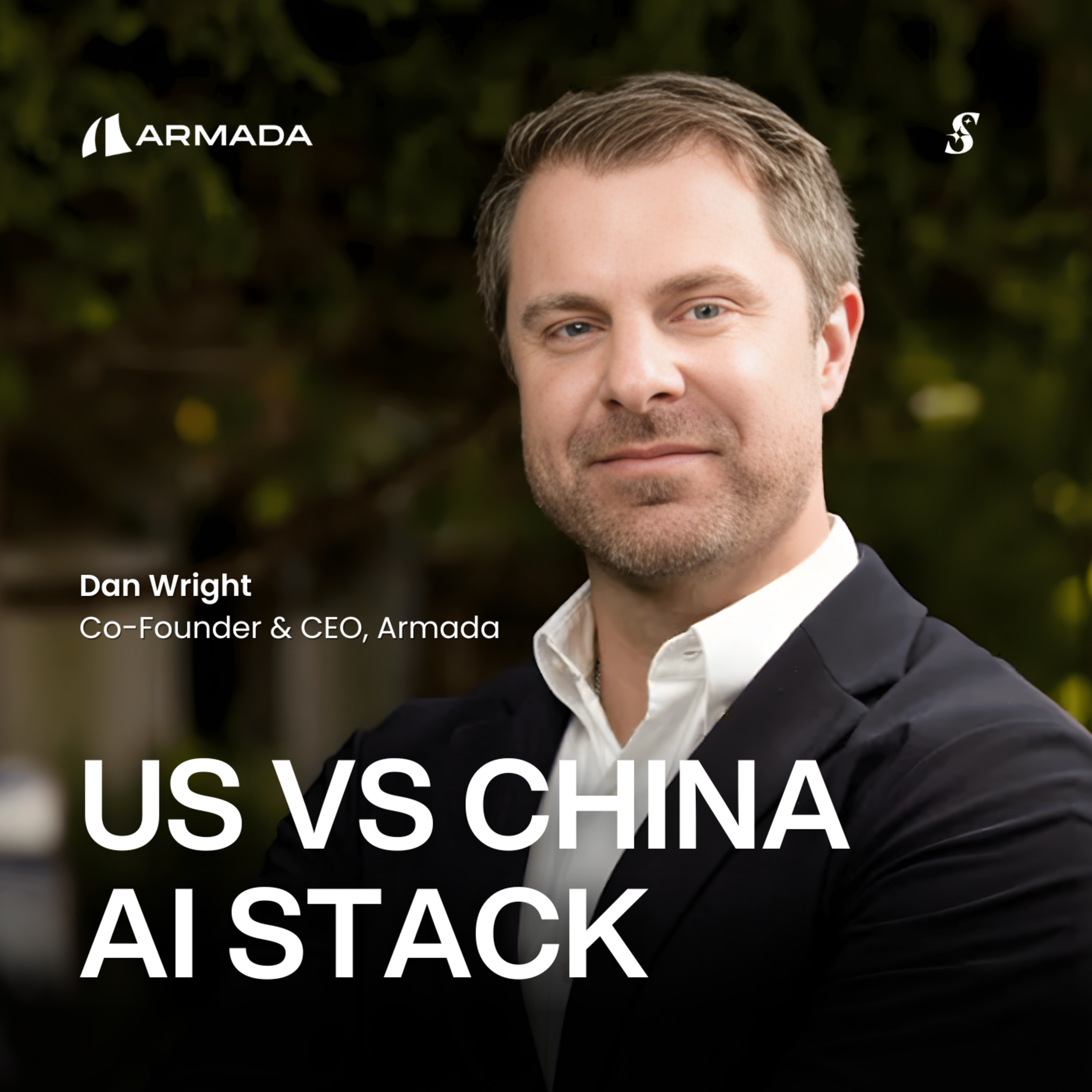
Jensen Huang argues that aggressive export controls are a strategic error. They force China to develop its own hardware and software stack, which could lead to a bifurcated global standard and prevent the American tech ecosystem from benefiting from China's vast developer talent.

Jensen Huang's counterintuitive argument is that aggressive export controls could be detrimental to US interests. By cutting China off, the US risks creating two separate ecosystems, where an open-source AI community develops exclusively on a foreign Chinese tech stack, ultimately weakening American influence.

Washington's pressure on firms like Anthropic to block foreign access to advanced AI models is creating a vacuum that China's competitive, open-source models are filling. This policy, intended to protect US interests, may ironically undermine them by pushing the global developer community towards a rival ecosystem.
Blocked from accessing the most advanced chips and closed models from companies like OpenAI, China is strategically championing open-source AI. This could create a global dynamic where the US owns the 'Apple' (closed, high-end) of AI, while China builds the 'Android' (open, widespread) ecosystem.

Unlike the US's increasingly closed-off AI models, China's powerful open-source alternatives (like Zhipu's GLM 5.2) are seeing massive global adoption. This strategy risks creating a world where Chinese AI is the global standard and US models are confined to the US and a few allies, effectively creating an "AI Iron Curtain."
The performance gap between US and Chinese AI has closed, establishing them as co-leaders. A key divergence is China's embrace of open models, while major US players have shifted to closed, proprietary systems. This creates a significant geopolitical and technological divide in the global AI ecosystem.
The inability to access OpenAI, Claude, or advanced GPUs in China left its massive market and talent pool with no choice but to build its own alternatives. This protectionist policy, intended to stifle China's progress, has ironically catalyzed the creation of a powerful, self-sufficient AI industry.

Due to sanctions and censorship, Russia and China are developing self-contained AI ecosystems. Their markets are dominated by local models (e.g., Yandex, Gigachat, Baidu's Ernie) rather than Western platforms like ChatGPT or Gemini, creating a fragmented global AI landscape with distinct technological trajectories.

A defensive strategy of banning AI chip exports may backfire. While it creates short-term hurdles for China, it forces them to accelerate their own ecosystems. This could lead to a fractured global market where China, not the US, sets the standards, similar to Huawei's rise in 5G.