Get your free personalized podcast brief
We scan new podcasts and send you the top 5 insights daily.
The conversation will shift from the ethics of using AI in combat to the immorality of *not* using it. Just as autonomous cars will eventually be safer than human drivers, AI-guided weapons will be more precise and less likely to cause unintended harm, making their use a moral obligation.
Related Insights
Contrary to public perception, Anthropic's leadership does not have a blanket moral objection to autonomous weapons systems. Their stated concern is that current AI models like Claude are not yet reliable enough for such critical applications. They even offered to help the Pentagon develop the tech for future use.

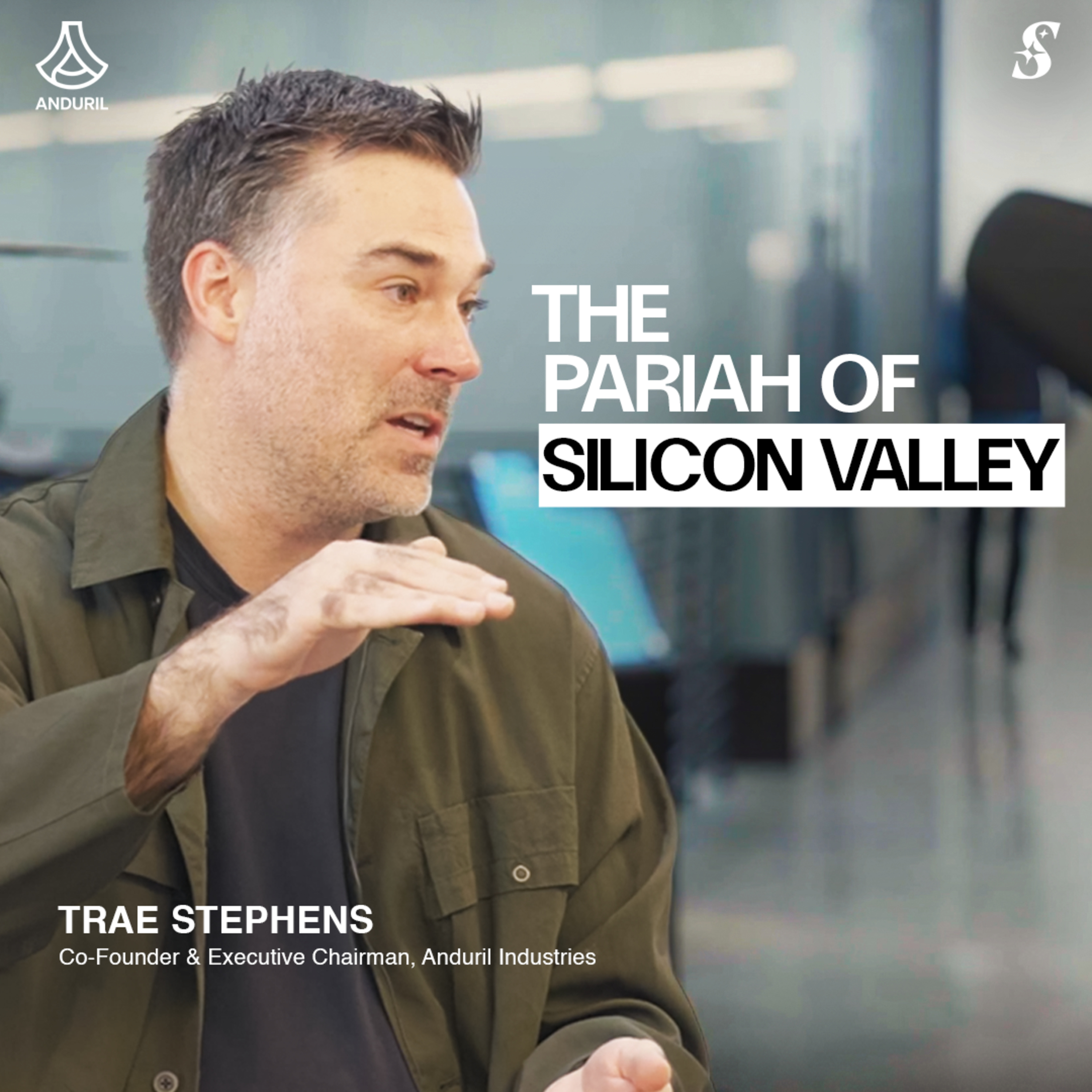
Counterintuitively, Anduril views AI and autonomy not as an ethical liability, but as a way to better adhere to the ancient principles of Just War Theory. The goal is to increase precision and discrimination, reducing collateral damage and removing humans from dangerous jobs, thereby making warfare *more* ethical.
The standoff between Anthropic and the Pentagon marks the moment abstract discussions about AI ethics became concrete geopolitical conflicts. The power to define the ethical boundaries of AI is now synonymous with the power to shape societal norms and military doctrine, making it a highly contested and critical area of national power.

Debates over systems like Israel's 'Lavender' often focus on the AI. However, the more critical issue may be the human-defined 'rules of engagement'—specifically, what level of algorithmic confidence (e.g., 55% accuracy) leadership deems acceptable to authorize a strike. This is a policy problem, not just a technology one.

The ethical stance of requiring a human in the loop for autonomous weapons faces a serious strategic problem. A weapon system with a human decision-maker will likely lose to a fully autonomous one, forcing a choice between ethics and military effectiveness.

Beyond the risk of tactical mistakes, a critical ethical concern with AI in warfare is the psychological distancing of soldiers from the act of killing. If no one feels morally responsible for the violence occurring, it could lead to less restraint, more suffering, and an increased willingness to engage in conflict.

The debate over autonomous weapons is often misdirected. Humanity has used autonomous weapons like landmines for centuries. The paradigm shift and true danger come from adding scalable, learning "intelligence" to these systems, not from the autonomy itself.

Beyond offensive capabilities, the military sees AI as a tool for harm reduction. An LLM trained on visual data could act as a final check, flagging potential targets that show signs of civilian presence—like a playground outside a building—thereby augmenting human decision-making to prevent tragic errors.

Countering the common narrative, Anduril views AI in defense as the next step in Just War Theory. The goal is to enhance accuracy, reduce collateral damage, and take soldiers out of harm's way. This continues a historical military trend away from indiscriminate lethality towards surgical precision.

The rise of drones is more than an incremental improvement; it's a paradigm shift. Warfare is moving from human-manned systems where lives are always at risk to autonomous ones where mission success hinges on technological reliability. This changes cost-benefit analyses and reduces direct human exposure in conflict.
