Get your free personalized podcast brief
We scan new podcasts and send you the top 5 insights daily.
The usual seasonal trend of a weaker Chinese Yuan after the Lunar New Year may not materialize. Ongoing trade negotiations with the US could incentivize Beijing to maintain a stable or appreciating CNY as a potential bargaining chip for tariff relief, overriding typical seasonal flow dynamics.

Related Insights
A key tension exists for Asian FX. China's central bank is keeping the Yuan stable, providing an anchor for the region. Simultaneously, weak Chinese stocks are driving negative risk sentiment. This forces regional currencies into a difficult choice of which signal to follow, leading to uncertainty.
China could leverage its dominance in rare earths by requiring payment in offshore Chinese Yuan (CNY). This move would force Western defense, AI, and industrial companies to source CNY, creating significant new demand for the currency and challenging the US dollar's role in global commodity trade.

The PBOC allowing the USD/CNY exchange rate to fix below the psychologically important 7.00 level for the first time in three years marks a significant change. In the past, this level was stoutly defended, and the recent "accommodative signal" suggests authorities are more comfortable with a stronger Yuan.
Contrary to conventional wisdom, a stronger renminbi would exacerbate China's deflationary pressures. This would harm corporate revenues, leading to wage cuts and negatively impacting consumer spending. Therefore, currency appreciation would make the desired economic rebalancing towards consumption more difficult.

Recent US Treasury actions, including unusually direct language in its currency report calling for Chinese Yuan appreciation and citing specific tariff threats, indicate a shift toward a more interventionist FX policy. This move away from a hands-off approach suggests the US may become a more active source of bilateral currency volatility.
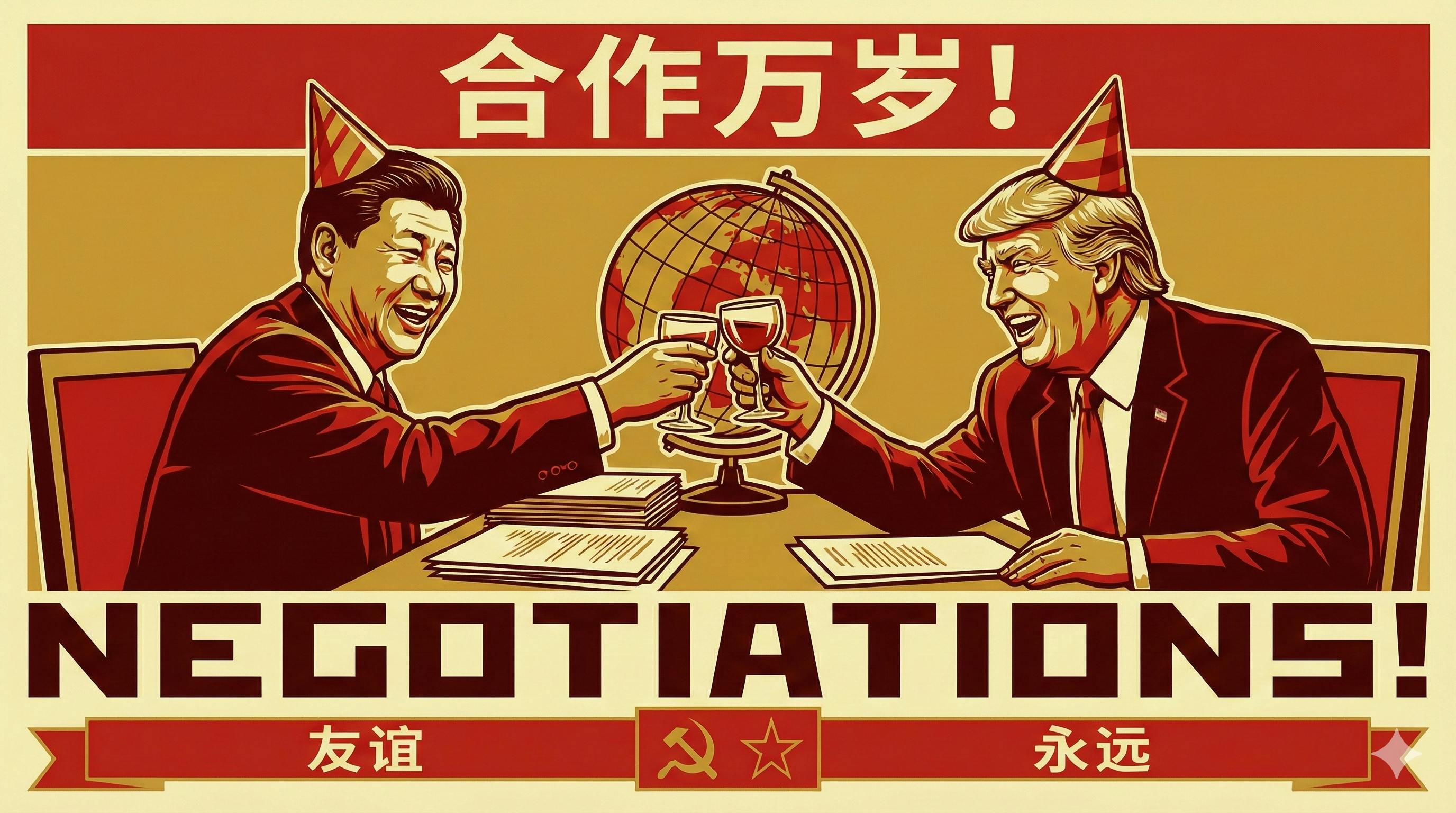
Beijing believes that as the U.S. midterm elections approach, the Trump administration will feel increasing pressure to secure a tangible "win" or deal. By prolonging negotiations, China aims to maximize its leverage and extract more favorable terms, mapping this strategy from the first trade war.
China deliberately maintains an undervalued renminbi to make its exports cheaper globally. This strategy props up its manufacturing-led growth model, even though it hinders economic rebalancing and reduces the purchasing power of its own citizens.

The upcoming US-China summit is expected to produce optics over substance. More importantly for traders, the FX market lacks a clear playbook for any outcome. The People's Bank of China (PBOC) has firmly anchored the Yuan, removing any 'trade war risk premium' from the currency and rendering the event largely untradable for FX.
The Chinese Yuan's (CNY) recent strength, particularly against the Euro, is not just a market phenomenon. It reflects a deliberate PBOC policy to manage the EuroCNH cross to placate European concerns over China's massive trade surplus, making EuroCNH a key political and policy indicator.
The latest US-China trade talks signal a shift from unilateral US pressure to a negotiation between equals. China is now effectively using its control over critical exports, like rare earth minerals, as a bargaining chip to compel the U.S. to pause its own restrictions on items like semiconductors.
