Get your free personalized podcast brief
We scan new podcasts and send you the top 5 insights daily.
The next generation of enterprise AI software is not a fixed set of tools. Instead, it acts as an operating system that uses LLMs to write its own code on the fly, creating new capabilities like a data integration or an NPV analysis script the moment a user needs it.

Related Insights
AI's biggest enterprise impact isn't just automation but a complete replatforming of software. It enables a central "context engine" that understands all company data and processes, then generates dynamic user interfaces on demand. This architecture will eventually make many layers of the traditional enterprise software stack obsolete.

Tools are emerging that don't just build an app but run the entire company—managing marketing, bookkeeping, and legal. This evolution shows the value is not in the LLM itself but in the 'harness' built around it to orchestrate complex business functions, creating a new category of fully autonomous company builders.

Companies will adopt a hybrid "build vs. buy" approach. They will use AI agents to build bespoke, simple software "screwdrivers" for specific workflows on the fly, eliminating many niche SaaS tools. However, they will continue to "rent" large, foundational platforms like ERPs and CRMs, which serve as heavy-duty "trucks."

For decades, buying generalized SaaS was more efficient than building custom software. AI coding agents reverse this. Now, companies can build hyper-specific, more effective tools internally for less cost than a bloated SaaS subscription, because they only need to solve their unique problem.

Enterprises will shift from relying on a single large language model to using orchestration platforms. These platforms will allow them to 'hot swap' various models—including smaller, specialized ones—for different tasks within a single system, optimizing for performance, cost, and use case without being locked into one provider.

The pace of AI model improvement is faster than the ability to ship specific tools. By creating lower-level, generalizable tools, developers build a system that automatically becomes more powerful and adaptable as the underlying AI gets smarter, without requiring re-engineering.

Once a universal code execution environment becomes the standard 'super tool' for AI agents, creating new capabilities will no longer require custom code. Instead, 'building a tool' will mean writing a detailed prompt that instructs the LLM on how to sequence actions using an already-exposed, comprehensive API SDK.

Instead of integrating with existing SaaS tools, AI agents can be instructed on a high-level goal (e.g., 'track my relationships'). The agent can then determine the need for a CRM, write the code for it, and deploy it itself.
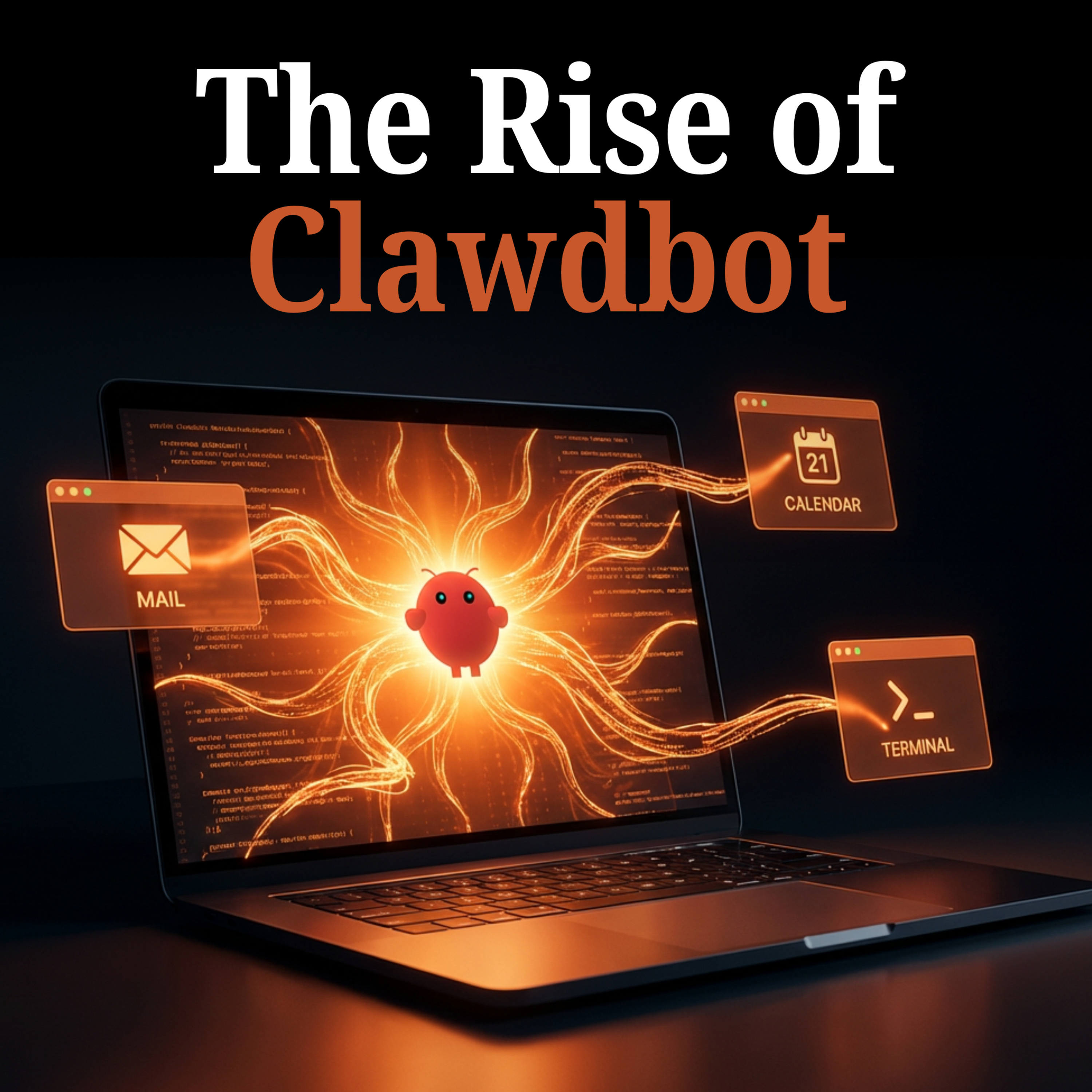
Instead of integrating third-party SaaS tools for functions like observability, developers can now prompt code-generating AIs to build these features directly into their applications. This trend makes the traditional dev tool market less relevant, as custom-built solutions become faster to implement than adopting external platforms.

Traditionally, developers choose the tech stack. With self-writing platforms, business owners describe needs directly to an AI. Their criteria become security and reliability, not developer familiarity, dissolving the network effects that protect incumbent platforms.