Get your free personalized podcast brief
We scan new podcasts and send you the top 5 insights daily.
Keynes compared professional investing to a newspaper beauty contest where the goal isn't to pick the prettiest face, but the one the average competitor will choose. This highlights how short-term markets are driven by guessing others' opinions, not by fundamental analysis—a game very few can win consistently.

Related Insights
Markets, technologies, and companies change constantly. The one constant is the human operating system—our biases, emotions, and irrationality. The ability to systematically trade against predictable human behavior is an enduring source of alpha.

Keynes initially failed by speculating on macroeconomic trends like currency fluctuations. He found success only after shifting his focus to the fundamental "micro realities" of individual businesses, such as their earnings power and management quality, realizing that a good business can thrive in any market environment.
Phenomena like bank runs or speculative bubbles are often rational responses to perceived common knowledge. People act not on an asset's fundamental value, but on their prediction of how others will act, who are in turn predicting others' actions. This creates self-fulfilling prophecies.

The maxim "buy low, sell high" is psychologically hard because it forces you to act against the crowd's emotional consensus. It's like flying by instruments when everyone else is calm and looking out the window. This act of trusting abstract data over social proof feels deeply unnatural for humans.

The market for financial forecasts is driven by a psychological need to reduce uncertainty, not a demand for accuracy. Pundits who offer confident, black-and-white predictions thrive because they soothe this anxiety. This is why the industry persists despite a terrible track record; it's selling a feeling, not a result.
![[REPLAY] Morgan Housel – Same as Ever (EP.359) thumbnail](https://static.libsyn.com/p/assets/f/b/7/6/fb76e1c8bfb69e8dd959afa2a1bf1c87/CA_Square_logo_light_background_6.26.24.jpg)
The primary driver of market fluctuations is the dramatic shift in attitudes toward risk. In good times, investors become risk-tolerant and chase gains ('Risk is my friend'). In bad times, risk aversion dominates ('Get me out at any price'). This emotional pendulum causes security prices to fluctuate far more than their underlying intrinsic values.

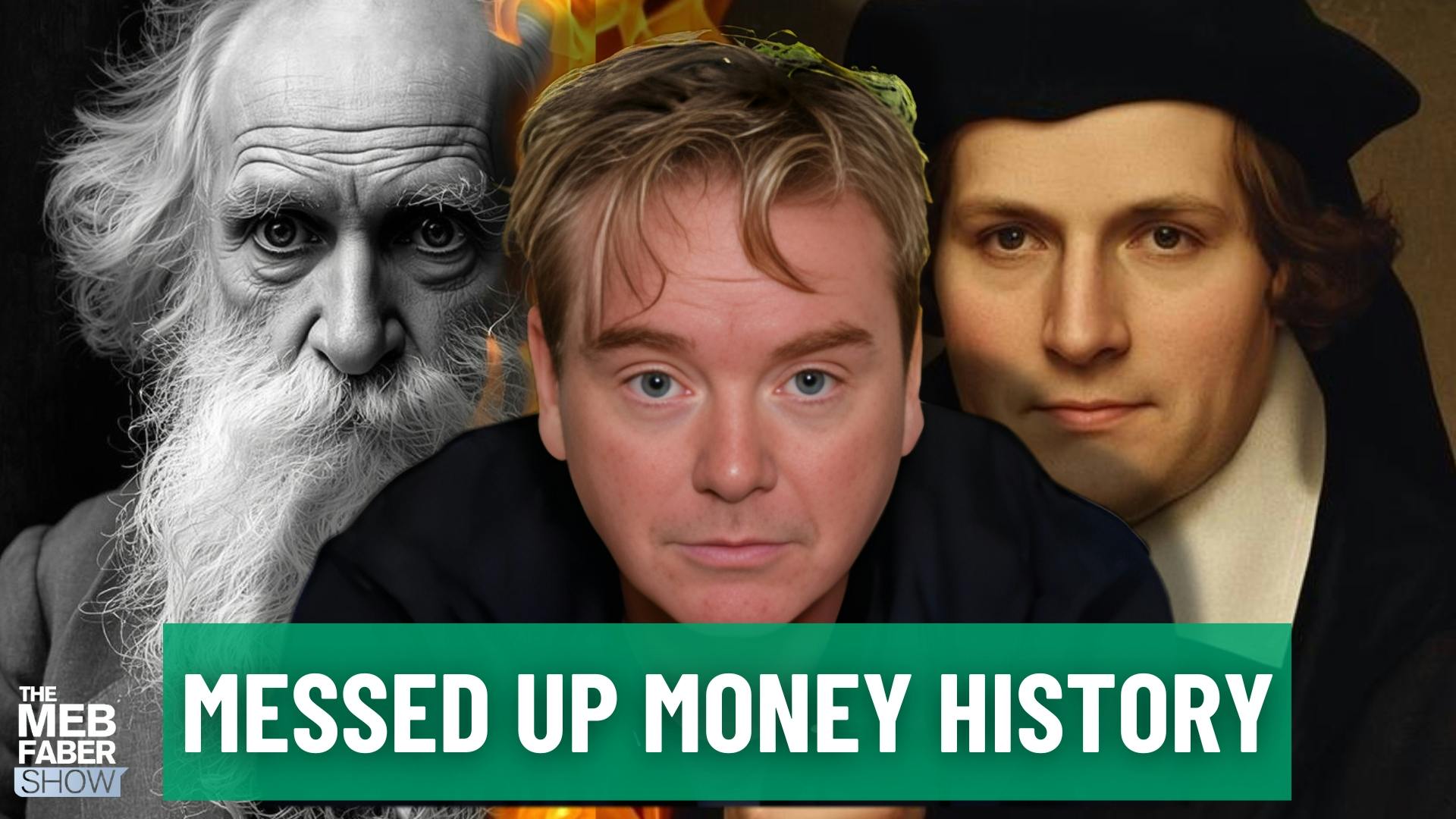
The fathers of physics and biology both lost their fortunes in financial speculation—Newton in the South Sea Bubble and Darwin in railways. This demonstrates that intellectual brilliance in one domain does not translate to financial markets, which are governed by psychology and mercurial forces.
An asset's price is ultimately determined by what someone is willing to pay, making the market a game of predicting collective human emotion, much like trading baseball cards. Even fundamentally sound assets can crash if sentiment turns negative, meaning investors are gambling on the emotional state of others.
Keynes distinguished between speculation and enterprise (investing). A speculator tries to predict what other investors will think, while an enterprising investor forecasts a business's long-term earnings potential. Speculators focus on price, while investors focus on intrinsic value—a crucial distinction for avoiding costly errors.
In an experiment where participants could trade on Monday's prices after seeing Wednesday's newspaper, the average person could not make money. This demonstrates the profound difficulty of translating perfect macro information into profitable trades, as market reactions are unpredictable.
