Get your free personalized podcast brief
We scan new podcasts and send you the top 5 insights daily.
The popular image of Route 66 as a nostalgic symbol of a 'simpler, better time' is a predominantly white perspective. For Black travelers during the Jim Crow era, the road was a landscape of exclusion and danger, necessitating guides like The Green Book to find rare safe havens. This alternative history reveals the 'open road' was often a segregated and perilous experience.
Related Insights
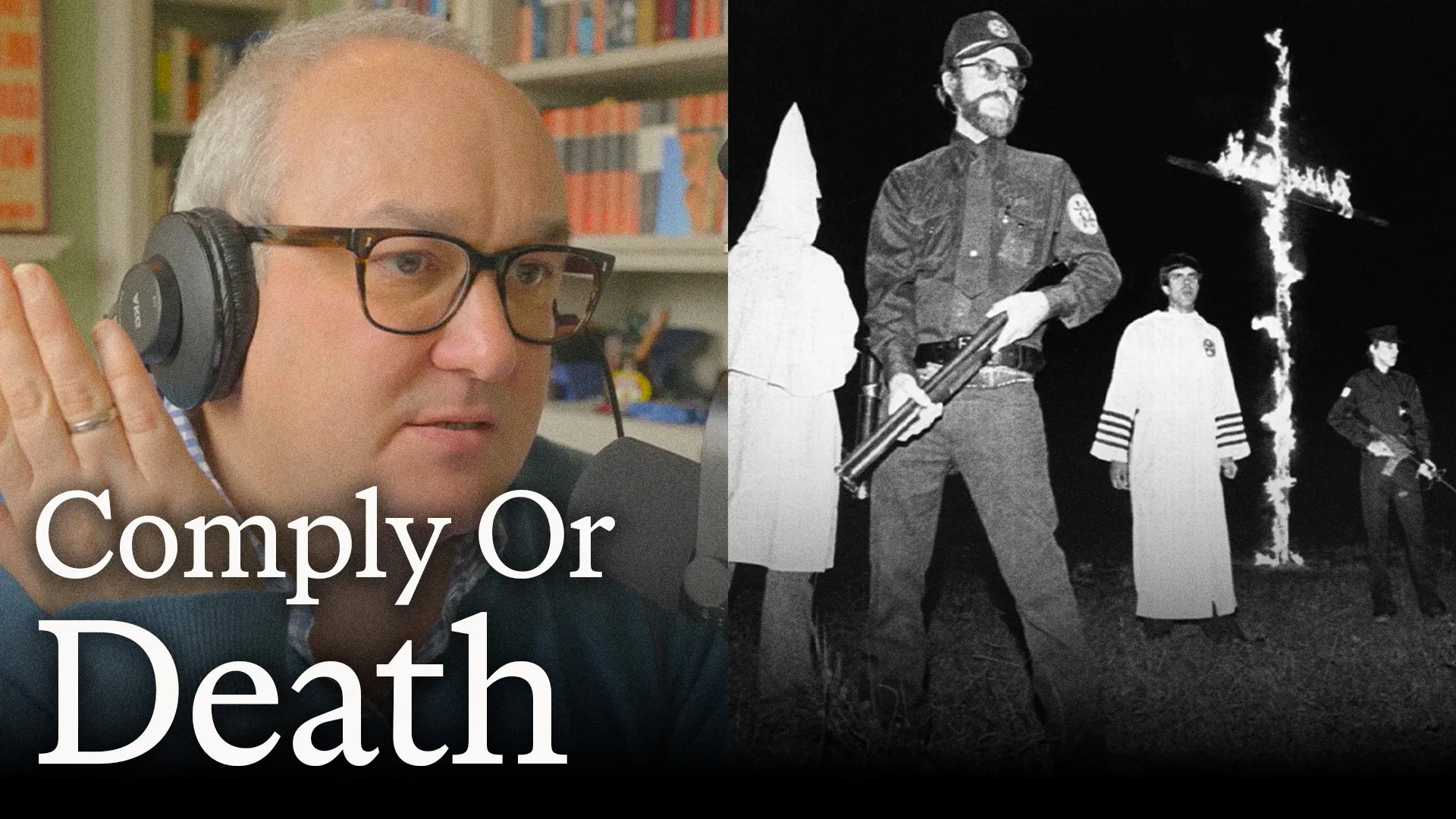
The Klan was not ubiquitous across the South. It was most successful in counties where black and white populations were roughly equal, creating maximum social and political friction. It failed to gain traction in majority-black areas (due to fear of reprisal) or overwhelmingly white areas (due to lack of a perceived threat).

To grasp America's current state, the podcast host revives Alexis de Tocqueville's 1831 methodology: an extended road trip for in-depth interviews with diverse citizens. This suggests that deep, qualitative immersion is superior to quantitative data for understanding national identity and division.
Route 66 historically symbolized the American dream of moving west to California for a new life. In a striking modern reversal, expensive and over-regulated California is now shedding residents for the first time, while the inexpensive Midwest—a region people traditionally fled—is gaining them, flipping the century-old migration pattern.

The geographic distribution of vacant properties in Baltimore today is not random but a direct legacy of historical, race-based housing policies. The neighborhoods systematically disinvested in via redlining in the 1930s are the same ones suffering from widespread vacancy now, demonstrating the long-term impact of discriminatory policies.

The KKK's success was not just about violence but about creating a social movement. It hosted picnics, parades, and even circuses, embedding its hateful ideology into ordinary, taken-for-granted community life for millions of white Protestants, making it seem normal and even wholesome.
The Klan's terror campaign was a holistic effort to restore pre-war racial hierarchy. Beyond suppressing votes, they targeted Black churches, schools, landowners, and even women who displayed self-respect. This reveals a broader goal: to crush any sign of Black autonomy and re-establish total white supremacy in every aspect of Southern life.
The story of the Blue Back Speller is quintessentially American in three layers: its creation for a narrow identity, its exclusion of others, and its reinterpretation by those very excluded groups. This act of taking what isn't intended for them and making it their own is a core theme of the Black American story.

Bryan Stevenson argues that beyond the physical brutality, slavery's most damaging legacy is the narrative of racial difference created to allow enslavers to see themselves as moral. This ideology of racial hierarchy persists today, enabling moral disengagement and perpetuating injustice.

Despite its status as an American cultural icon, the vast majority of travelers on Route 66 are international visitors. For them, the journey represents the 'American dream' and the romance of the open road. This demographic highlights the highway's transformation from domestic road to a global tourism phenomenon.
Following its demise, the KKK's violent legacy was completely sanitized by the 'Lost Cause' mythology. Academic historians and popular culture, most notably D.W. Griffith's 1915 film 'The Birth of a Nation', recast the Klan not as racist terrorists but as swashbuckling defenders of civilization, a narrative that enabled its eventual rebirth.